
What if the device promised to end your chronic pain actually became the source of your deepest betrayal? For many patients, the quiet malfunction of an implant isn't just a technical glitch; it's a life-altering crisis that leaves you physically broken, emotionally exhausted, and financially drained. If your symptoms have returned or worsened, filing a failed spinal cord stimulator claim is the first step toward reclaiming your future from the corporations that prioritized profits over your safety.
You expected a permanent solution, but instead, you're facing the terrifying prospect of invasive revision surgery and mounting medical bills. We understand that you feel like a case number in a massive system, but your suffering is real and your voice deserves to be heard. This 2026 legal guide provides the exact roadmap you need to document device failure, establish manufacturer liability, and secure the compensation you deserve. We'll walk through the essential evidence required for a successful case, the nuances of proving negligence, and how a dedicated trial lawyer can stand as your shield against industry giants.
When you agreed to the implant, you were promised a return to normalcy. You weren't told that the device might become a liability. A failed spinal cord stimulator claim isn't about a doctor's surgical error; it's about a fundamental breach of trust by the manufacturer. While spinal cord stimulation has helped many patients manage chronic conditions, the legal system recognizes that when these devices fail due to poor design or manufacturing, the patient shouldn't bear the financial burden. We believe in holding these giants accountable for the hardware they put into your body.
In 2026, we're seeing an unprecedented level of transparency regarding device longevity and safety profiles. This year marks a turning point for patient rights. We're moving past the era where manufacturers could hide behind complex medical jargon or proprietary data. If your device has malfunctioned, you're not just a medical statistic. You're a victim of corporate negligence. We stand as a shield between you and the companies that failed you, providing the stable, authoritative guidance you need during this chaotic time.
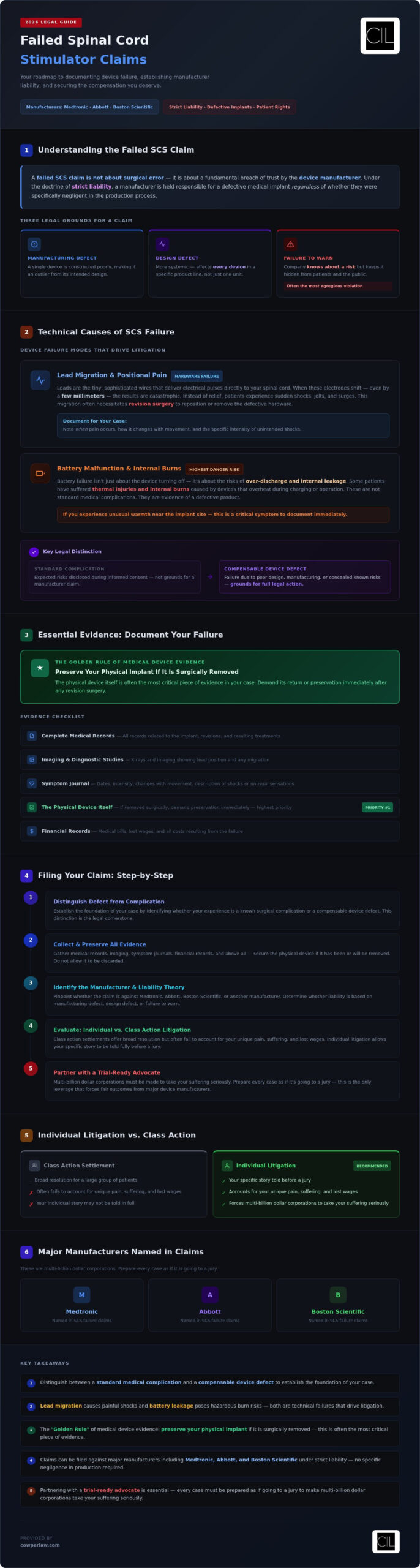
To succeed in a failed spinal cord stimulator claim, we must identify the specific nature of the failure. Manufacturing defects occur when a single device is constructed poorly, making it an outlier. Design defects are more systemic, affecting every device in a specific product line. Often, the most egregious violation is the "failure to warn," where a company like Medtronic, Abbott, or Boston Scientific knows about a risk but keeps it from the public. Under the doctrine of strict liability, a manufacturer is held responsible for a defective medical implant regardless of whether they were specifically negligent in the production process.
Many law firms want a quick settlement to keep their volume high. We don't. We are trial lawyers who believe that catastrophic injuries require a relentless pursuit of full justice. While class action settlements offer a broad resolution, they often fail to account for your unique pain, suffering, and lost wages. Individual litigation allows us to tell your specific story. Our "Compassionate Warrior" approach combines intellect, strategy, and heart to ensure you aren't just another case number. We prepare every case as if it's going to a jury; it's the only way to make multi-billion dollar corporations take your suffering seriously.
A failed spinal cord stimulator claim often begins with a mechanical or electrical breakdown that is completely beyond your control. You were told this technology would be your lifeline, yet internal components can fail in ways that are both terrifying and painful. When hardware malfunctions, it isn't just a medical nuisance; it's a breach of the manufacturer's duty to provide a safe, durable, and reliable product. We believe that when a multi-billion dollar corporation releases a device that breaks inside your body, they must be held to account for the wreckage they leave behind.
Technical failures in these devices aren't always subtle. They can manifest as sudden, violent interruptions to your daily life. Understanding the "how" behind your device's failure is the first step in stripping away the manufacturer's excuses. Whether it's a physical break in the hardware or a silent failure of the internal software, these malfunctions prove that the device was not fit for its intended purpose.
Leads are the tiny, sophisticated wires that deliver electrical pulses directly to your spinal cord. When these electrodes shift, even by a few millimeters, the results are catastrophic. Instead of the soothing relief you were promised, you might experience sudden shocks, jolts, and surges that feel like an electric fence. This migration often necessitates revision surgery, an invasive and risky procedure to reposition or remove the defective hardware. Documenting these physical sensations is vital for your case. Note exactly when the pain occurs, how it changes with your movement, and the specific intensity of the unintended shocks.
The battery is the heart of your stimulator system, but it can also be its most dangerous component. Battery failure isn't just about the device turning off; it's about the risks of over-discharge and internal leakage. Some patients have suffered thermal injuries and internal burns caused by devices that overheat during charging or operation. These are not standard medical complications. They are evidence of a defective product. If you've experienced unusual warmth near the implant site or if your device has suffered a premature expiration, the manufacturer may be strictly liable for the harm you've endured.
Hardware breakage, such as fractured leads or internal insulation failures, can also lead to a total loss of therapy. Additionally, software glitches can cause the device to deliver unexpected surges of electricity, creating a state of constant anxiety for the patient. If you are struggling with these technical failures, seeking an advocate who understands the complex engineering of these implants is a critical step in your journey toward recovery and justice.
In the high-stakes battle against multi-billion dollar medical manufacturers, evidence is your most powerful shield. The "Golden Rule" for any failed spinal cord stimulator claim is simple: document everything exactly as it happens. You are no longer just a patient; you're the primary witness to a device's failure. Every unintended shock, every sudden jolt, and every hour of returned pain must be recorded with meticulous precision. This data is what transforms a personal tragedy into a formidable legal case.
We strongly advise maintaining a detailed pain diary. This isn't merely a journal for reflection; it's a tactical legal tool designed to establish the human impact of a defective device. Record the date, the specific time of the malfunction, and the exact physical sensation you endured. By tracking your symptoms daily, you create a chronological narrative of failure that a manufacturer cannot easily dismiss. This log bridges the gap between clinical data and the reality of your physical, emotional, and financial suffering.
If your medical team recommends a revision surgery to remove the hardware, that physical stimulator becomes the "smoking gun" of your case. Manufacturers frequently pressure hospitals to return failed devices for internal testing. You must refuse this request. Once the device is returned to the company that made it, you lose control over the very evidence needed to prove their negligence. Establishing a clear chain of custody is the legal process of ensuring that evidence is handled, stored, and tracked to prevent any possibility of tampering or loss. We work to ensure that these devices are secured in neutral, forensic environments where they can be analyzed by independent experts rather than the manufacturer's own technicians.
Building a successful claim requires a comprehensive collection of objective data. You must request all surgical notes, pre-operative imaging, and device interrogation reports from your healthcare provider. These interrogation reports are particularly vital because they contain the internal logs of the device's electrical performance and error history. Beyond the medical files, it's essential to track the economic wreckage caused by the failure. Keep records of out-of-pocket medical costs, lost wages from missed work, and the estimated costs of future surgeries or long-term care needs.
Expert medical testimony often provides the final link between a hardware malfunction and corporate liability. By gathering this evidence now, you empower your legal team to build a case rooted in facts and fortified by strategy. If you feel overwhelmed by the complexity of these requirements, connecting with a medical device injury lawyer provides you with a constant companion who can manage the logistics of your claim while you focus on your recovery.
Initiating a failed spinal cord stimulator claim begins with a rigorous, comprehensive case evaluation. We don't just skim your medical files; we analyze the mechanical failure, the surgical history, and the long-term impact on your quality of life. Once we establish the grounds for litigation, we file a formal complaint. This legal document names the manufacturers, such as Medtronic, Abbott, or Boston Scientific, as defendants. It marks your official transition from a silent victim to a plaintiff in a mission-driven pursuit of justice. We are trial lawyers who believe that every document filed should move you closer to a position of strength and stability.
The litigation timeline is a marathon, not a sprint. It requires a partner who is persistent, focused, and intensely loyal. After the initial filing, your case enters the discovery phase. This is where we demand internal corporate emails, proprietary testing data, and safety reports that these multi-billion dollar entities would prefer remained buried. To see if your specific device is already subject to federal safety alerts, you can consult a spinal cord stimulator recall lawyer to understand the current landscape of manufacturer liability.
Discovery is the engine of your lawsuit. We use this time to uncover exactly what the corporation knew about their device's defects and when they knew it. During this process, you may be required to give a deposition. The manufacturer’s lawyers will question you, but you won't face them alone. We provide the protective, highly capable guidance you need to tell your story with confidence. Our role is to ensure your voice is heard while we relentlessly pursue the evidence needed to dismantle the manufacturer's defense. Persistence during this stage is what separates a standard settlement from a truly just result.
We prepare every case for a courtroom battle from day one. While many firms look for the quickest exit, we believe that "Trial Ready" is the only way to secure full justice for a catastrophic injury. When a settlement offer is presented, we evaluate it with a results-first framing: does it cover your lifetime of care, your lost wages, and your physical suffering? A court award or a high-value settlement provides the peace of mind and the financial support you need to move forward. If you are ready to stop being treated like a case number, contact us for a sophisticated evaluation of your claim and take the first step toward reclaiming your future.
Selecting the right advocate is the most critical decision you'll make in your legal journey. A failed spinal cord stimulator claim requires more than just a firm that handles high-volume cases; it demands a partner who is emotionally and professionally invested in your recovery. We are a national trial firm that specializes in taking on the "Goliath" manufacturers who have allowed defective technology to cause catastrophic harm. By positioning ourselves as a "Compassionate Warrior," we provide a sophisticated blend of authoritative strategy and deep-seated empathy. We don't just see a case number; we see a person whose life has been upended by corporate negligence.
Our "Trial Ready" philosophy is the foundation of our success. When facing multi-billion dollar medical corporations, the threat of a courtroom battle is the only leverage that truly matters. While other firms might push for a quick, inadequate settlement, we prepare every claim for a jury from the very first day. This relentless approach ensures that the manufacturers take your suffering seriously. We believe that full justice is only possible when your legal team has the intellect, the resources, and the heart to stand their ground until a fair result is achieved.
We operate with a unified focus across the United States, bringing elite legal representation to individuals regardless of their location. Our firm is built on the values of durability, persistence, and loyalty. We understand the unique challenges of medical device litigation, and we are dedicated to providing a high-end, tailored service that respects the personal nature of your journey. This is not just a job for us; it's a mission to protect the vulnerable against powerful entities. We stand as a constant companion from the beginning to the end of the process, providing the stability you need during this chaotic time.
Taking the first step toward justice shouldn't be a source of additional stress. We operate on a contingency-based model, which means there are no upfront costs and no fees unless we secure a recovery for you. This partnership is designed to provide peace of mind and remove the financial barriers to seeking justice. When you call our team for your initial case review, try to have your device information and a brief summary of your symptoms ready. We will listen to your story, evaluate the technical failures of your implant, and provide a clear roadmap for your claim. Contact Cowper Law today to begin your journey toward justice.
You have already endured the physical betrayal of a device that failed to deliver on its promises. By identifying the technical causes of your hardware failure and meticulously documenting your daily journey, you've laid the groundwork for a formidable legal response. Successfully filing a failed spinal cord stimulator claim requires more than just paperwork; it demands a relentless partner who understands the complex engineering of Medtronic, Abbott, and Boston Scientific implants. We are prepared to stand as your shield against these industry giants, ensuring your voice isn't lost in a sea of corporate litigation.
Our firm operates on a contingency fee basis, meaning you pay nothing unless we win your case. This partnership is built on durability, persistence, and total loyalty to your outcome. We treat you like family, not a case number, while maintaining the "Trial Ready" posture necessary to secure full justice for your catastrophic injuries. It's time to move toward the peace of mind and financial stability you deserve. Get a Free Case Evaluation from Cowper Law and take the first step toward reclaiming your life. You don't have to carry this burden alone.
Signs of failure often involve a sudden loss of pain relief or the onset of new, distressing sensations. You might experience sharp, electric-like jolts when you move, which typically suggests lead migration. Other physical symptoms include unusual warmth or swelling at the implant site, indicating a battery malfunction. If your remote shows persistent error codes or the device fails to hold a charge, it's a strong indicator of a hardware defect.
You can pursue a failed spinal cord stimulator claim even if the manufacturer hasn't issued a formal recall. Recalls often happen long after patients have already suffered injuries. Legal liability is based on whether the device was defective or if the manufacturer failed to warn you about known risks. We focus on the specific failure of your hardware and the resulting harm rather than waiting for federal agencies to take action.
The timeframe for filing a claim is governed by the statute of limitations, which varies depending on your specific circumstances. Generally, the clock starts ticking when you first discovered, or should've discovered, that the device failed and caused you harm. Because these deadlines are strict and missing one can permanently bar you from seeking justice, it's vital to consult with a trial lawyer as soon as you suspect a malfunction.
Settlement amounts aren't fixed and vary significantly based on the unique details of your case. We evaluate the total impact on your life, including the cost of revision surgeries, lost wages due to physical limitations, and the intensity of your pain and suffering. Every case is different; a court award or settlement is designed to address your specific medical needs and the financial wreckage caused by the manufacturer's negligence.
You won't pay any upfront costs to secure our representation. We operate on a contingency fee basis, which means our interests are perfectly aligned with yours. We cover the expenses of investigating the claim and hiring medical experts to analyze the device failure. You only pay legal fees if we successfully recover compensation for you. This model ensures that every victim has access to elite legal advocacy without financial risk.
If you require revision surgery to remove a defective implant, that procedure becomes a central part of your legal case. The explanted device is critical evidence that must be preserved under a strict chain of custody. We work to ensure the hardware is secured in an independent lab for forensic testing rather than being returned to the manufacturer. This surgery also helps document the physical reality of the failure and your ongoing medical damages.
Yes, you can hold the manufacturer responsible even if your surgeon followed every protocol perfectly. Most failed spinal cord stimulator claim cases focus on product liability, meaning the fault lies with the device's design or manufacturing rather than the doctor's skill. If the hardware itself is broken, shifted, or leaked, the manufacturer is the entity that breached your trust and caused the injury. We specialize in proving these corporate failures.
Litigation against major medical corporations is a complex process that typically takes months or years to resolve. The timeline depends on the complexity of the discovery phase, where we uncover internal company documents and safety data. While we always aim for an efficient resolution, we prepare every case as if it's going to trial. This persistence is necessary to ensure the manufacturer can't simply wait you out or offer an inadequate settlement.