
As of March 2026, Boston Scientific has reported four deaths and 2,557 serious injuries linked to a critical software defect in its Accolade family of pacemakers. When you undergo surgery to implant a cardiac device, you're placing your trust, your health, and your future in the hands of a manufacturer. Discovering that this technology is now subject to an FDA Class I recall is more than a technical failure; it's a profound violation of that trust. If you or a loved one are facing the anxiety of a potential device failure, you may be eligible to file a defective pacemaker lawsuit to hold those responsible accountable.
We understand the weight of this uncertainty. You're likely feeling the fear of sudden device failure, the anxiety of unplanned revision surgery, and the mounting financial burden of medical procedures you never expected to need. We are here to provide the clarity, the strength, and the relentless advocacy required to navigate this crisis. This guide will help you understand the current recall status, identify if your symptoms match the known defects, and find a clear path toward physical and financial recovery. We'll explore the complexities of medical device litigation and show you how to protect your rights against powerful corporations.
The medical device industry is currently grappling with a surge of high-stakes failures that threaten the very lives they were designed to protect. An artificial cardiac pacemaker must be a silent, reliable guardian of your heart's rhythm. When these devices fail, the consequences are catastrophic. The FDA has designated several recent events as Class I recalls, which is the most severe classification available. This status indicates that using the device carries a reasonable probability of serious adverse health consequences or death. As we move through 2026, the legal landscape is shifting rapidly as thousands of affected patients seek justice through a defective pacemaker lawsuit.
The science behind these failures has evolved. While older litigation often focused on physical lead breakages, current cases frequently involve complex battery cathode defects or sophisticated software glitches. In 2026, we're seeing a massive consolidation of these cases into multi-district litigation (MDL). This process allows individual plaintiffs to pool resources against multi-billion dollar corporations, ensuring that evidence is shared and legal strategies are unified for maximum impact. It represents a collective stand for safety, accountability, and transparency.
The Boston Scientific Accolade family has faced intense scrutiny due to a specific battery defect. This flaw causes the device to enter an unexpected "Safety Mode" without warning. In this state, the pacemaker reverts to a basic, non-responsive setting, stripping away the personalized therapy and heart rate regulation the patient requires. For models manufactured before 2024, data suggests that over 10% of devices may be susceptible to this premature depletion. This isn't just a technical error; it's a fundamental breach of the promise of safety, reliability, and longevity.
While Boston Scientific is a major focus, other manufacturers like Medtronic are not immune to these systemic issues. Throughout 2025 and early 2026, we've observed a rise in software-related recalls affecting remote monitoring capabilities. These failures often stem from manufacturing shortcuts where speed, profit, and market share were prioritized over rigorous, long-term testing. Medtronic's pattern of device-related failures extends beyond pacemakers; patients harmed by their diabetes technology have similarly pursued an insulin pump injury lawsuit to hold the company accountable for defective products. If you're unsure if your device is involved, you must verify your specific model and serial number against the FDA's current recall database. Identifying your status is the first step in determining your eligibility for a defective pacemaker lawsuit. We are committed to helping you uncover the truth about your device and holding these powerful entities accountable for their negligence.
Living with a cardiac device should provide peace of mind, not a constant state of vigilance. When a manufacturer fails to deliver a reliable product, the patient is left to shoulder the burden of monitoring their own survival. Recognizing the early indicators of failure is critical, as these devices rarely stop working all at once. Instead, they often degrade in ways that are subtle, confusing, and deeply unsettling. We believe that no individual should have to live with the "ticking clock" of a recalled device, wondering if their next heartbeat will be supported or ignored.
Patients must remain alert to potential complications and risks that signal a device is struggling to maintain its programmed rhythm. Clinical symptoms often manifest as sudden dizziness, fainting spells, or unexplained chest pain. You might notice a return of the very symptoms the device was supposed to cure, such as shortness of breath or profound, crushing fatigue. These are not merely side effects; they are red flags. If your home monitoring system indicates rapid battery depletion or if you hear an audible alert from the device itself, you must seek medical attention immediately. Documenting these clinical events is a vital step in building the foundation for a defective pacemaker lawsuit.
The "Safety Mode" trap is one of the most insidious aspects of recent recalls. When a device enters this state, it abandons the sophisticated, personalized therapy your cardiologist programmed and reverts to basic, default settings. To the manufacturer, the device is still "working," but for a patient with complex needs, this loss of heart rate regulation can be life-threatening. Safety Mode is often irreversible without surgery, leaving patients in a vulnerable state until a revision can be performed. If you've been told your device has reverted to these settings, it's vital to consult with a legal advocate who understands the technical nuances of these failures.
The decision to undergo revision surgery is never easy. It involves weighing the immediate danger of a failing device against the inherent risks of a second invasive procedure, including infection, lead damage, and prolonged recovery. This emotional and physical toll is why we fight so hard. As of March 2026, over 2,557 serious injuries have been linked to these defects, proving that these are not isolated incidents but a systemic failure of corporate responsibility. Successfully pursuing a defective pacemaker lawsuit requires a partner who recognizes that your recovery is about more than just a settlement; it's about restoring the stability and security that was taken from you.
Many patients hesitate to seek justice because they fear it means attacking their own doctor. This is a common misconception. In cases involving device recalls, your physician is usually just as much a victim of corporate misinformation as you are. A defective pacemaker lawsuit focuses on the manufacturer's failure to provide a safe, reliable, and functional product. We are here to clarify that your surgeon is not the target of these claims; the multi-billion dollar corporation that designed the device is.
We distinguish between medical malpractice, which involves professional negligence, and product liability, which holds manufacturers accountable for design, manufacturing, or marketing flaws. Under the doctrine of strict liability, you don't need to prove the company intended to cause harm. You only need to demonstrate that the device was inherently dangerous or defective and that this defect led to your injury. This legal framework is designed to protect the individual against the vast resources of global entities. It's a matter of moral conviction and professional balance.
The path to accountability involves scrutinizing every entity in the chain of command. This includes device designers, component manufacturers, and the marketing teams that may have pushed "off-label" or untested features to gain market share. Your surgeon often becomes a vital witness for your case, providing the clinical evidence needed to prove the device failed to meet medical standards. We view this as a partnership for truth. By identifying every link in the chain, we ensure that the responsibility rests exactly where it belongs.
Multi-billion dollar corporations don't yield easily. They often employ the "preemption" defense, arguing that because the FDA approved the device, they should be shielded from state-level lawsuits. We know how to dismantle these arguments. They may also try to claim that a patient's lifestyle or underlying health caused the failure, rather than their own technical shortcuts. Overcoming these tactics requires a trial-ready team that combines intellect, strategy, and heart. We are committed to ensuring the individual's voice isn't silenced by corporate legal power. Successfully navigating a defective pacemaker lawsuit requires persistence, loyalty, and a refusal to yield.
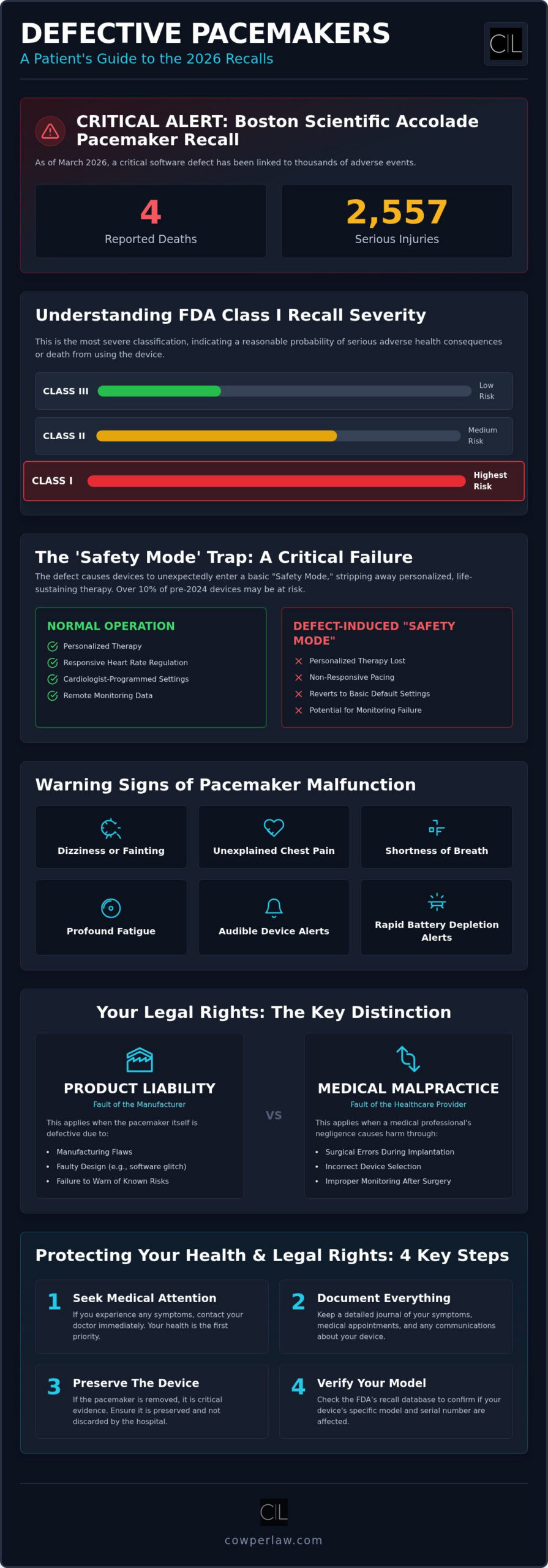
When you learn that your heart is tethered to a recalled device, the world feels suddenly unstable. Your first and most urgent priority is medical stabilization; you must work with your cardiology team to ensure your immediate safety. However, once you are out of danger, you must pivot to protecting your legal future with the same intensity. A successful defective pacemaker lawsuit is built on a foundation of meticulously preserved facts, clinical records, and physical evidence. We are here to guide you through this process, ensuring that no detail is overlooked in your pursuit of stability, security, and justice.
Information is your most powerful tool. You have a legal right to your full medical file, including the specific device logs and remote monitoring data that track your pacemaker's performance. It's essential to ensure your surgeon's notes explicitly reflect the device's failure mode—whether it entered Safety Mode prematurely or suffered a battery cathode defect. Beyond clinical data, you must track the "human cost" of this ordeal. Keep a detailed journal of your symptoms, your anxiety levels, and every out-of-pocket expense, from hospital co-pays to the wages you lost while recovering from an unplanned revision surgery.
If you undergo surgery to replace a failing unit, that explanted device becomes the "smoking gun" of your case. Medical device manufacturers often send representatives to the operating room to collect failed devices for "internal analysis." You must refuse this. Once the manufacturer has the device, you lose control over the primary piece of evidence needed for your defective pacemaker lawsuit. We follow strict legal protocols to ensure the device is preserved in a "chain of custody" and sent to independent labs for forensic analysis. These experts can uncover the manufacturing shortcuts or design flaws that the corporation might try to hide. If you're ready to secure your future, contact our team of trial-ready advocates to begin your journey toward justice.
Time is a critical factor in these cases. The statute of limitations for filing a claim varies by state, typically ranging from one to six years. However, the "discovery rule" often means the clock doesn't start until you knew, or should have known, that your injury was caused by the device. Because these timelines are complex and strictly enforced, delaying your legal consultation can result in losing your right to compensation forever. We provide the intellect, strategy, and heart necessary to navigate these deadlines, ensuring your voice is heard before it's too late.
We are a national trial firm dedicated to the pursuit of justice for individuals whose lives have been disrupted by corporate negligence. When you face a multi-billion dollar manufacturer, you aren't just fighting for a settlement; you are fighting for your dignity, your security, and your peace of mind. Successfully managing a defective pacemaker lawsuit requires more than just legal knowledge. It demands a sophisticated blend of intellect, strategy, and heart. We provide a tailored, high-end service that treats every client as a partner in a shared mission. Because we operate on a national scale, we have the resources and the reach to hold global entities accountable across the United States.
Our trial-ready reputation is our greatest asset. We don't just settle. We prepare every case as if it's going to a jury. This relentless focus on litigation sends a clear message to medical device giants that we refuse to yield. We are your Medical Device Injury Lawyer: Relentless Advocacy for the Harmed. This David vs. Goliath battle is one we've fought many times. We understand the durability, persistence, and loyalty required to see it through to the end. Our goal is to ensure that the individual's voice is never drowned out by the noise of corporate legal departments.
Your journey toward recovery starts with a steady, reassuring conversation. During your initial consultation, we take the time to understand the human element of your story. We handle the complex heavy lifting of evidence gathering, expert forensic testimony, and corporate litigation so you can focus entirely on your physical healing. We'll explain How to Join a Medical Device Class Action Lawsuit: A Comprehensive Guide and help you determine the best path forward for your specific situation. Our contingency-based fee structure ensures that justice is accessible to everyone. We don't get paid unless we win, meaning our interests are perfectly aligned with your success. We are your constant companion, providing a calm, focused, and formidable presence from the first day until the final resolution of your defective pacemaker lawsuit.
The journey from a medical crisis to legal resolution is about restoring the stability that corporate negligence compromised. Understanding the distinction between medical malpractice and product liability is the first step toward clarity. Preserving your explanted device and clinical logs ensures your case is built on a foundation of undeniable fact. Navigating a defective pacemaker lawsuit requires a partner who combines intellectual strategy with a deep commitment to your personal well-being. You aren't just another case number; you're an individual who deserves a fierce, dedicated defender against global manufacturers. Just as patients harmed by defective diabetes technology have turned to an insulin pump injury lawsuit to seek accountability from negligent corporations, pacemaker patients have the same right to pursue justice and financial recovery.
We are a national trial firm with the expertise to handle high-stakes medical device litigation. Our team provides the trial-tested medical device expertise needed to secure justice, backed by a national reach that ensures personalized care regardless of where you live. Because we operate on a contingency basis, there's no fee unless we win. We're here to carry the legal burden so you can focus entirely on your physical and emotional recovery.
Speak with a Compassionate Warrior at Cowper Law Today to start your journey toward justice. You have the right to hold these corporations accountable, and we have the strength to ensure your story is heard. Your peace of mind is within reach.
Yes, the FDA issued a Class I recall for the Boston Scientific Accolade family of pacemakers and CRT-Ps in May 2026. This recall, which includes models like Proponent and Essentio, addresses a software issue that causes premature battery depletion. As of March 2026, the manufacturer reported 2,557 serious injuries and four deaths associated with this defect. It's the most serious type of recall, indicating a high risk of injury or death.
You can identify if your device is part of a defective pacemaker lawsuit by matching your model and serial number against the FDA's recall list. Your medical ID card, provided during implantation, contains these specific details. If your device has entered "Safety Mode" or required an unplanned revision surgery, you should consult a legal advocate. We provide the expertise needed to verify your eligibility and protect your rights during this stressful time.
You may be eligible to file a claim even if your device hasn't completely failed. If a recall requires you to undergo additional monitoring or creates a significant risk of future surgery, you've already suffered a loss of security. Corporate negligence isn't excused just because a catastrophe hasn't occurred yet. We focus on the human impact of living with a defective device, including the psychological burden and the need for medical intervention.
Settlement amounts vary significantly based on the severity of the injury and the impact on your life. While general industry data suggests ranges from $30,000 for minor complications to over $1,000,000 for cases involving permanent disability or multiple revisions, every journey is unique. Factors like lost wages, medical expenses, and emotional distress are all carefully calculated. We fight to ensure the final result reflects the true depth of your suffering and provides long-term stability.
No, you don't have to pay any upfront costs to secure our representation. We operate on a contingency fee basis, which means our firm only receives payment if we successfully recover compensation for you. This structure ensures that high-quality legal advocacy is accessible to everyone, regardless of their financial situation. We take on the financial risk of the litigation so you can focus entirely on your physical and emotional recovery without added financial strain.
When a device enters Safety Mode, it abandons the personalized settings your cardiologist programmed and reverts to basic, default pacing. This is often a response to a critical internal error or battery depletion. While the device is still technically active, it no longer provides the sophisticated heart rate regulation you need. This transition is often irreversible and typically requires surgical intervention to replace the failing unit and restore your health and peace of mind.
The time limit to file a claim, known as the statute of limitations, typically ranges from one to six years depending on your state. However, the "discovery rule" may extend this deadline. This rule means the clock often begins when you first discovered, or should have discovered, that the device was defective. Because these timelines are strict and complex, it's vital to speak with a legal expert as soon as you suspect a problem with your device.
Most medical device cases are resolved through settlements before reaching a courtroom, but we prepare every case as if it's going to trial. If your case does proceed to court, we'll be by your side every step of the way. Our trial-ready reputation often encourages manufacturers to offer fair settlements to avoid a public battle. We handle the heavy lifting of the legal process to protect you from unnecessary stress while pursuing the justice you deserve.