
When a continuous glucose monitor goes silent, the result isn't just a technical glitch; it's a sudden, life-threatening emergency. If you or a loved one suffered severe hypoglycemia or diabetic ketoacidosis after relying on inaccurate readings, you are likely wondering whether you qualify for a Dexcom G7 lawsuit. You trusted this technology to safeguard your daily health, yet you were left facing unexpected hospital bills, physical trauma, and the agonizing uncertainty of whether the failure was somehow your fault. It was not.
Medical device corporations possess vast resources, but patients deserve fierce accountability when defective hardware or flawed software causes catastrophic harm. In this 2026 legal guide, you'll discover the latest Dexcom G7 litigation updates, the critical defect allegations underlying recent Class I recalls, and why proving algorithmic failure demands the immediate forensic preservation of your digital sensor logs. We outline the medical criteria required to pursue a product liability claim, equipping you with the clarity and support needed to hold negligent manufacturers legally accountable.
The dexcom g7 lawsuit represents a crucial fight for accountability across the diabetes community. For individuals living with Type 1 or insulin-dependent Type 2 diabetes, continuous glucose monitors (CGMs) are not optional convenience gadgets. They are life-sustaining medical technologies. When patients attach a sensor to their arm, they place their absolute trust in its internal algorithms to provide dependable, accurate interstitial glucose readings. Today, that trust has fractured. Mounting claims assert that critical design flaws and hardware defects systematically compromised the system, leaving patients exposed to catastrophic health crises without warning.
Legal actions moving through the justice system seek financial recovery for avoidable intensive care admissions, emergency treatments, debilitating physical trauma, and profound emotional distress. Rather than an isolated user mistake, plaintiffs argue these outcomes stem from corporate negligence, unvetted technical revisions, and unfulfilled performance promises.
Continuous monitoring transformed modern metabolic management by replacing periodic fingersticks with continuous, automated data. Patients rely on real-time numbers to calibrate rapid-acting insulin doses, evaluate dietary intake, and track metabolic shifts. Crucially, as detailed in this Dexcom G7 overview, the device integrates direct-to-app telemetry engineered to sound alarms before glucose levels breach safe thresholds. A single corrupted reading showing false stability can prompt an individual to administer an excessive insulin dose, inducing a fatal hypoglycemic crash within hours.
Litigation against the manufacturer focuses on the human reality of preventable medical disasters. Individuals filing a dexcom g7 lawsuit assert that the product suffered from unreliable sensor calibrations, silencing vital alerts when intervention was required most. Key allegations raised across these actions include:
We are trial lawyers dedicated to confronting powerful corporate entities when their products harm innocent people. Patients shouldered the terrifying consequences of these device failures, and holding manufacturers accountable is the necessary path toward genuine justice.
A continuous monitor should act as a reliable guardian, not a silent hazard. When sensory hardware or internal code fails, the physiological consequences are immediate and severe. Sensor dislodgements, erratic Bluetooth disconnects, and muted alarms leave individuals defenseless, especially during sleep. For patients pursuing a dexcom g7 lawsuit, these failures weren't minor technical glitches; they were terrifying breakdowns that resulted in emergency room admissions, prolonged hospitalizations, and life-altering trauma.
The human brain requires an uninterrupted glucose supply to maintain basic neurological function. When a malfunctioning sensor fails to register plummeting blood sugar, neuroglycopenia rapidly takes hold. Patients experience debilitating disorientation, violent convulsions, and sudden syncope. Without audible nocturnal alarms, family members often find their loved ones unresponsive, necessitating rapid glucagon administration, paramedic resuscitation, and intensive stabilization.
Distorted metrics disrupt delicate metabolic balance from both directions. Erroneously elevated readings prompt patients to administer excessive insulin, while false low alerts provoke unnecessary carbohydrate consumption. This destabilizing cycle accelerates ketone accumulation, driving patients into diabetic ketoacidosis (DKA). As toxic acids saturate the bloodstream, systemic acidosis strains vital organs, requiring days of intravenous rehydration, electrolyte stabilization, and continuous critical care.
Federal scrutiny highlights significant manufacturing and software vulnerabilities across recent production cycles. Under the official FDA definition of a recall, Class I designation is reserved exclusively for defective devices carrying a reasonable probability of catastrophic injury or death. In June 2026, the FDA designated the recall of over 600,000 G7 receivers as Class I after compromised speaker foam silenced critical low alerts, an issue linked to at least 56 reported injuries. This action followed a late 2025 Class I recall targeting the mobile application and a formal FDA warning letter citing unapproved sensor design changes.
Surviving a sudden medical crisis leaves lasting physical and emotional scars. If an inaccurate device led to your hospitalization, our firm's focused medical device injury litigation advocates stand ready to shoulder the legal burden, helping you uncover the facts and demand full accountability.
Holding a massive medical technology company accountable requires a sophisticated legal strategy. Under product liability law, manufacturers bear strict responsibility for releasing technologies that are unreasonably dangerous or inadequately vetted. When an insulin-dependent individual files a dexcom g7 lawsuit, the litigation moves beyond general negligence. The case targets specific corporate failures across engineering, manufacturing, and marketing pipelines. Proving liability demands demonstrating that an inherent defect directly caused catastrophic medical harm.
Product liability claims involving continuous glucose monitors generally divide into two distinct legal theories:
Our trial attorneys analyze internal quality audits, engineering change orders, and raw testing telemetry to reveal where corporate oversight unraveled.
Device manufacturers have an uncompromising duty to warn healthcare providers and consumers about known device limitations. In the Dexcom G7 litigation, plaintiffs argue that the company minimized documented alert failures, connectivity drops, and calibration drift in its promotional materials. Had endocrinologists received transparent warnings regarding these algorithmic discrepancies, they could have counseled patients to perform confirmatory fingerstick tests before making critical insulin dosing adjustments.
Litigation provides a vital mechanism to expose internal corporate decision-making. Through formal court discovery, legal teams uncover executive communications that show whether profit targets took precedence over rigorous pre-market validation. Holding corporate leadership accountable through trial litigation forces meaningful industry reform, ensuring that future life-sustaining technologies adhere to uncompromising safety standards.
We are dedicated advocates who stand firmly beside individuals harmed by corporate negligence. Learn how our relentless advocacy supports patients facing life-altering injuries through focused medical device injury lawyer representation.
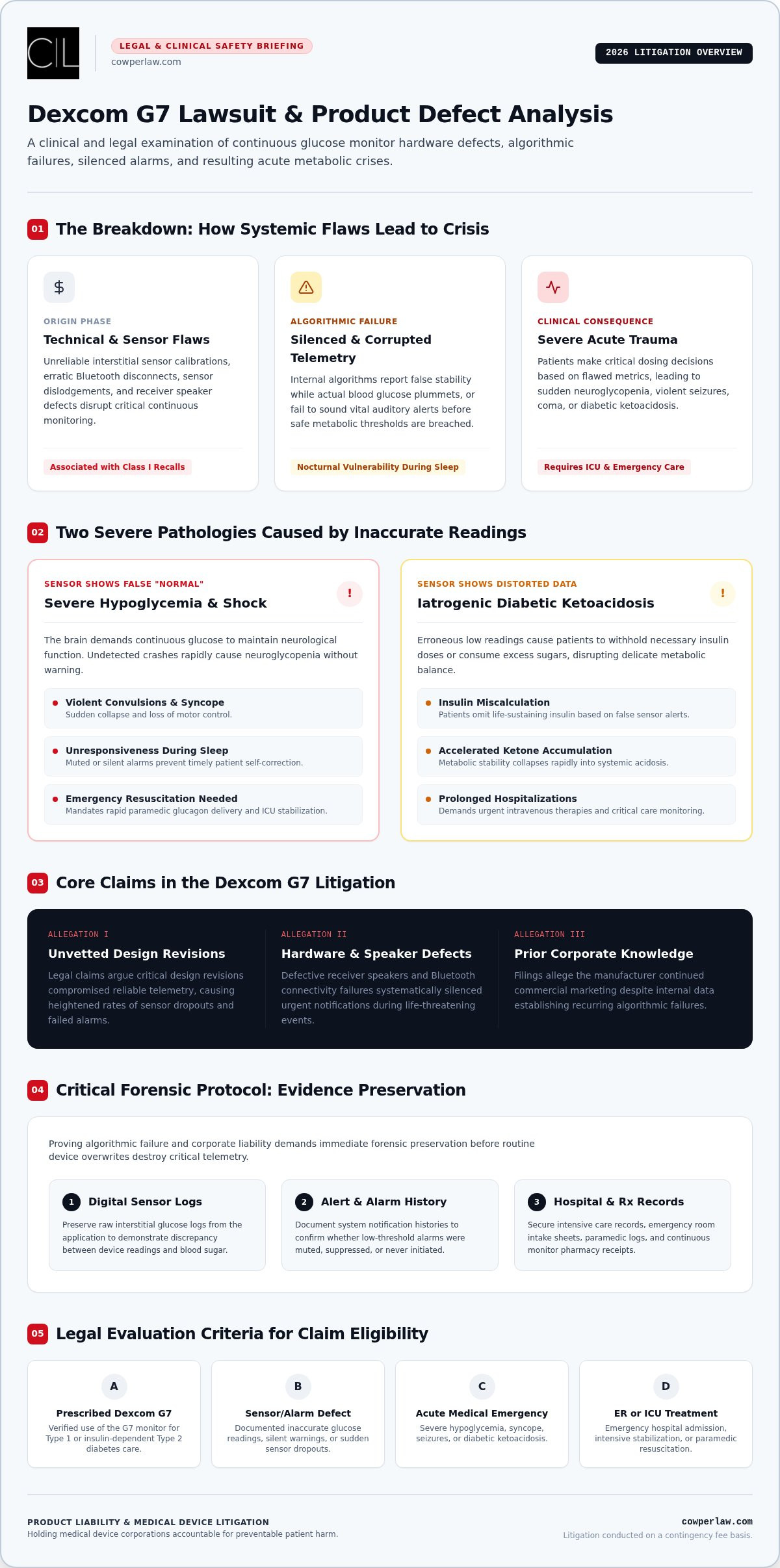
Proving a medical device claim requires indisputable, time-stamped proof connecting hardware malfunction to actual physical injury. Corporate defense teams routinely attempt to dismiss these incidents as simple patient error or improper self-management. To build an unyielding dexcom g7 lawsuit, our legal team focuses on securing objective data trails before critical evidence disappears. Establishing liability demands pairing verifiable medical intervention records directly with the sensor's internal telemetry.
To qualify for a legal claim, claimants must meet specific criteria establishing both device usage and serious harm:
If you meet these baseline requirements, review the critical steps on how to join a medical device class action lawsuit to protect your right to recovery.
Unlike traditional personal injury claims, continuous monitoring litigation hinges entirely on digital forensics. Cloud data overwrites over time, making immediate preservation vital. Export raw CSV data logs directly from the Dexcom Clarity portal immediately. Capture detailed screenshots of smartphone alert logs, Bluetooth connectivity histories, and any contrasting capillary fingerstick meter readings taken during the event. Crucially, do not discard the physical equipment; place the failed sensor, receiver, applicator, and original packaging containing the product lot number into a clean, secure container.
Corroborating clinical proof establishes the full scope of your damages. Secure complete ambulance transit reports, paramedic logs, diagnostic blood panels, and emergency department intake notes. These records document your actual physiological state, directly refuting any misleading readings the sensor displayed. In addition, maintain rigorous records of compounding ICU expenses, lost wages, and specialized neurological follow-up care. Surviving families confronting an unimaginable loss can consult a dedicated wrongful death medical device lawyer to demand accountability for fatal failures.
Do not navigate the complexities of corporate litigation alone. Connect with our trial team today to safeguard your medical evidence and initiate a comprehensive case review.
Taking on a multi-billion-dollar medical device manufacturer requires substantial legal muscle, financial resolve, and unwavering dedication. Corporate defense teams deploy deep resources to wear down claimants and minimize corporate liability. When pursuing a dexcom g7 lawsuit, your counsel must possess the courtroom experience to go the distance. We level the playing field by matching corporate resources blow for blow, partnering with leading biomedical engineers, clinical software analysts, and board-certified endocrinologists to prove the exact mechanics of device failure.
Choosing the right procedural framework is critical to maximizing your recovery. In consolidated class actions or multidistrict litigation, pretrial discovery is streamlined, allowing courts to coordinate evidence regarding company-wide design flaws. However, an individual product liability lawsuit ensures your distinct personal trauma; your emergency hospitalizations, chronic health complications, and lost income; remains the focal point of the claim. A seasoned legal team evaluates your circumstances to determine the most advantageous filing strategy for your future.
Suffering a sudden medical crisis brings unexpected emotional strain and mounting financial pressure. To protect our clients, we handle these high-stakes cases strictly on a contingency fee basis. You pay nothing upfront for our thorough investigation, expert witness retention, or courtroom filings. We shoulder the financial risk entirely, collecting legal fees only if we secure a successful settlement or favorable verdict. This approach ensures injured patients gain access to formidable trial advocacy without out-of-pocket exposure.
Every state establishes a rigid statute of limitations that strictly restricts the time available to pursue legal recourse. Waiting too long risks permanently barring your ability to recover damages. Early intervention also ensures your legal advocates can issue formal preservation demands, preventing corporate servers or automated software updates from overwriting crucial diagnostic telemetry. If an inaccurate monitor caused serious harm to you or someone you love, contact Cowper Law today for a confidential, compassionate case review.
When life-sustaining medical technology fails the very people it was engineered to protect, the physical, financial, and emotional fallout can feel overwhelming. You shouldn't have to carry the heavy burden of emergency hospitalizations, terrifying metabolic crashes, or lost wages caused by defective technology. Pursuing a dexcom g7 lawsuit isn't merely about seeking financial recovery; it's about demanding answers, exposing corporate negligence, and reclaiming control over your future.
We are dedicated trial lawyers committed to leveling the playing field against multi-billion-dollar medical device manufacturers. Our firm operates strictly on a contingency fee basis, ensuring you face zero upfront costs or financial risk while we investigate the full scope of your injuries. From forensically safeguarding your digital sensor telemetry to standing resolute against corporate defense teams, we walk beside you with relentless advocacy and personalized care. Demand justice for medical device harm: connect with Cowper Law to evaluate your claim and begin your path toward lasting peace of mind.
Yes. Federal lawsuits involving Dexcom continuous glucose monitors have been consolidated into federal class action proceedings, alongside individual product liability claims. Additionally, the FDA issued Class I recalls in 2025 and 2026 affecting Dexcom G7 app software and over 600,000 receivers due to critical failure alerts being silenced. These regulatory actions emphasize the severity of potential health risks when monitoring systems fail.
Yes, inaccurate glucose data can trigger rapid, catastrophic metabolic events. When a sensor fails to register plunging glucose levels, patients can suffer severe neuroglycopenia, violent seizures, diabetic comas, or sudden death. Conversely, false readings can lead to inappropriate insulin dosing or misguided carbohydrate intake, inducing life-threatening diabetic ketoacidosis. These acute emergencies frequently require intensive care hospitalization and prolonged medical recovery.
You may qualify for the dexcom g7 lawsuit if you actively used a Dexcom G7 sensor that provided false readings or failed to alert you, directly causing a severe medical crisis. Qualifying complications typically involve emergency room visits, paramedic resuscitation, intensive care unit admissions, or physical trauma caused by sudden fainting or seizures. An experienced trial attorney can review your medical records and digital data to assess liability.
You can still pursue a claim even if you discarded the physical hardware. While preserving the sensor is helpful, our legal team can establish device malfunction through digital forensics. We obtain cloud-stored telemetry from your Dexcom Clarity account, mobile app diagnostic logs, pharmacy dispensing histories, and hospital lab panels. This electronic footprint often provides conclusive evidence showing a stark discrepancy between sensor readings and your actual clinical condition.
Hiring our trial lawyers involves zero upfront costs or out-of-pocket expenses. We represent injured patients strictly on a contingency fee basis. This means our firm covers all investigative expenses, expert witness fees, and filing costs throughout the litigation process. We only receive legal fees if we successfully resolve your claim through a negotiated settlement or courtroom trial verdict, ensuring you face no financial risk.
Injured claimants can seek comprehensive compensation for both economic and personal losses resulting from defective medical devices. Recoverable damages encompass emergency room bills, intensive care stays, follow-up neurological treatments, and past or future lost wages. Additionally, lawsuits demand accountability for physical pain, mental anguish, permanent disability, and the severe emotional distress experienced by patients and their families in the wake of avoidable medical emergencies.
Every state enforces strict statutes of limitations governing medical device product liability actions. Depending on your jurisdiction, you generally have between one and several years from the date of injury or discovery to file a claim. Missing this legal deadline permanently bars your right to recover damages. Contacting our team promptly ensures essential digital logs are preserved before servers overwrite the technical evidence.