
A device recall can raise urgent questions, but it isn’t the only factor in a Medical device injury compensation claim. The central issues are often whether a device caused harm and whether the evidence connects that harm to a responsible party. If your health or finances have suffered, it’s understandable to wonder whether your complications could support a claim, particularly while treatment and recovery are ongoing.
A recall alone doesn’t determine the outcome, and the absence of a recall doesn’t automatically rule out a claim. What matters is a careful review of your injuries, the device, and the circumstances surrounding its use. Eligibility depends on the facts of each case.
This article explains the basic elements that may support a claim, the physical and financial losses that could be evaluated, and how preserving medical records and device information can help. It also covers deadlines and practical next steps. Cowper Law provides personalized advocacy in complex medical device injury litigation, helping people assess their options and move forward with greater clarity.
A Medical device injury compensation claim is a legal demand seeking accountability for harm allegedly caused by a medical device defect or failure. A claim may allege that a device’s design was unsafe, a manufacturing error affected a particular device, or its warnings failed to communicate relevant risks. These are possible legal theories, not proof that a device was defective. The terms and standards that apply can vary, so an attorney should assess how they fit the circumstances.
These claims may fall within Product liability law, the broader legal framework for harm allegedly caused by defective products. An injury or complication after device use does not, by itself, establish liability or guarantee compensation. The evidence must support a connection between the device-related issue and the harm, along with a legally recognized basis for holding a responsible party accountable.
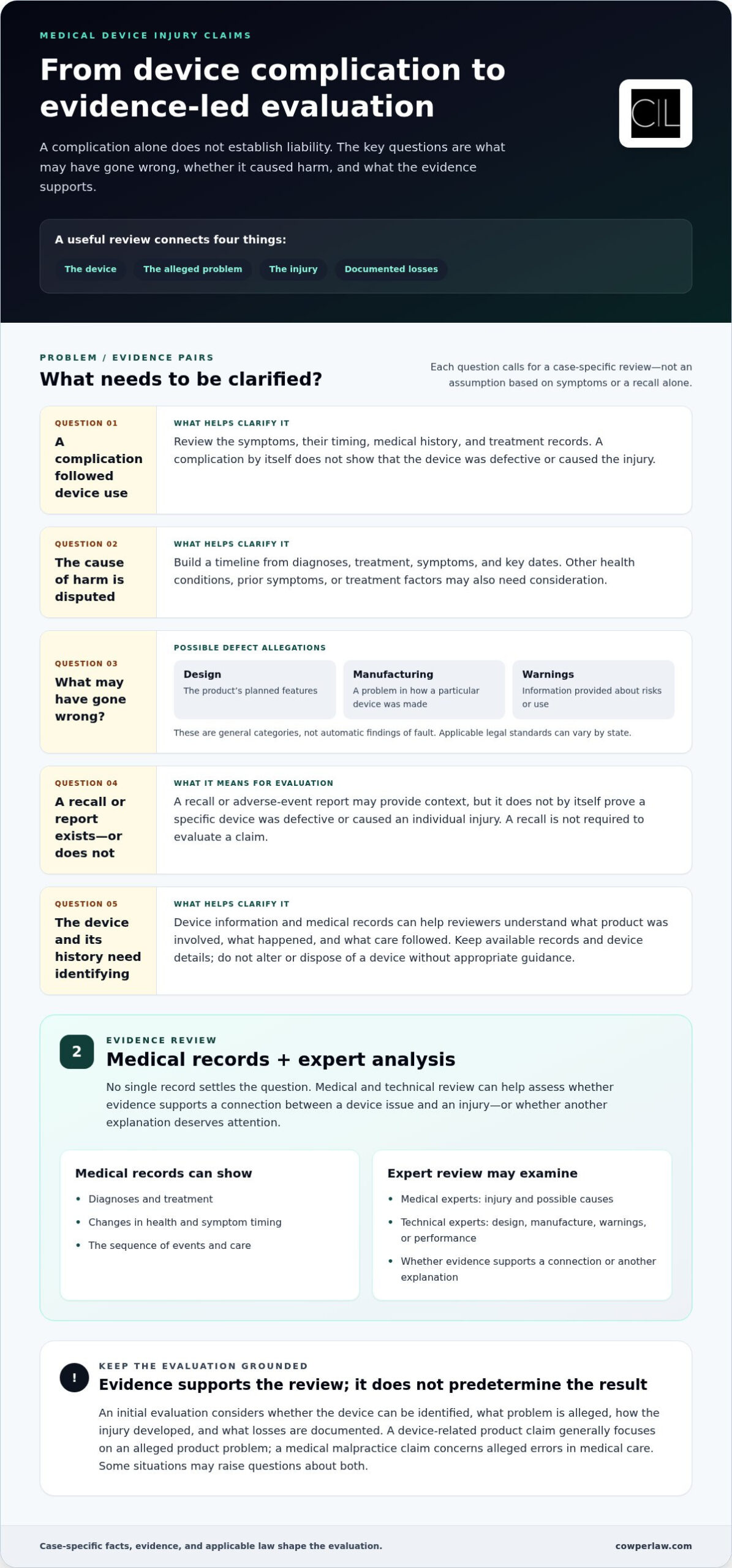
An initial evaluation considers whether the device can be identified, what problem is alleged, how the injury developed, and what losses are documented. Medical history and treatment records can help establish the timeline. Technical analysis may examine the device’s design, manufacture, warnings, or performance. Causation can be disputed, particularly when other health conditions or possible explanations exist, so medical and technical review may both be important.
A claim evaluation asks what device was used, what may have failed, whether that failure caused the injury, and what harm the evidence can support.
Claims may involve devices such as spinal cord stimulators, hernia mesh, or breast implants. Alleged harm can vary, including physical complications that require further treatment or affect a person’s ability to function. The symptoms and their timing matter, but a complication alone doesn’t show that a device was defective. A case-specific review helps clarify what happened.
A device-related product claim generally focuses on an alleged problem with the product itself, such as its design, manufacture, or warnings. A medical malpractice claim, by contrast, concerns alleged errors in medical care. The issues can differ, though some situations may raise questions about both a device and the care surrounding its use. For more on the broader legal landscape, see this guide to medical device injury lawyer and patient rights.
A careful evaluation looks beyond the fact that a complication followed device use. It asks whether the device can be identified, what may have gone wrong, and whether reliable evidence connects that issue to the injury and its effects. Medical history, treatment records, and a clear timeline can show how symptoms developed and what care followed. Other conditions, prior symptoms, or treatment factors may also need consideration because they can affect how causation is understood.
No single record settles the question. A recall or adverse-event report may provide context, but it doesn’t by itself prove that a specific device was defective or caused an individual’s injury. The FDA device regulation overview provides background on the U.S. regulatory framework. Applying that information to an individual claim requires a separate review of the device and evidence.
Depending on the device and facts, a claim may raise questions about its design, how it was manufactured, or whether its warnings adequately communicated relevant risks. A design allegation concerns the product’s planned features. A manufacturing allegation concerns a problem in how a particular device was made. A warning allegation concerns information provided about risks or use. These are general categories, not automatic findings of fault. Legal standards can vary by state, so an attorney should assess which theories may apply.
Medical records can establish diagnoses, treatment, changes in health, and the sequence of events. Device information can help identify the product involved. Together, those details give reviewers a clearer basis to examine what happened rather than relying on memory alone. Keep copies of available records and note key dates and symptoms. Don’t change or dispose of a device without appropriate guidance.
Medical experts may interpret the injury and possible causes, while technical experts may examine device design, manufacturing, warnings, or performance. Their analysis can help clarify whether the evidence supports a connection or whether another explanation deserves attention. In a Medical device injury compensation claim, this case-specific review matters. For broader information about legal support and patient rights, read medical device injury lawyer and patient rights. Cowper Law provides personalized advocacy in complex device injury litigation, helping people evaluate the facts and evidence behind possible claims. Learn more about Cowper Law’s medical device injury representation.
A claim may seek compensation for losses connected to an injury, but no particular category or outcome is guaranteed. What can be considered depends on the facts, available evidence, and applicable law. A recall isn’t necessarily required to evaluate a claim, and a recall alone doesn’t establish the extent of an individual’s losses or resolve responsibility.
Depending on the case, potential damages may include medical expenses, lost income, reduced earning capacity, and harms related to pain and limitations. Future care or lasting effects may also be relevant when supported by medical evidence and recognized under applicable law. A careful review considers how the injury has affected a person’s health, work, and daily life.
Past medical costs may include documented expenses for treatment related to the injury. Future care may also be evaluated if medical evidence supports the need for continued treatment or assistance. Neither category is automatic. The connection between the claimed expense and the injury matters.
Lost wages may be assessed using employment and income records. Reduced earning capacity may involve evidence about how lasting limitations affect a person’s ability to work. Useful documentation can include bills, receipts, pay records, tax documents, and information about missed work or changes in job duties. Expert analysis may help explain projected care needs or the effect of an injury on future work, where relevant.
Where applicable law permits, an evaluation may account for physical pain, reduced mobility or function, and emotional effects. The duration and severity of symptoms, treatment received, continuing limitations, and impact on everyday activities can help describe the harm. A person’s experience matters, and consistent medical documentation can help show how it has changed over time.
Compensation depends on documented harm and applicable law. A case’s value can’t be reliably determined from a general estimate or another person’s outcome. For a device-specific discussion of issues that may shape recovery, see factors affecting BioZorb lawsuit compensation. A tailored assessment of a Medical device injury compensation claim considers the individual’s losses and supporting evidence, not a promised result.
Take practical steps, but put your health first. If you’re dealing with symptoms or complications, follow your healthcare team’s advice and seek appropriate care. You don’t need to have every record in hand before asking a lawyer to review your situation.
Don’t alter, discard, or return the device without appropriate medical and legal guidance. How it is handled may matter to a later review, and your care should remain the priority.
Helpful details may include the device name or model, procedure information, when symptoms began, treatment dates, and communications about the device or your care. Medical records, bills, and information about missed work or changed duties may also help explain the impact. These materials can support a review, but gathering a complete file isn’t a condition of seeking advice. For more context, see the medical device injury lawyer and patient rights guide.
Filing deadlines and procedural requirements can vary by state and by the circumstances of a claim. Don’t rely on a general deadline found online to determine how much time you have. Prompt legal review can help clarify which rules may apply to your situation.
A recall or regulatory notice may be relevant, but neither automatically establishes that a particular device caused your injury or decides the outcome of an individual case. The evidence and applicable law still matter. A Medical device injury compensation claim deserves a case-specific assessment, including review of the device history, medical facts, and potential losses. To discuss your circumstances with Cowper Law, discuss a medical device injury claim.
A medical device case can involve dense records, technical questions, and disputed explanations for an injury. Legal representation can help bring those pieces into focus. Counsel may review your medical history, the device and its known history, possible legal theories, and the losses you’ve experienced. This case-specific review can help identify useful evidence and unanswered questions without promising a particular result.
Depending on the circumstances, representation may also involve organizing records, coordinating medical or technical expert analysis, and handling communications related to the claim. When a claim involves a large manufacturer or another powerful entity, an advocate can assess the evidence and explain possible next steps.
An attorney may ask what device was used, what treatment you received, when the injury or symptoms developed, and what happened around the suspected device failure. Share what you know. Missing details or records don’t necessarily prevent an initial conversation. Counsel can identify information that may clarify the device history, medical issues, or potential legal theories, then discuss possible next steps.
An initial discussion is an opportunity to understand the circumstances, not a guarantee that the firm will represent you or that compensation will be recovered. A Medical device injury compensation claim must be assessed on its own facts, evidence, and applicable legal standards.
Cowper Law’s representation is contingency-based, with legal fees collected only upon successful recovery. This describes the firm’s legal fees. It shouldn’t be read as a promise that case expenses, expert costs, or other charges are waived. Before proceeding, review the representation agreement carefully and ask for a clear explanation of its terms, including how fees and any expenses are handled.
Choosing whether to pursue a claim is a personal decision. A careful legal review can help you understand the evidence, potential paths forward, and questions to consider before acting. If you’re ready to discuss your circumstances, you can discuss your claim with Cowper Law. There’s no guaranteed outcome, but an informed conversation can help bring greater clarity to your next steps.
A device complication doesn’t automatically establish liability. A Medical device injury compensation claim depends on evidence connecting an alleged device issue to the injury, along with documentation of the losses involved. Medical records, device information, and a clear timeline can help an experienced legal team assess the facts and explain possible next steps.
Cowper Law represents people harmed by medical devices, including spinal cord stimulators, hernia mesh, and breast implants. The firm provides personalized advocacy in complex injury litigation, with legal fees collected only upon successful recovery. Review the terms of any representation carefully, including how expenses are handled.
You don’t have to resolve every question before seeking legal guidance. A thoughtful conversation can help you better understand your circumstances and options, without guaranteeing eligibility or an outcome. Discuss your medical device injury claim with Cowper Law and take the next step with greater clarity and support.
No. A recall isn’t automatically required to ask whether an injury may support a claim. A recall or regulatory notice can provide relevant context, but it doesn’t by itself prove that a specific device caused an individual’s harm. An evaluation may consider the device history, medical evidence, alleged defect, and applicable law. A lawyer can review those factors together rather than treating recall status as the deciding issue.
The absence of a recall doesn’t, by itself, determine whether you may have a claim. A review can consider the device, the alleged defect, your injury, medical records, and other available evidence. The relevant legal standards depend on the facts and applicable state law. Preserve information about the device and your treatment, and seek case-specific legal guidance rather than assuming that no recall means no legal options.
There’s no reliable compensation amount that applies to every medical device injury claim. Potential damages may depend on documented medical expenses, lost income, future care needs, lasting limitations, and other harms recognized by applicable law. Causation, available evidence, and the individual circumstances also matter. General figures shouldn’t be treated as a prediction of your case. A case-specific legal review is needed to assess potential losses and supporting evidence.
Depending on the evidence and applicable law, potential losses may include medical expenses, lost wages, reduced earning capacity, future care, pain, or lasting effects on daily function. No category is automatically included, and an injury alone doesn’t establish entitlement to damages. Medical records, bills, employment information, and professional evaluations may help explain how the alleged device-related harm affected your health, work, and everyday activities.
A manufacturer’s denial doesn’t resolve whether it may be responsible. A claim review can examine device information, treatment records, the medical timeline, and the circumstances surrounding the alleged failure. Medical or technical experts may help assess possible causes or a suspected defect. Because these cases can involve complex evidence and state-specific legal rules, an attorney can evaluate the available information and explain potential next steps without promising a result.
There isn’t one deadline that applies to every claim nationwide. Time limits may depend on the state, the type of claim, when the injury or its possible connection to a device became known, and other circumstances. Some deadlines can be strict, so don’t rely on a general online estimate to calculate your time. Seek prompt advice from an attorney familiar with the law that may apply to your situation.
Whether and how to preserve a device depends on the circumstances, including medical needs and safety. Don’t alter, discard, or return it without appropriate medical and legal guidance, and follow your healthcare team’s instructions. Keep available packaging, labels, or other information that identifies the device, if you can do so safely. If you’re unsure how to handle it, ask counsel about preservation as soon as practical.