
A defective insulin pump can cause DKA, diabetic coma, or even death if a defect interrupts or misdirects insulin delivery. Resulting blood sugar changes can lead to severe complications, including loss of consciousness, seizures, and brain injury. For patients and families affected by this harm, defective insulin pump legal help can clarify whether a product defect may support a claim.
It’s understandable to have questions about what went wrong, especially when a device you relied on failed without warning. This article explains how pump defects may cause harm, who could be legally responsible, and how a product liability claim differs from a medical malpractice claim.
You’ll also learn what evidence may matter and how to preserve it. Understanding the difference between a device failure and care-related negligence can bring clarity during a difficult, uncertain time.
Yes. A pump defect can interrupt insulin delivery or provide an incorrect dose, leading to severe blood sugar changes, diabetic ketoacidosis (DKA), coma, or death. A 2019 Medtronic MiniMed recall illustrates the seriousness: 322,005 MiniMed 600 Series pumps were recalled, with 2,175 injuries and one death reported.
You may have a claim if you used the pump according to its instructions and suffered harm linked to a defect. A recall notice does not automatically prevent a claim; the evidence must connect the device problem to your injury and resulting damages.
Defects can arise in different ways. A design defect involves a flaw in the pump’s underlying design. A manufacturing defect occurs when a particular device or component departs from its intended specifications. A failure-to-warn claim concerns inadequate instructions or warnings about known risks. For example, a pump speaker wiring defect could stop insulin delivery; Tandem issued an FDA medical device correction for this issue in August 2025 and reported 59 injuries.
After an injury, a manufacturer’s follow-up may be relevant. Investigators may compare device records, alarms, maintenance history, instructions, and the pump’s physical condition. Manufacturers may suggest user error, such as incorrect setup or missed steps. That explanation should be tested against the records and the device itself, rather than assumed to settle whether negligence or a product defect contributed.
Reports also help identify safety patterns. Between 2005 and 2009, the FDA received over 56,000 reports involving infusion pump malfunctions, injuries, and deaths; manufacturers issued 87 recalls during that period. Manufacturers generally must report device-related deaths or serious injuries to the FDA within 30 days of learning a device may have contributed. Hospitals and other user facilities must report device-related deaths within 10 working days. Preserve the pump, packaging, instructions, and any recall notice so relevant evidence remains available.
A personal injury claim may examine who made, supplied, or sold the pump and how the alleged defect caused harm. The evidence and applicable state law help determine each party’s potential liability.
Responsibility may extend to parties in the product’s distribution chain if a design, manufacturing, or marketing defect caused injury. That may include the manufacturer and other businesses involved in bringing the pump to the patient. A recall does not automatically eliminate potential liability for injuries involving products distributed before the recall.
Review the pump’s identifying details, purchase or supply records, packaging, and any repair or replacement history. These details can help trace the product’s path and distinguish a defect in the pump from a problem introduced later. A lawsuit may name more than one responsible party when the evidence supports their involvement.
Product liability claims may rely on strict liability, negligence, or breach of warranty. Strict liability focuses on whether a defective product caused harm. Negligence examines whether a party failed to use reasonable care in designing, making, or marketing the device. A warranty claim concerns promises or assurances associated with the product.
The legal theory shapes what evidence matters. For example, manufacturing records may help show whether a pump differed from its intended design, while product warnings and instructions may matter in a marketing-defect claim. A claimant must connect the alleged defect to the injury and resulting damages, such as medical costs, lost wages, or pain and suffering.
A focused legal consultation can bring the facts together: the pump and its components, treatment records, recall communications, and the injury timeline. It can also assess potential defendants, legal theories, and documented damages. Preserve the device and related records; they may help clarify how the alleged failure occurred.
Bring a clear account of what happened, including when the pump malfunctioned and what followed. A review of an insulin pump injury claim can help identify the questions that shape a potential legal action and the evidence needed to address them.
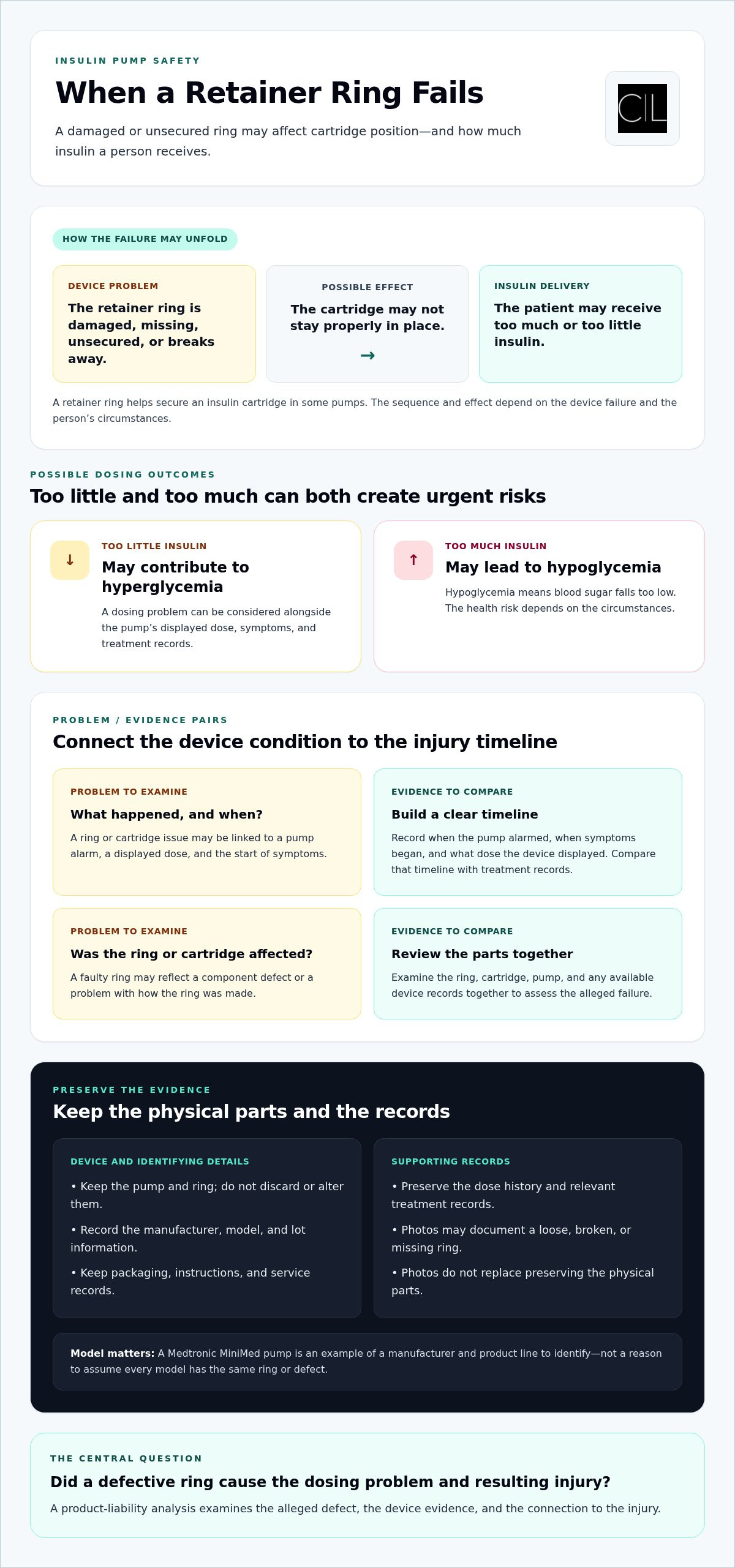
A retainer ring helps secure an insulin cartridge in some insulin pumps. If the ring is damaged, missing, not locked securely, or breaks away, the cartridge may not stay properly in place. The patient may then receive too much or too little insulin. For someone managing diabetes, either dosing error can create urgent health risks.
Too little insulin can contribute to hyperglycemia, while too much can lead to hypoglycemia, meaning blood sugar falls too low. The sequence depends on the device failure and the person’s circumstances. A useful first step is to record when the pump alarmed, when symptoms began, and what dose the device displayed. Compare that timeline with treatment records.
Faulty retainer rings may reflect a component defect or a problem with how the ring was made. A careful review examines the ring, cartridge, pump, and any available device records together. Don’t discard or alter the pump or ring. Keep them with the packaging, instructions, and service records so their condition can be examined.
Identify the pump’s manufacturer, model, and lot information. For example, record whether the device is a Medtronic MiniMed pump, without assuming every model has the same ring or defect. Photos of a loose, broken, or missing ring may document its condition, but they don’t replace preserving the physical parts. Attorneys can compare this evidence with medical records and the reported dose history.
A strict product-liability analysis asks whether a defective ring caused the dosing problem and resulting injury. The evidence may also help distinguish a component failure from incorrect installation or handling. Document medical care, out-of-pocket expenses, and other damages connected to the event. These steps can help organize the facts before a legal claim is assessed.
If a retainer-ring failure led to an incorrect dose or injury, request a review of your insulin pump injury claim and preserve the device evidence.
After a pump failure, address your health first by following your prescribed care plan and contacting your treating clinician about the device problem. Defective insulin pump legal help can also guide you in documenting what happened while details remain clear. Note the date, symptoms, device messages, and any treatment changes, then keep those records together.
A product liability claim examines whether a device defect caused harm. A medical malpractice claim focuses on care, such as a provider’s treatment decision or response to a reported problem. For example, an investigation might consider both whether a pump malfunctioned and whether a clinician’s later decision affected the outcome. The claims involve different questions and evidence.
To help establish a timeline, preserve device messages or logs, if available, alongside medical records showing treatment and blood sugar changes. Write down whom you contacted and what they advised. These details may help distinguish a device failure from a care-related issue without assuming either explanation applies.
Keep the pump, cartridge, packaging, and instructions in their current condition. Save recall notices, service documents, and communications with the manufacturer. A dated account can capture details that may be difficult to recall later, such as when an alarm sounded or how the pump displayed its delivery status.
Legal review considers the device, the sequence of events, applicable state law, and documented harm. Records of medical expenses, missed work, and changes to daily activities can help describe the injury’s impact. Each claim is assessed based on its own evidence, rather than simply by comparison with another person’s experience.
If you’re seeking defective insulin pump legal help, organize these materials and write down your questions for a lawyer. A clear account can make the first discussion more focused and help identify practical next steps.
The next step is to bring scattered records together into a clear account of what happened and how it affected your life. Keep your device and related documents together, note unanswered questions, and consider how the injury has changed your care, work, or daily routines. These details can help frame a focused legal discussion.
Seeking defective insulin pump legal help can bring structure to questions about responsibility, evidence, and potential damages. Cowper Law provides legal advocacy for insulin pump device cases, medical device injury litigation, and catastrophic injury cases. The firm also represents clients in spinal cord stimulator lawsuits, another area involving alleged medical device harm.
Every person deserves to have their circumstances heard with care and examined with resolve. Contact Cowper Law about your claim to discuss your situation and possible next steps. You don’t have to face the uncertainty alone; a thoughtful first conversation can help you move forward with greater clarity.
A lawyer can assess how the pump failure, medical treatment, and resulting harm may connect legally. They can help organize technical and medical records, identify potentially responsible parties, and evaluate possible product liability claims. For example, device service records may help clarify whether a pump was repaired before the incident. Legal guidance can also help identify unanswered questions before you decide how to proceed.
Yes, filing deadlines vary by state and claim type, so prompt review matters. In New York, product liability claims generally have a three-year deadline from the injury date under CPLR 214(5). New York wrongful death claims generally have a two-year deadline from the date of death under EPTL 5-4.1. Other states may use different deadlines, so identify where the injury occurred and act promptly.
The cost depends on the legal work involved and the terms of representation. Before authorizing work, ask for clear written terms covering attorney fees and any case expenses, including when they may be owed. Keep a copy for your records. This helps you understand the financial arrangement before deciding, without assuming every legal review or case follows the same payment structure.
Potentially responsible parties may include the pump manufacturer and other businesses involved in distributing the device, depending on their roles and the alleged defect. For example, a claim may examine whether a component was defective when made or whether product information adequately described a risk. Evidence about the device’s supply and service history can help identify which parties may be connected to the injury.
A malfunction alone does not establish a legal claim; the evidence must support a defect and connect it to an injury. Examples include a device that fails to deliver insulin as intended, delivers an incorrect dose, or has a component that prevents normal operation. Records showing the pump’s behavior, medical consequences, and treatment can help distinguish a harmful defect from an unrelated health event.
Preserve the pump and its parts, including the cartridge and any broken or detached component. Keep the packaging, instructions, purchase or service records, and manufacturer communications. Also save medical records, glucose readings, prescriptions, and a dated account of alarms, symptoms, and calls made after the incident. Together, these materials can help establish the sequence of events and document the effect on your health and daily life.