
A serious side effect doesn’t automatically justify a lawsuit. A drug side effect injury claim may be viable if a medication caused harm because of a design defect, manufacturing defect, or inadequate warning. The key is linking the injury to a problem with the drug, not simply experiencing a known risk.
It’s understandable to expect a medicine’s warnings to explain serious risks clearly. If a danger was inadequately described or the drug was defective, the circumstances may warrant legal review. This article explains when side effects may support a claim, how warnings and instructions can matter, and what compensation may cover, including medical expenses, lost income, and pain and suffering. It also explains how medication-related harm differs from an ordinary, disclosed side effect, helping you understand the issues that may shape a claim.
A serious reaction alone doesn’t establish liability. The central question is whether a drug defect or inadequate warning caused the injury.
A filing deadline is the state-law period for starting a lawsuit. There is no single nationwide deadline: the period varies by state and claim type, so identifying the governing state’s rule matters. In Washington, a personal injury claim generally must be filed within three years, according to the Washington State Legislature. Pennsylvania’s discovery rule delays the deadline until someone discovers, or reasonably should discover, that the drug caused harm. Symptoms that appear years later can complicate when that period begins.
Taking medication exactly as directed doesn’t automatically prevent an injury claim. A patient who follows the prescription but is harmed by a defective design, contaminated product, or inadequate warning may still have a product liability claim. For example, the label may not explain a serious risk clearly enough to support informed use. By contrast, someone who knew about a side effect and chose to take the drug typically cannot sue over that disclosed risk alone. Prescription records and medical notes can help establish how the medication was used and when symptoms began.
A drug injury claim generally requires evidence of injury, a drug defect or dangerous warning failure, and a causal link between them. Defective drug design means the medication itself was unreasonably dangerous; a manufacturing defect means a particular batch departed from its intended condition. Cross-contamination during production can taint medication, while contamination before it reaches a pharmacy can also create a product liability issue. In 2012, contaminated compounded medications caused a meningitis outbreak.
Medical devices can also be the subject of defective-product claims when they cause injury during normal use. This differs from medical malpractice, such as a surgeon’s failure to follow sterilization procedures. A lawyer can assess the evidence linking the product, the harm, and the responsible party. Under strict product liability, a manufacturer may be responsible for harm caused by a defect without proof of negligence.
A warning can be inadequate even when a medication label lists side effects. A pharmaceutical company may face a failure-to-warn claim if it knew, or should have known, about a serious risk but did not adequately inform patients or doctors. For example, a vague description may fail to explain the danger’s severity or likelihood. The central issue is whether a more complete warning could have helped prevent the injury.
Warnings appear on prescription labels, package inserts, advertising, and instructional materials. Each may matter if it minimizes a known danger or omits information needed for safe use. A lawsuit may allege that a manufacturer failed to update its warnings after learning about newly identified adverse effects. Evidence may include earlier and later label versions, medical records, and company information about the risk. These details can help establish what the company knew and when.
Receiving a warning can affect a claim, but it doesn’t automatically resolve every case. Someone who understood a clearly disclosed risk and chose to take the medication typically cannot sue for that known side effect alone. However, a warning may still be inadequate if it understated the danger or used language too vague to explain the potential harm. A defective drug claim may also involve misleading advertising that encouraged off-label use without sufficient information about risks.
Taking a prescription as directed doesn’t rule out a warning-based claim. The key questions include whether the medication was used as intended, whether the warning fairly described the danger, and whether the missing or unclear information contributed to the injury. A lawyer may assess those issues alongside potential negligence by other parties. A focused consultation can help clarify which records matter. For support assessing a medication-related warning claim, explore drug injury litigation.
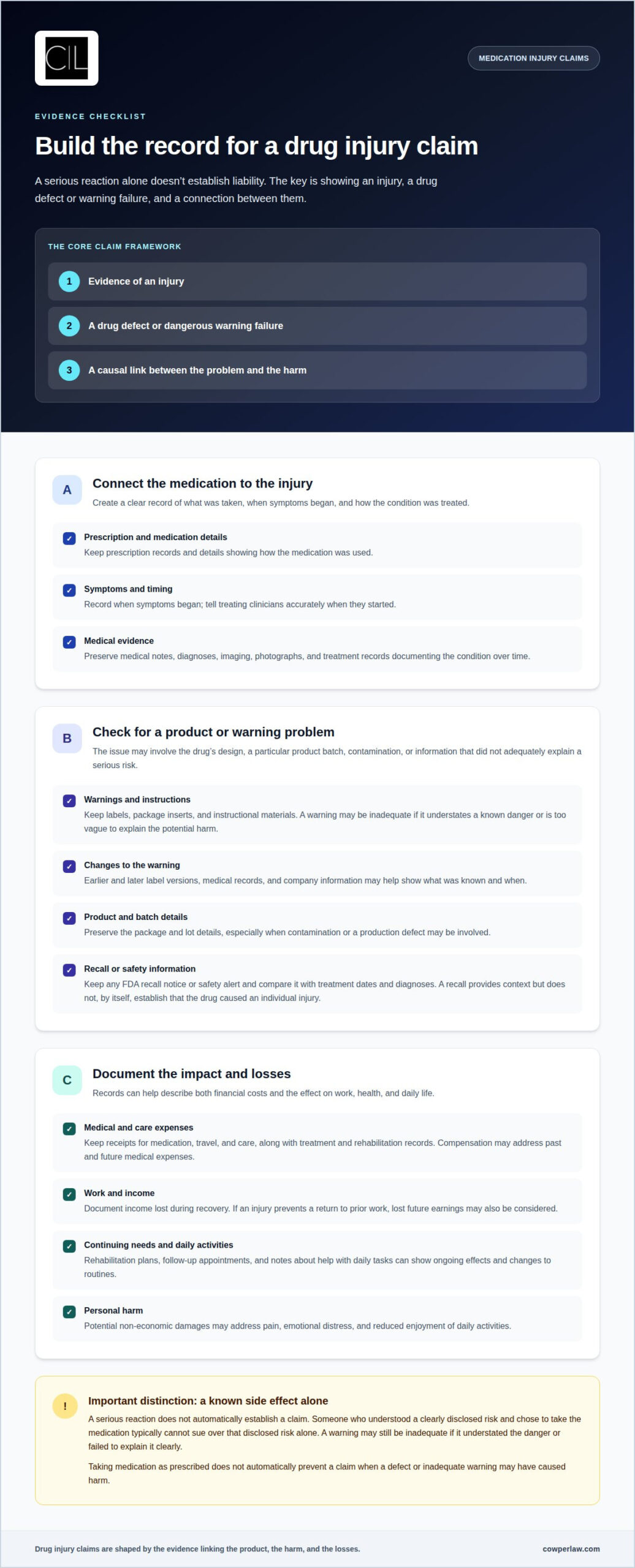
Compensation in a medication injury claim may address financial losses and personal harm. Economic damages can include past and future medical expenses, treatment, rehabilitation, and income lost during recovery. If a serious injury prevents someone from returning to their prior work, lost future earnings may also be considered. Non-economic damages can address pain, emotional distress, and reduced enjoyment of daily activities. The losses, their duration, and the supporting evidence shape what the claim seeks.
Keep a clear record of how the injury affects your health, work, and daily routines. Seek medical care promptly, describe symptoms accurately, and tell your treating clinician when they began. Medical notes, diagnoses, imaging, and photographs can document the condition over time. Keep prescription details, treatment records, and receipts for medication, travel, and care. These materials can help link the medication to the injury and document expenses already incurred.
A medication recall can provide relevant context, but it doesn’t establish by itself that the drug caused an individual’s injury. Preserve the package, lot details, prescription records, and any FDA recall notice or safety alert. Compare the recall information with treatment dates and diagnoses. Medical studies and expert testimony may help explain causation, while manufacturing records can matter when contamination or a production defect is alleged. A manufacturer’s responsibility depends on evidence linking the product defect to the harm.
Keep records of continuing needs, too. Rehabilitation plans, follow-up appointments, and notes describing assistance with daily tasks can show how an injury changes life beyond initial treatment. Adequate documentation also helps distinguish medical costs tied to the injury from unrelated expenses. If you suffered lasting limitations, record specific changes, such as missed work or difficulty completing familiar activities. To discuss how documented losses relate to a medication injury case, connect with drug injury litigation counsel.
A compensation claim must connect a dangerous medication to a patient’s injury and resulting losses. The evidence must show what harm the drug caused and which party may be responsible. Depending on the facts, a claim may involve a manufacturer, distributor, pharmacy, or prescribing doctor. Misleading information from a sales representative or an incorrect prescription may also raise questions about responsibility.
Damages may include injury-related medical care, rehabilitation, lost income, pain, emotional distress, and loss of enjoyment of life. In severe cases, a court or jury may award punitive damages for especially reckless or deceptive conduct. These damages aim to punish misconduct rather than directly reimburse a patient’s losses. If a dangerous medication caused a death, eligible family members may bring a wrongful death claim for their losses.
An individual lawsuit focuses on one person’s injury, evidence, and damages. Multidistrict litigation coordinates related federal cases for shared proceedings, while each person’s claim remains individual. A class action combines claims from multiple people, and a court’s verdict may identify compensation intended to be divided among injured individuals. The structure affects how claims proceed, but does not erase differences in patients’ injuries or losses.
Deadlines also affect compensation claims. The filing period varies by state and claim type; in Pennsylvania, defective product claims generally have a two-year deadline from the drug-related injury. An attorney can assess the applicable deadline alongside medical evidence, prescription history, and records linking the medication to the harm. Prompt attention matters because waiting can affect the ability to bring a lawsuit, even when symptoms or complications emerge later.
A drug side effect injury claim may involve an expert’s analysis of whether the medication caused the reported condition. FDA recall notices, safety alerts, clinical trial data, and medical studies can help show whether a drug was unreasonably dangerous. These materials may support a case, but the patient’s diagnosis and documented losses remain central to a claim for compensation.
Uncertainty can make it difficult to decide what to do next. Start by writing down the questions that matter most to you: what may have caused the harm, how it has changed your daily life, and what information could clarify your options. A focused conversation can help organize those concerns and consider a path forward.
A Drug side effect injury claim deserves careful attention to the person behind the records. Cowper Law represents people in drug injury and medical device injury litigation, including spinal cord stimulator cases, as well as catastrophic injury cases. The circumstances of your injury and the available evidence shape the legal questions involved.
Contact Cowper Law about your claim to discuss what happened and what steps may make sense. You don’t have to face a difficult process without support; a clear next step can help you move forward with greater confidence.
Yes, a pharmaceutical company can face a lawsuit when a drug defect or inadequate warning caused an injury. Approval of the medication alone doesn’t rule out a claim. The legal issue is whether evidence connects the drug’s design, production, or risk information to the harm. Records showing the medication taken, dosage, and timing of symptoms can help clarify that connection.
Side effects may warrant legal review when they cause substantial harm and relate to a defective drug, inadequate warning, or negligence. The FDA considers a medication reaction serious if it results in death, hospitalization, disability, permanent damage, a birth defect, or a need for medical intervention. Seriousness alone doesn’t prove liability; evidence must also connect the medication to the injury.
Useful evidence can include prescription records, medical notes, diagnoses, imaging, and documentation of when symptoms began. Keep the medication packaging and details identifying the product or batch, if available. A doctor’s records can help establish the injury timeline, while medical studies or expert testimony may help explain whether the drug caused the condition. Warning labels and recall notices can provide additional context.
Liability means legal responsibility for harm caused by a dangerous medication. A manufacturer may be responsible for a defective product or failure to communicate a known risk. A doctor or pharmacist may also face a claim if a medication error, inadequate monitoring, or incorrect dispensing contributed to the injury. The evidence must link the conduct or product problem to the patient’s harm.
Strict liability is a legal theory that can hold a manufacturer responsible when a drug defect causes injury, without requiring proof that the manufacturer was negligent. The injured person still needs evidence of a defect, an actual injury, and a causal link between them. For example, evidence that a contaminated medication caused a diagnosed illness may help establish those elements.
Potentially responsible parties can include the drug manufacturer, distributor, reseller, prescribing doctor, or dispensing pharmacy. The relevant party depends on what caused the injury. A manufacturing problem may point to a company in the product chain; an incorrect prescription or dispensing error may raise questions about a clinician or pharmacy. Labels, prescription details, and treatment records can help identify the issue.