
An injury claim involving a defective medical device generally must be filed within specific state deadlines, usually measured from the injury date or when the injured person became aware of the harm. Affordable medical device injury legal help starts with understanding these potential time limits, how the device may have caused harm, and what evidence could support a nationwide claim through Cowper Law.
It’s understandable to want clear answers while managing treatment, pain, and uncertainty about what went wrong. This article explains what to do after a suspected device injury, how complex product liability claims work, and what compensation may be sought for losses such as medical expenses, lost income, and pain and suffering.
You’ll also learn how experienced legal counsel can investigate the device, assess the evidence, and address disputes about responsibility and causation. A focused review of the injury, device, and timeline can help clarify your options moving forward.
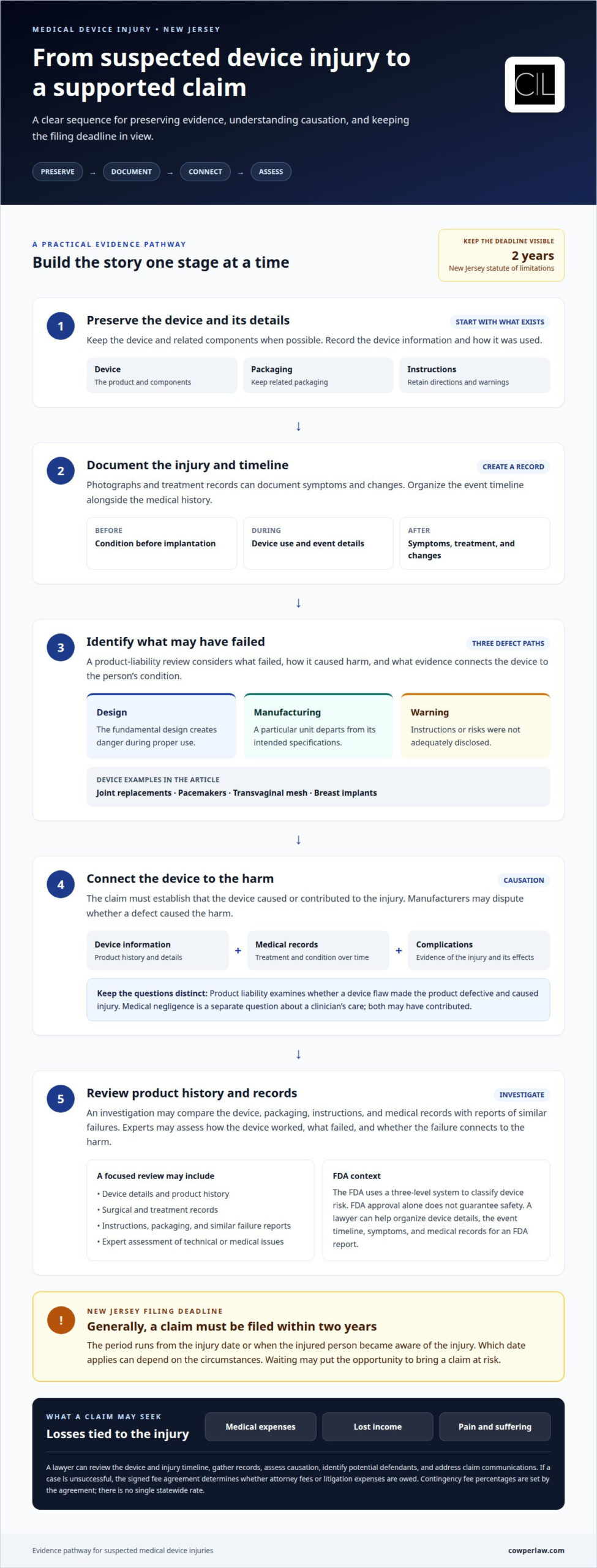
A defective device may cause serious harm because of a design, manufacturing, or warning failure. A product liability review considers what failed, how it caused the injury, and what evidence connects the device to the person’s condition.
A design defect exists when a device’s fundamental design creates danger during proper use. A manufacturing defect occurs when a particular unit departs from its intended specifications. A warning defect may involve inadequate instructions or risks that were not properly disclosed. Joint replacements, pacemakers, transvaginal mesh, and breast implants are examples of medical devices. Pain or infection near an implant site may signal harm.
Product liability law examines whether a design, manufacturing, or warning flaw made the device defective and caused injury. Causation means connecting the device to the harm, such as organ complications or an injured limb. Medical negligence is a separate question about a clinician’s care. When both may have contributed, a lawyer can assess treatment decisions alongside the device evidence.
An investigation may compare the device, packaging, instructions, and medical records with reports of similar failures. Keeping the device and related components can preserve evidence; photographs and treatment records can document symptoms and changes. The U.S. Food and Drug Administration uses a three-level system to classify device risk, and FDA approval alone doesn’t guarantee safety. A medical device lawyer can assess whether product history and compliance records support liability.
An injury claim may be considered when a medical device is connected to harm or death. Examples include joint replacements, pacemakers, transvaginal mesh, and breast implants; reported harms include toxic buildup, falls, and organ complications. If a case is unsuccessful, the signed fee agreement determines whether attorney fees or litigation expenses are owed. A lawyer can also help organize device details, the event timeline, symptoms, and medical records for an FDA report.
A New Jersey claim must connect the device-related injury to evidence and meet the filing deadline. The device’s history, treatment records, and timing can shape the legal strategy.
The New Jersey Legislature sets a two-year statute of limitations for claims involving injuries caused by defective medical devices. The period runs from the injury date or when the injured person became aware of the injury. A lawyer can assess which date applies, identify potential defendants, and prepare the filing. Waiting may put the opportunity to bring a claim at risk.
A claim must establish causation: that the device caused or contributed to the injury. A lawyer can organize medical records, treatment timelines, device information, and evidence of complications to help show that connection. For example, records documenting a patient’s condition before and after implantation may help explain when the harm arose. Manufacturers may dispute whether a defect caused the injury, so focused evidence matters.
Without legal representation, a claimant may find it difficult to identify responsible parties, preserve useful evidence, or respond to arguments that another condition caused the harm. Missing New Jersey’s filing deadline can also bar a claim. Some lawyers use contingency arrangements, where the fee depends on a recovery. The fee agreement sets the percentage; there is no single statewide rate.
A lawyer can review the device and injury timeline, gather medical records, assess causation, and handle communications about the claim. The lawyer can also explain what evidence supports accountability and how the filing deadline affects next steps. For a focused New Jersey device injury claim review, organized records about treatment and the device’s use can help begin the assessment.
Medical device lawsuits can require more than medical records alone. In one spinal fusion case example, a patient underwent seven additional surgeries after a severe adverse reaction to a medical device. Attorneys can investigate the device, treatment, and evidence needed to explain the patient’s suffering.
Medical device claims may require expert witnesses and substantial evidence to establish what happened. Manufacturers may dispute whether defective materials caused an injury, so attorneys need to address technical arguments alongside the patient’s medical history. An expert can explain how a device worked, what failed, and whether that failure is connected to the claimed harm.
A careful investigation brings together device information, surgical records, treatment timelines, and the patient’s account of complications. Medical experts can help assess whether the injury is consistent with device failure or another cause. This analysis is important when a patient has complex conditions or has undergone more than one procedure: the lawsuit needs a clear, evidence-based account.
Attorneys also assess which legal theories fit the evidence, including product liability and personal injury claims. State and federal laws govern these cases, and expert testimony may clarify technical or medical issues. A focused legal review can identify records, testimony, and device details that support the claim, then prepare responses to arguments challenging causation or the extent of the injury.
Trial experience helps attorneys prepare evidence for negotiation or court, rather than relying on unsupported claims about likely verdicts. They can organize expert opinions, explain surgical consequences, and show how the injury affected daily life. For example, additional operations may mean prolonged treatment and lasting disruption. A strong case presentation centers the patient’s evidence and documented losses.
For help assessing the evidence and legal issues in a device injury lawsuit, request a medical device case review.
Compensation in a medical device case depends on the losses connected to the injury. A claim may include treatment costs, lost income, and the personal effects of complications.
Yes. A claim may seek compensation for medical bills, future care, lost wages, pain, and suffering. Evidence must connect those losses to the device injury.
Medical expenses may include bills for treatment and corrective surgery related to device complications. Future care may also be part of a claim if the injury requires ongoing treatment. Records help show what care was provided and how it relates to the device. For example, surgical revision costs can document expenses following an implant problem.
A device injury claim may seek lost income if complications interfere with work. Employment and income records can help document that loss, while medical records describe treatment and its effects. A claim may also address pain and suffering and emotional distress. Because these harms are personal, explain how the injury changed daily activities, work, and well-being.
Potential recovery depends on the harm and its documented consequences, including medical expenses, future care, corrective surgery, lost wages, and pain and suffering. For example, a manufacturing defect may cause complications requiring additional treatment. If a device-related injury results in death, surviving family members may pursue a wrongful death claim. The evidence and applicable law guide which losses the litigation can seek.
A law firm can represent an injured person or surviving family throughout a claim, organizing records to support each requested category. A settlement or court result depends on the evidence presented and the losses established. Clear documentation helps connect treatment, lost income, and suffering to the device-related harm.
Choosing what to do next is a personal decision, especially when an injury has changed your health, work, or family life. Affordable medical device injury legal help can start with a careful conversation about the facts that matter to you and the outcome you hope to pursue. You deserve to understand the path ahead before deciding how to proceed.
Cowper Law handles medical device injury litigation, including spinal cord stimulator lawsuit representation, and wrongful death claims for families facing loss. The firm provides personalized legal services and can review the circumstances of your case and the information that may help assess your options. No two experiences are identical, so your next step should reflect your needs and priorities.
When you’re ready to discuss your situation, contact Cowper Law to discuss your options. A direct conversation can help you move forward with greater clarity and a committed advocate by your side.
Yes. FDA approval does not automatically prevent a product liability claim or guarantee that a device is safe or free from defects. A claim still needs evidence of a defect and a connection between that defect and the injury. Relevant issues may include whether the device’s design, manufacture, or warnings contributed to the harm.
Possibly, if evidence shows that a device defect caused or contributed to the worsening condition. A change in symptoms after implantation is important context, but an evaluation also considers treatment records, device use, and other possible causes. For example, records of new complications and the care they required can help clarify the timeline and support a legal review.
In New Jersey, the filing period for an injury caused by a defective medical device is generally two years, according to the New Jersey Legislature. The period runs from the injury date or when the injured person became aware of the injury. Because deadlines vary by jurisdiction, promptly assess the applicable deadline if treatment and injury involved different states.
Losing or discarding the device does not automatically end the possibility of a claim. Other materials may help establish what happened, including surgical records, device packaging, photographs, and correspondence about the implant. A lawyer can review available records to see whether they help identify the device and its complications. Write down what you remember about its removal and any discussions with clinicians.
Look for a lawyer who has handled claims involving your specific device and can explain the investigation and litigation process in plain language. Ask how the lawyer evaluates causation, what the fee agreement covers, and whether the consultation is free. Affordable medical device injury legal help should include a clear discussion of fees before representation begins, without promising a particular result.
There is no single filing deadline for every state; the limitation period varies by jurisdiction. In New Jersey, the period is generally two years, measured from the injury date or when the injured person became aware of the injury, according to the New Jersey Legislature. When a claim involves more than one state, the applicable deadline needs careful assessment.