
A settlement offer may provide financial relief, but signing can end your right to seek more money later. If you’re weighing what happens if the device company offers to settle, first understand what the payment covers and whether it accounts for future care. Once you sign a settlement, you generally can’t seek additional payment, even if you later need surgery or other treatment.
Wanting a clear path forward after a medical device injury is understandable, especially when treatment and recovery are still unfolding. To assess an offer, compare it with your current medical bills, lost wages, possible future missed paychecks, and travel for specialist visits. This article explains what a settlement may cover, why future treatment matters, and how legal advice or negotiation can help you make an informed decision. The aim is to understand the terms before accepting, not to rush while important costs remain uncertain.
Future medical costs are expenses for care you may need after accepting an offer. A device injury may require continued treatment, specialist visits, rehabilitation, or additional procedures. One night in the emergency room does not necessarily reflect the full course of care. Before deciding, compare the offer with treatment you’ve received and care still being considered.
Your treating clinician’s plan can help clarify what may come next. Ask what follow-up visits, therapy, or device-related procedures are being considered, and whether recovery may limit work or daily activities. Include related travel for specialist visits and possible future missed paychecks in your financial picture. Preserve any promotional claims about the device, along with its instructions and your medical records, especially if they help explain what you understood about its use.
Special damages are measurable losses, such as medical expenses and lost income. Keep bills, receipts, and records of treatment dates, recommended care, and time away from work. These documents help link claimed expenses to the injury. If care is ongoing, an offer based only on bills already received may not account for costs that have yet to arise.
There is no single nationwide deadline for medical device injury claims. The applicable limitation period depends on the state and the type of claim. The injury date, when the harm was discovered, and the claim’s legal basis can affect the deadline, so identify the relevant state rule promptly.
Medical device settlements are not automatically taxable or tax-free. Tax treatment may depend on what each part of the payment compensates. Have a tax professional review the proposed allocation before signing, since how the payment is characterized can affect tax reporting.
To evaluate an offer, gather the written proposal, medical records, bills, treatment recommendations, wage records, travel receipts, and device instructions. Preserve related promotional materials and communications, too. Before signing, review whether the offer addresses ongoing care and all documented losses. You may not be able to seek additional payment afterward.
A broken bone or back injury may need further care, even after a night in the emergency room. Consider whether the offer accounts for that possibility.
An attorney can review the offer amount, release language, and deductions before you decide. The written terms matter as much as the proposed payment.
A settlement release is a written agreement specifying which claims you give up in exchange for payment. The settlement papers state whether accepting the offer requires signing a release and identify the claims it covers. Read that scope carefully: signing can prevent you from seeking additional payment later, even if you need further treatment. An attorney can explain how the release applies to your injury and the claims involved.
Attorney fees and liens can reduce the amount of a settlement you ultimately receive. Your fee agreement explains how the attorney’s fee is calculated and paid. A lien or reimbursement claim may seek payment from the recovery for certain expenses. Before agreeing, ask for an itemized estimate of the proposed settlement amount, fees, liens, and expected net payout.
Look beyond the headline figure. For example, an offer might sound substantial but leave questions about which claims it resolves or what deductions apply. Ask the attorney to identify every payment term, release condition, and outstanding claim against the funds. A bill credit for an iPhone is different from compensation for a medical device injury; make sure the documents clearly describe the offer being discussed.
Bring the written offer, release, fee agreement, and any lien or reimbursement notices to the review. An attorney can compare the release language with your injury claims and explain the financial effect of the proposed terms. The review can also help clarify whether negotiating the amount or wording is appropriate before you sign.
A careful review of medical device settlement terms can help you understand what the agreement would resolve and how its deductions affect your recovery.
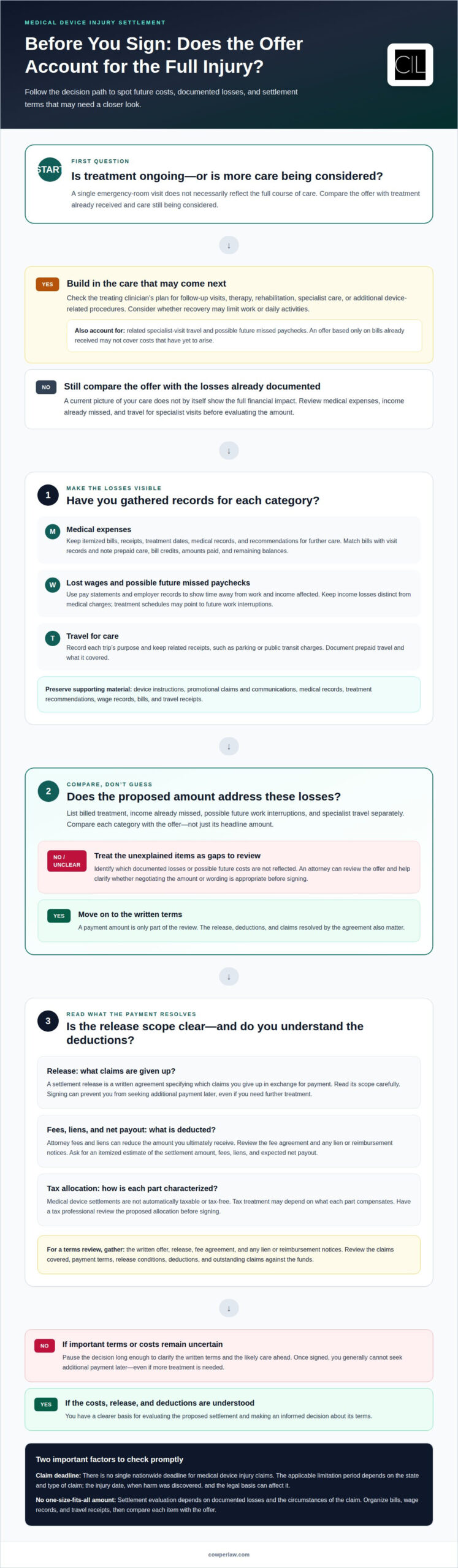
A settlement amount is evaluated against documented losses connected to the injury. In the United States, this can include medical costs, lost wages, future missed paychecks, and travel for specialist visits.
Medical expenses are charges for care related to the device injury. Gather itemized bills, receipts, and records showing treatment dates. For example, match a clinic bill with the visit record and any payment receipt. If you prepaid for care or received a bill credit, keep documentation showing the amount paid and the remaining balance.
Lost wages are income you missed because the injury or treatment kept you from working. Pay statements and employer records can help show the time missed and income affected. A current paycheck may document past loss, while a treatment schedule that interrupts future work can point to additional missed paychecks. Keep these losses distinct from medical charges.
Travel expenses are costs of getting to medical appointments, including specialist visits. Record each trip’s purpose and keep related receipts, such as parking or public transit charges. Document prepaid travel expenses, too, so the record shows what they covered and how they relate to care.
Compare the offer with these categories instead of focusing only on its headline amount. List billed treatment, income already missed, possible future work interruptions, and specialist travel separately. This makes gaps easier to spot and gives you a clearer basis for evaluating the proposed payment.
The calculation depends on documented losses and the circumstances of the claim. There is no single figure that fits every injury. Organize bills, wage records, and travel receipts, then compare each item with the offer. If a category is unaddressed, note the gap before deciding how to respond.
For help assessing how medical device injury losses fit into a claim, discuss your settlement and documented expenses.
An unfair settlement offer fails to account for the harm and losses described in the claim. Start a clear response by identifying specific gaps, rather than simply calling the amount too low. For example, point to a documented loss or a claim the proposed terms leave unresolved.
A settlement agreement is the written set of terms governing the resolution. Review both the payment and what the agreement requires in return. If the offer releases claims beyond the injury being resolved, ask for the language to be clarified before accepting. The agreement’s scope matters as much as its amount.
Build a focused counterproposal based on the evidence you’ve gathered. Organize your response around specific items:
For example, if an offer covers treatment you’ve received but omits documented lost wages, identify the omission and provide the supporting record. A claimant’s position is easier to assess when each requested change is tied to evidence rather than a general demand for more.
Keep negotiation communications factual and measured. A device company may offer to settle to avoid the expense of a lawsuit, while an insurance adjuster works for the insurer and seeks to resolve claims at the company’s lowest possible expense. This makes a specific, documented response important, but it does not establish what any individual offer is worth.
Before agreeing, compare the revised offer with the claims it resolves and the losses it addresses. If the company rejects a requested change, ask which parts of the proposal remain open for discussion. Don’t sign while a material term is unclear. Make your decision based on the written agreement, supporting records, and consequences of releasing claims.
Understanding what happens if the device company offers to settle can help you approach the decision with purpose. The next step is to make sure your choices reflect your priorities. A settlement is a personal decision, and you deserve time to understand the agreement before committing. If questions remain, an attorney can help you evaluate the terms and consider how to move forward.
Cowper Law handles medical device injury litigation, including spinal cord stimulator lawsuits, and wrongful death claims involving fatal harm. Whether you’re weighing an offer or considering a claim, a focused conversation with our team can help clarify your options and the path ahead.
Contact Cowper Law to discuss your settlement and take the next step with informed support.
It means the company is proposing terms to resolve a claim, usually through payment and a written agreement. Understanding what happens if the device company offers to settle starts with distinguishing a proposal from a completed settlement. Review who is making the offer, which claims it covers, and whether it requires a release. The offer alone doesn’t show whether its terms account for the full impact of the injury.
A settlement may address documented medical expenses, income lost from missed work, future missed paychecks, and travel for specialist visits. The written terms may explain what the payment is intended to cover, so compare those categories with your claim records. If the agreement allocates payment among different losses, clarify any category that seems incomplete or inconsistent with the supporting documents.
Yes. You can decline an offer or respond with a counterproposal instead of accepting its original terms. A useful response identifies a specific issue, such as a disputed allocation or a release that reaches beyond the claim you intend to resolve. Keep communications and revised offers together to track changes to the proposal. Before signing, make sure the final written terms reflect the agreement you intend to accept.
Keep the offer and accompanying documents, including the email or letter showing when and how it arrived. Note the sender’s name and any stated response date, then save later communications with the same file. Don’t rely on a verbal summary when the written agreement controls the terms. An attorney at Cowper Law can review the proposal and explain its effect before you decide whether to accept, reject, or negotiate.