
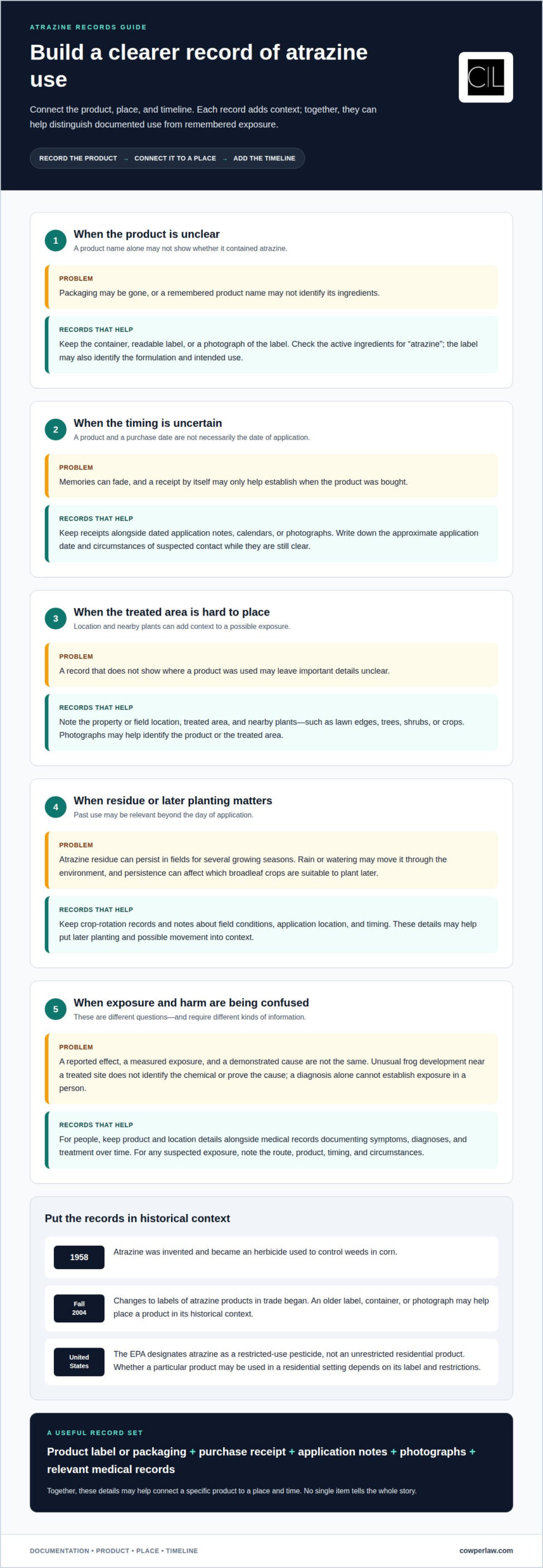
Proof begins with a trail of records, not a perfect memory. To document atrazine use in gardening, gather product packaging or labels, purchase receipts, photographs, application notes, and accounts from people who saw the product being used. Together, these details can help connect a specific product to a place and time.
It’s understandable to wonder whether evidence still matters if the product is gone or the use happened years ago. It can. The product name, dates, locations, and records of what was planted or treated may help build a clearer picture, even when no single item tells the whole story.
This article explains how atrazine became part of weed control, why residue may remain in the environment, and what has been reported about its effects on frogs and people. It also distinguishes evidence of exposure from evidence of harm, helping you understand what records may establish and where questions about a potential claim begin.
Atrazine was invented in 1958 and became an herbicide used to control weeds in corn. Its history can help distinguish agricultural use from residential applications. The product, application date, and property location each add context when tracing possible exposure. Records from the time are especially useful when memories have faded or packaging has changed.
Residue can persist in fields for several growing seasons, and rain or watering may move it through the environment. This persistence can affect which broadleaf crops are suitable to plant later. A crop rotation record, for example, may show whether sensitive plants were grown after a field was treated. Application location and timing help put those records in context.
Changes to labels of atrazine products in trade began in fall of 2004. Those changes included terms of an EPA-industry agreement. An older label, container, or photograph may therefore help place a product in its historical context. Preserve any legible label information, including the product name and listed active ingredients.
In the United States, the EPA designates atrazine as a restricted-use pesticide, not an unrestricted residential product. Whether a particular product may be used in a residential setting depends on its label and restrictions. The label is important evidence of the product’s stated use. Don’t assume every atrazine product permits application in a home garden or on a lawn.
To document an old application, connect the product to a date and place. A receipt may support when it was purchased, while a photograph may identify the label or treated area. Application notes can describe where it was spread and which plants were nearby. Each item provides only part of the account, but together they can give a clearer picture of what happened.
Because atrazine residue can persist in fields for several seasons and limit which broadleaf crops can be planted afterward, growers should carefully record crop rotations and avoid planting sensitive crops in fields where persistent chemicals have been applied. Atrazine can also move through the environment with rain or watering. Records of crop rotations and field conditions may help clarify potential movement and crop impacts.
Research and public debate have raised concerns about atrazine’s effects on frogs. Some claims link exposure to mutations or developmental changes. These claims are not proof that every exposure causes harm. A reported effect, a measured exposure, and a demonstrated cause are different kinds of evidence.
People may be exposed through contact with treated areas, contaminated water, or pesticide handling. The route, product, timing, and amount matter when assessing what happened. The product label can identify ingredients and application precautions. A dated container photograph or receipt may also connect a particular product with a household or property.
The EPA has determined that atrazine used properly below specified environmental levels will not harm humans or the environment. That determination concerns use under those conditions. It does not establish whether a particular person encountered atrazine, the extent of exposure, or whether an individual health condition resulted. Those questions require evidence tied to the person, product, place, and timeline.
Useful records can preserve those details. Keep product labels, purchase receipts, application notes, and photographs showing where treatment occurred. Write down the date and circumstances of suspected contact while they are still clear. Medical records can document symptoms, diagnoses, and treatment over time. Together, these materials may help distinguish remembered exposure from documented product use and health history.
If atrazine gets on your skin, is inhaled, or is accidentally swallowed, stop the exposure and follow the product label’s first-aid directions. Contact poison control or a medical professional promptly, and seek emergency care for severe symptoms. Keep the label or container available so responders can identify the product and its instructions.
For frogs, unusual development observed near a treated site may raise questions, but it does not identify the chemical or prove the cause. A diagnosis alone likewise cannot establish exposure in a person. Product records, location details, and medical documentation provide a more complete foundation for evaluating a possible atrazine-related claim.
Atrazine is a systemic herbicide that targets broadleaf weeds. “Systemic” means plants absorb it through their roots. It has been used to control weeds in corn, so its agricultural history differs from ordinary garden care. Products containing atrazine may also be relevant to residential exposure questions, especially when weed-and-feed products were applied near lawns, trees, or shrubs.
Use around a home depends on the specific product and its labeled directions. A product name alone may not establish whether it contained atrazine. Look for “atrazine” among the active ingredients on the label. The label can also identify the formulation and intended use. These details matter when distinguishing a product used on a lawn from one used in another setting.
To document a past application, connect the product to a specific place and time. A container or label photograph can identify the ingredient, while a receipt may help establish when the product was purchased. Application notes, calendars, or photographs can show where it was used. For example, a dated lawn photograph alongside a readable product label provides more context than recollection alone.
These records can help clarify whether a gardening product contained atrazine, but they do not by themselves establish exposure or a health effect. Product identity, application location, and timeline each provide a separate piece of evidence. Together, they offer a clearer basis for evaluating what happened.
Atrazine was used extensively in the Cheyenne, Wyoming area during the 1970s. For a gardening history tied to that place and period, connect any surviving product evidence with records identifying the treated area and application timing. The regional history can provide context, but it does not identify a particular product, property, or application. Packaging, receipts, and photographs can help distinguish a documented use from a general recollection.
Safety depends on the product, its directions, and how it was applied. The EPA has determined that properly used atrazine below specified environmental levels will not harm humans or the environment. That statement describes use under those conditions, not every product or application. Read a weed-and-feed label for its stated uses and precautions before drawing conclusions about a lawn or garden.
Edible plants need particular care. Don’t assume a lawn product is suitable for a vegetable bed or fruit plants. Check the label for permitted application areas and any restrictions involving crops, people, or animals. A product used on turf beside tomatoes, for example, raises different questions from one applied directly to a garden bed. Record the product name and treated area.
Trees and shrubs can also be affected. Gardeners have been advised to stop using atrazine-containing weed-and-feed products near these plants because atrazine can poison them. Reported injury includes stunted growth and severe leaf scorch. A photograph of scorched leaves, together with the product label and a record of where it was spread, can help document what happened. Plant damage alone does not identify the chemical involved.
For a past application, preserve evidence connecting the product, place, and timing. Useful materials include the original container, a readable label, a purchase receipt, application notes, and dated photographs. A simple property sketch can show whether the product was applied on a lawn, near shrubs, or beside edible plants. Keep any notes about watering or rain afterward, as these details can help describe the circumstances of application.
When reviewing a possible exposure, separate three questions: what product was used, where it went, and what followed. A label can identify ingredients and directions; photographs and notes can add context. These records support a clearer account, but they do not by themselves establish a health effect or its cause.
When concerns about atrazine in gardening connect to a serious diagnosis, start by organizing what you remember and can document. A timeline can bring product use, locations, and health records into one account. Gaps in memory don’t erase the value of evidence you do have. A product label, purchase record, photograph, or medical record may help explain part of the story.
Cowper Law handles Atrazine Cancer Lawsuit matters, including questions about the relationship between atrazine and Non-Hodgkin lymphoma. How exposure evidence and medical history relate to a potential claim depends on the individual circumstances.
You deserve a careful conversation about what happened and what options may be available. Contact Cowper Law to discuss your case. Taking that step can help you move forward with greater clarity and support.
Atrazine residue can persist in soil for several growing seasons, and rain or watering can move it beyond the treated area. It may reach groundwater or nearby surface water, with the extent depending on local conditions and movement through soil. For a specific property, dated application records and relevant water or soil test results can help clarify whether contamination occurred.