
A pump can be a lifeline, but a failure in insulin delivery can create serious concerns. Medtronic MiniMed pumps deliver insulin continuously under the skin. A Medtronic insulin pump recall lawsuit may concern the 600 series, including 630G and 670G models recalled in February 2020 because a defective retainer ring could cause unregulated insulin delivery.
It’s understandable to want clear answers about whether your pump was affected and what risks may be involved. The model name alone may not be enough to identify a recalled device: manufacturing and distribution dates can also matter.
This guide explains what MiniMed pumps do, how insulin delivery problems may cause harm, and which dates and model details may be relevant. It also outlines how injury claims are evaluated, helping you understand the issues before deciding what to do next.
MiniMed insulin pumps deliver insulin continuously beneath the skin from a reservoir. In the 600 series, a clear plastic retainer ring secures that reservoir. The pump is about the size of a smartphone, and some MiniMed systems measure glucose every five minutes. These devices support insulin management for people with type 1 or type 2 diabetes. The exact model matters when identifying a device involved in a recall.
On February 12, 2020, a recall covered MiniMed 630G and 670G pumps after a retainer-ring defect could allow unregulated insulin delivery. The U.S. recall affected 322,005 devices. A Class I recall indicates a reasonable probability of serious adverse health consequences or death from use or exposure. Model number, lot information, and manufacturing or distribution dates help distinguish affected devices.
Too much insulin can cause hypoglycemia, while too little can cause hyperglycemia. Either problem can become life-threatening. When the body receives too little insulin, ketones can build up in the blood and lead to diabetic ketoacidosis. Severe blood-glucose disruption can affect health and daily life. Seek prompt medical attention for unusual symptoms while using a MiniMed pump. Do not stop using a prescribed device without consulting your doctor.
A potential settlement is a negotiated resolution of a legal claim. Relevant evidence may include the pump and its records, medical documentation, and information linking a device problem to an injury. These materials help lawyers assess the alleged defect, the harm, and related losses. A settlement is not automatic, and the recall alone does not establish a settlement amount.
With a contingency-fee arrangement, the attorney’s fee depends on a recovery, as set out in the written agreement. Before signing, review how the fee is calculated, how case expenses are handled, and what happens if there is no recovery. Keep the agreement with medical records, recall notices, and pump information. These documents can help an attorney evaluate a potential claim.
Too much insulin can cause hypoglycemia; too little can cause hyperglycemia. Either dosing error can become life-threatening. The FDA issued a Class I recall in February 2020 for MiniMed 600-series pumps because a defective retainer ring could cause unregulated insulin delivery. The central issue is what happened to the user, not simply whether a device model appeared in a recall notice.
Different failures may create different risks. In June 2021, a Class II recall addressed a software defect in MiniMed 670G pumps that may lead to insulin overdelivery. Under-delivery can leave the body without enough insulin; diabetic ketoacidosis can occur when ketones build up in the blood. These complications make accurate records of pump alerts, insulin doses, and treatment important.
By the time of the February 2020 recall, 2,175 injuries and one death had been reported in connection with the defect. As of February 2020, 26,421 complaints involving MiniMed pump malfunctions had been reported. Those reports describe concerns across devices, but they don't establish what caused a particular person’s injury. Individual medical records and device information help show the sequence of events.
If you suspect a pump malfunction, seek medical attention for unusual symptoms and follow your treating clinician’s guidance. Do not stop using a prescribed device without first consulting a doctor. If possible, preserve the pump, insulin cartridge, packaging, and any warning or service records. Note what the device displayed and when symptoms or treatment occurred. These details can help distinguish an insulin delivery problem from other circumstances.
In litigation, lawyers examine how the alleged defect, medical complications, and documented losses connect. A claim may seek compensation, but recall status alone doesn’t establish eligibility or determine an outcome. A focused review of MiniMed records and treatment history can clarify the questions involved. For information on insulin pump injury claims, consider how the device history and medical evidence relate to your experience.
In September 2014, Medtronic recalled more than half a million MiniMed Paradigm insulin pumps over insulin delivery errors. On February 18, 2022, a plaintiff alleged that a MiniMed 770G pump malfunctioned while he was driving and caused a severe hypoglycemic episode. People experiencing unusual symptoms while using a Medtronic MiniMed insulin pump should consult a doctor immediately.
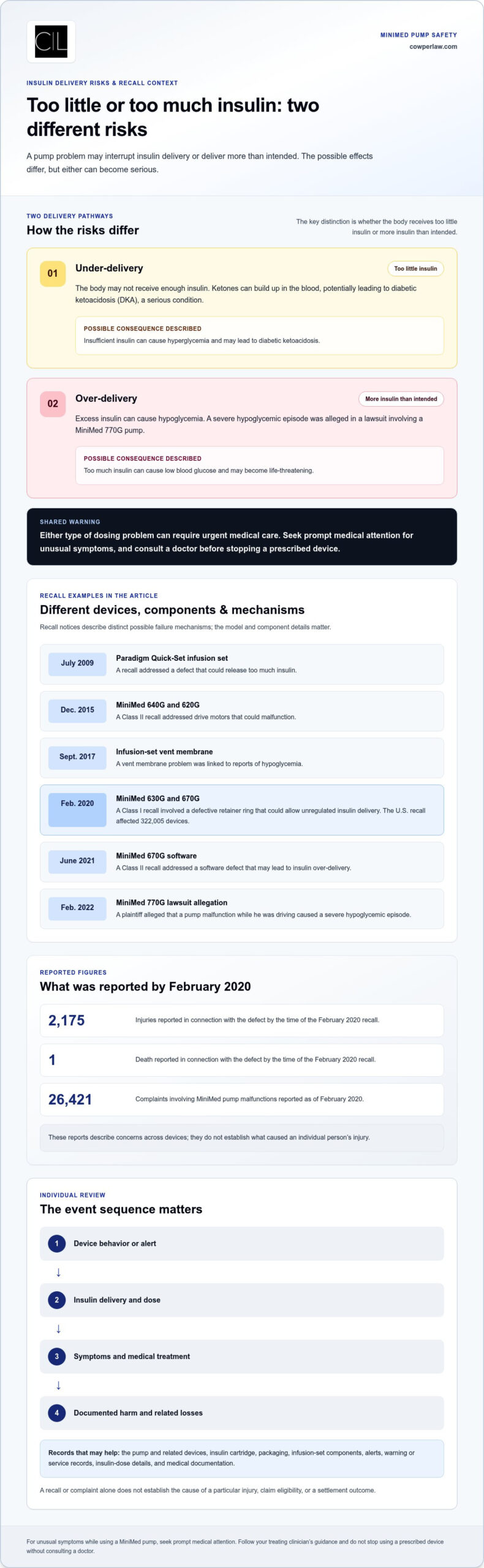
A MiniMed device can deliver too little insulin or more than intended. Under-delivery can leave the body without enough insulin, while overdelivery can cause hypoglycemia. The consequences differ, but either problem can require urgent medical care. Inadequate insulin may lead to diabetic ketoacidosis, a serious condition involving ketone buildup in the blood. Excess insulin can trigger a severe hypoglycemic episode, as alleged in a MiniMed 770G lawsuit filed in February 2022.
Recall notices describe different possible failure mechanisms. In December 2015, a Class II recall addressed MiniMed 640G and 620G drive motors that could malfunction. A MiniMed Paradigm Quick-Set infusion set recall followed in July 2009 over a defect that could release too much insulin. In September 2017, an infusion-set vent membrane problem was linked to reports of hypoglycemia. These examples show why model and component details matter.
A 2021 software recall involving MiniMed 670G pumps concerned possible insulin overdelivery. That is distinct from a delivery interruption: one may expose a user to excess insulin, while the other may leave them short. A recall or complaint alone does not explain what caused a particular injury. The sequence matters: device behavior, insulin delivery, symptoms, and medical treatment.
For a useful record, save the pump and related devices, packaging, and any infusion-set components. Preserve device alerts, written warning notices, and communications about service or replacement. Ask your care team to document reported symptoms and treatment in your medical records. Those materials can help lawyers assess how the device operated and whether its performance relates to the harm. If a malfunction may have injured you, discuss your insulin pump injury and the records connected to it with a legal professional.
The February 2020 U.S. recall affected 322,005 MiniMed devices. The worldwide total was 481,875 devices. These figures describe different scopes, so distinguish U.S. counts from global totals when reviewing a potential injury or claim.
The recalled 600-series models included MiniMed 630G and 670G pumps. The identified model numbers were MMT-1715 for the 630G and MMT-1780 for the 670G. The recall included lots manufactured before October 2019 for the 630G and before August 2019 for the 670G. Check the pump label and lot details against those identifiers.
Distribution dates and manufacturing cutoffs are not interchangeable. A pump may have been distributed during one period but belong to a lot defined by its manufacture date. For example, the 630G cutoff concerns manufacture before October 2019, while its distribution information identifies September 2016 to October 2019. Comparing both helps assess whether a device may fall within the recall criteria.
If you are considering a Medtronic insulin pump recall lawsuit, preserve the pump label, distribution records, service history, and any malfunction or dosing records. These materials can help link a specific device and timeline to an injury. A Medtronic insulin pump recall lawsuit also requires a careful review of the medical evidence and alleged harm. Inclusion in a recall alone does not establish liability or determine whether a settlement is available.
The U.S. counts by model provide another way to check records: the Medtronic MiniMed 630G recall affected 184,478 insulin pumps distributed in the United States from September 2016 to October 2019. The Medtronic MiniMed 670G recall affected 297,397 insulin pumps distributed in the United States from June 2017 to August 2019.
MiniMed insulin pumps faced multiple recalls from 2009 to 2020, so model, lot, and service records remain useful when sorting distinct notices. These model-specific counts can help place an individual pump within the broader recall history, but do not by themselves show whether a particular unit was affected.
A device-related injury can leave you balancing medical needs, records, and difficult questions about accountability. You don’t have to navigate the legal issues alone. Cowper Law represents people harmed by medical device injuries. A review of your experience can help clarify whether the facts support a claim and what evidence may matter next.
Cowper Law handles Medical Device Injury Litigation, including insulin pump device legal advocacy, as well as Catastrophic Injury Legal Services and Spinal Cord Stimulator Lawsuit Representation. Each matter turns on its own evidence and circumstances. If you’re considering a Medtronic insulin pump recall lawsuit, contact Cowper Law about your options. Taking that first step can help you move forward with greater clarity and support.
The major MiniMed 600-series retainer-ring recall, issued February 12, 2020, included the 630G and 670G. The affected model numbers were MMT-1715 and MMT-1780, with manufacturing cutoffs before October 2019 and August 2019, respectively. Separate recalls addressed 600-series keypad issues in July 2019, battery solder connections in December 2020, a 670G software defect in June 2021, and battery caps in July 2022.