
A Zantac cancer claim depends on the medication history, diagnosis timing, and evidence connecting the two. A Zantac cancer lawsuit attorney can assess whether a person’s cancer diagnosis followed their use of Zantac, the brand name for ranitidine. Lawsuits have alleged links to bladder, esophageal, gastric, liver, and pancreatic cancer, but an allegation alone does not establish that the drug caused an individual’s illness.
A serious diagnosis can raise difficult questions, especially when you are trying to understand the risks of a medication you once relied on. NDMA, a substance detected at unacceptable levels in testing of certain ranitidine lots, is central to concerns about possible cancer risk.
This article explains what Zantac is, which cancers have been alleged, and how NDMA relates to those concerns. It also describes how an attorney may assess a potential claim, including the importance of medical records, evidence of Zantac use, and diagnosis timing.
Zantac is a brand name for ranitidine, an H2 blocker that reduces stomach acid by blocking histamine receptors in the stomach. Its purpose was to reduce acid, but later concerns focused on NDMA and possible cancer risks associated with ranitidine products. Lawsuits have alleged a relationship; those allegations do not establish that ranitidine caused a particular person’s cancer.
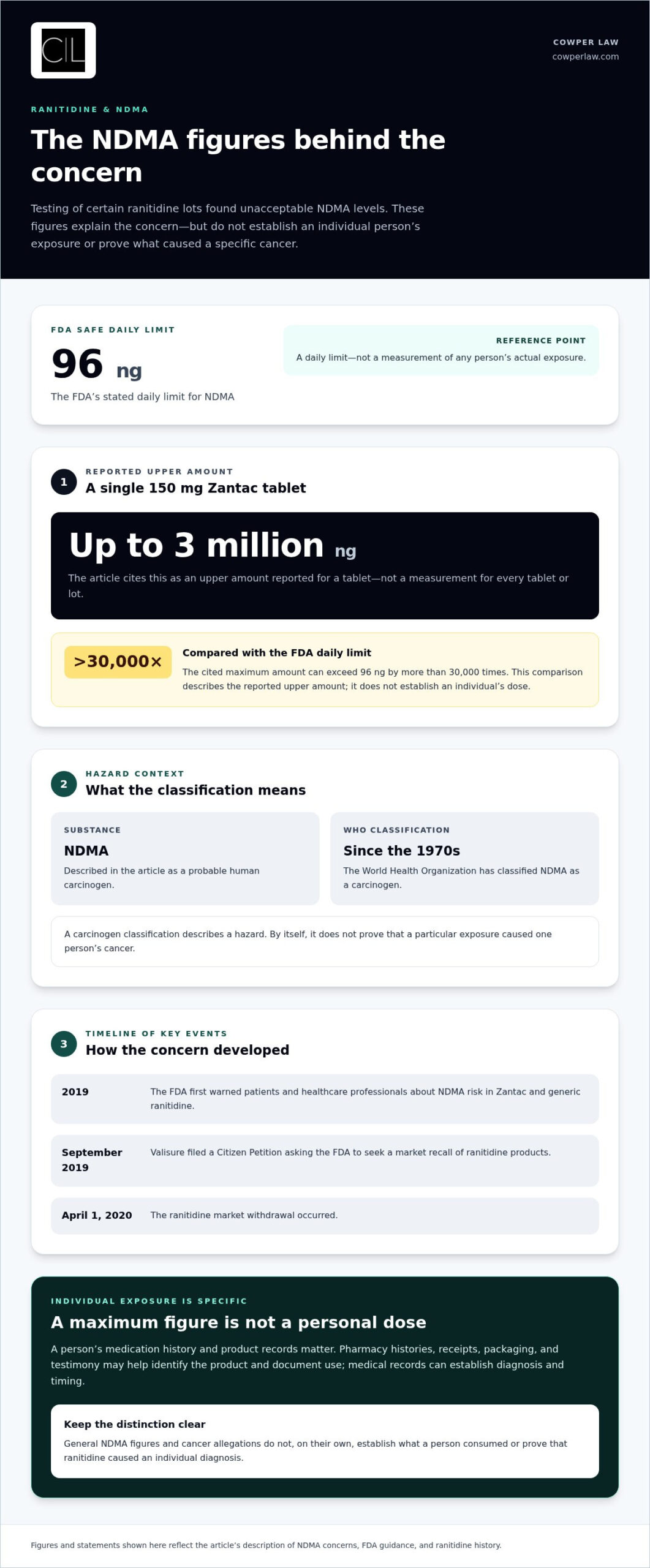
The timeline helps explain how the concerns developed. In 2019, the FDA first warned patients and healthcare professionals about NDMA risk in Zantac and generic ranitidine. In September 2019, Valisure filed a Citizen Petition asking the FDA to seek a market recall of ranitidine products. The ranitidine market withdrawal occurred on April 1, 2020.
Five cancer types became central to plaintiffs’ general-causation evidence. On January 25, 2022, plaintiffs disclosed that their experts had supplied reports addressing whether ranitidine could cause these cancers:
“General causation” asks whether an exposure can cause a disease in a broader group. It does not establish whether that exposure caused one person’s diagnosis. For a potential claim, timing matters: the cancer diagnosis must have followed the person’s first use of Zantac. The cancer type, medication history, and supporting records help shape the assessment.
These five cancers are the types identified in the disclosed expert reports. That does not prove every ranitidine user faced the same risk. When reviewing your history, note the cancer diagnosis, the approximate period of Zantac use, and any records showing that use. These details help distinguish an alleged connection from proof of cause in an individual case.
A claim assessment brings together the medication history, cancer diagnosis, and records relevant to the alleged connection. An allegation does not determine a payout. Any assessment depends on the evidence and the documented effects of the illness.
Begin by gathering records showing when Zantac use started and how long it continued. Pharmacy histories, receipts, medication lists, and personal testimony may help document use. Medical records should establish the cancer diagnosis and its timing. A Zantac cancer lawsuit attorney can review these materials together and assess the sequence of medication use and diagnosis.
For individuals nationwide, documenting Zantac use is a practical first step. Preserve records that identify the product and dates of use, then gather medical records describing the diagnosis and care. Testimony can support the account of use, while clinical records provide evidence of diagnosis and treatment. Keeping these materials organized can make it easier to assess the claim’s factual foundation.
Potential compensation depends on what the evidence establishes about the illness and its effects. Records of medical care, treatment needs, and changes to daily life can help describe the harm. Work-related documents may clarify whether the illness affected employment. These materials support an evaluation, but a cancer allegation alone does not establish a particular recovery.
Federal Zantac cases consolidated into multidistrict litigation in 2022 were dismissed in 2024. That history makes it important to distinguish those federal proceedings from the facts and posture of an individual claim. A legal review can organize the diagnosis, exposure evidence, and available records, then explain how they bear on potential next steps. A Zantac claim assessment can help bring those details into focus.
NDMA is the substance at the center of concerns about ranitidine products. The U.S. Food and Drug Administration sets the safe daily limit for NDMA at 96 nanograms. The World Health Organization has classified NDMA as a carcinogen since the 1970s. In this context, the amount detected and a person’s exposure history matter when assessing the alleged risk.
Testing of certain ranitidine lots found unacceptable NDMA levels. NDMA is described as a probable human carcinogen. A single 150 mg Zantac tablet can contain up to 3 million nanograms of NDMA. That amount can exceed the FDA safe daily limit by more than 30,000 times. These figures explain the concern, but don’t establish what any particular person consumed.
The 3 million nanogram figure is an upper amount, not a measurement for every tablet or lot. That distinction matters when reviewing a person’s medication history. Pharmacy records, receipts, packaging, and testimony may help identify the product and document use. A specific exposure history is different from relying on a maximum amount reported for a tablet.
For a potential claim, consider the evidence as a whole: product use, the alleged NDMA exposure, and medical records. A carcinogen classification describes a hazard, but does not by itself prove that an exposure caused a specific person’s cancer. NDMA figures alone do not establish an individual’s dose, either. The key is to assess the documented history alongside the specific diagnosis, rather than treating a general risk concern as proof of personal causation.
A separate example came in 2018, when a drug manufacturer found some batches of valsartan had become contaminated with unsafe levels of NDMA during manufacturing.
A focused case evaluation brings the medication history together with the legal and medical records. A Zantac cancer lawsuit attorney can organize the evidence, identify gaps, and assess how the facts relate to the potential claim. The aim is to establish a clear chronology, not to promise a particular result.
Start with a timeline. Record when Zantac use began and ended, when symptoms appeared, and when doctors diagnosed the cancer. Compare your account with pharmacy histories, medical records, and testimony. Pay attention to differences between sources, as they can affect how clearly the history is understood. Keep original documents and note where each record came from.
Legal context matters, too. On February 28, 2022, the federal MDL court entered a pretrial order to identify and winnow claims that could properly be filed in federal court. That order illustrates why a review should consider more than diagnosis and exposure. An attorney can examine the claim’s procedural posture and distinguish an individual’s evidence from broader litigation developments.
Before a legal review, gather materials that answer practical questions:
An attorney can then assess what the documents establish, what remains unclear, and what additional records may help complete the account. Medical evidence explains the diagnosis and care; medication records and testimony help document use. Reviewing these sources together gives the evaluation structure and helps ensure no single document is given more weight than it supports.
For a considered review of your records and claim history, request a case evaluation.
Cowper Law represents people harmed by medical device failures through Medical Device Injury Litigation. This work concerns device-related injuries, which differ from concerns about a medication such as ranitidine. Identifying the product and alleged harm is essential because both shape the legal review.
Turn to Cowper Law when an injury involves a medical device or has caused catastrophic harm. The firm also handles Spinal Cord Stimulator Lawsuit Representation, Catastrophic Injury Legal Services, and Wrongful Death Claims. These services address the circumstances and consequences of serious injuries, with attention to the evidence and the person affected.
If you are seeking legal guidance about a device-related injury, contact Cowper Law to discuss your situation.
A serious diagnosis can make decisions feel difficult, but a focused conversation can help clarify the legal questions. Before speaking with a Zantac cancer lawsuit attorney, write down what you remember about your medication history, the questions you want answered, and how the illness has affected your daily life. You do not need a perfect timeline to begin. A clear account of what you know can help frame the discussion and identify relevant records.
Cowper Law represents people harmed by medical products through services including Medical Device Injury Litigation and Catastrophic Injury Legal Services. The firm also provides Spinal Cord Stimulator Lawsuit Representation. These services address different kinds of harm, so the product and circumstances involved help determine which legal support is relevant.
Take the next step when you’re ready to discuss your circumstances and the records you have. Contact Cowper Law about your claim. You deserve a thoughtful review and a clear path forward.
Zantac is the brand name used for the medication ranitidine, an H2 blocker taken to reduce stomach acid. Records may identify the medicine as either “Zantac” or “ranitidine,” so look for both names when reviewing pharmacy histories, receipts, or medication lists. This distinction can help connect older treatment records with a person’s account of which product they used.
A potential claim assessment considers whether a cancer diagnosis followed Zantac use and whether records or testimony document that use. The specific diagnosis and available medical and medication history are central. Start by noting the product name, when you remember taking it, and when doctors diagnosed the illness. An attorney can assess how these facts fit together.
NDMA is described as a probable human carcinogen. Testing detected unacceptable levels in certain ranitidine lots, prompting concerns about possible exposure through products containing ranitidine. The results show what was detected in certain lots, not how much a particular person took. Product information and an individual’s medication history help put the concern in context.
Claims have drawn on testing of certain ranitidine lots and expert reports examining whether ranitidine could cause particular cancers. These materials concern general causation: whether an exposure can cause disease in a broader group. An individual assessment must also consider the diagnosis, medication history, and evidence of use together. A reported association alone does not establish the cause of one person’s illness.
Useful records include pharmacy histories, receipts, medication lists, and medical documents identifying the cancer diagnosis and treatment. Personal testimony may help describe product use when paperwork is incomplete. Gather records from different sources and organize them by date. Note the name shown on each document, including “ranitidine” if it appears instead of “Zantac.” These materials help establish a coherent account of use and diagnosis.
Choose an attorney who can review your Zantac use records, cancer diagnosis and timing, and medical evidence together. A focused evaluation should identify gaps in the records, consider the claim’s legal posture, and explain possible next steps without promising a particular result.