
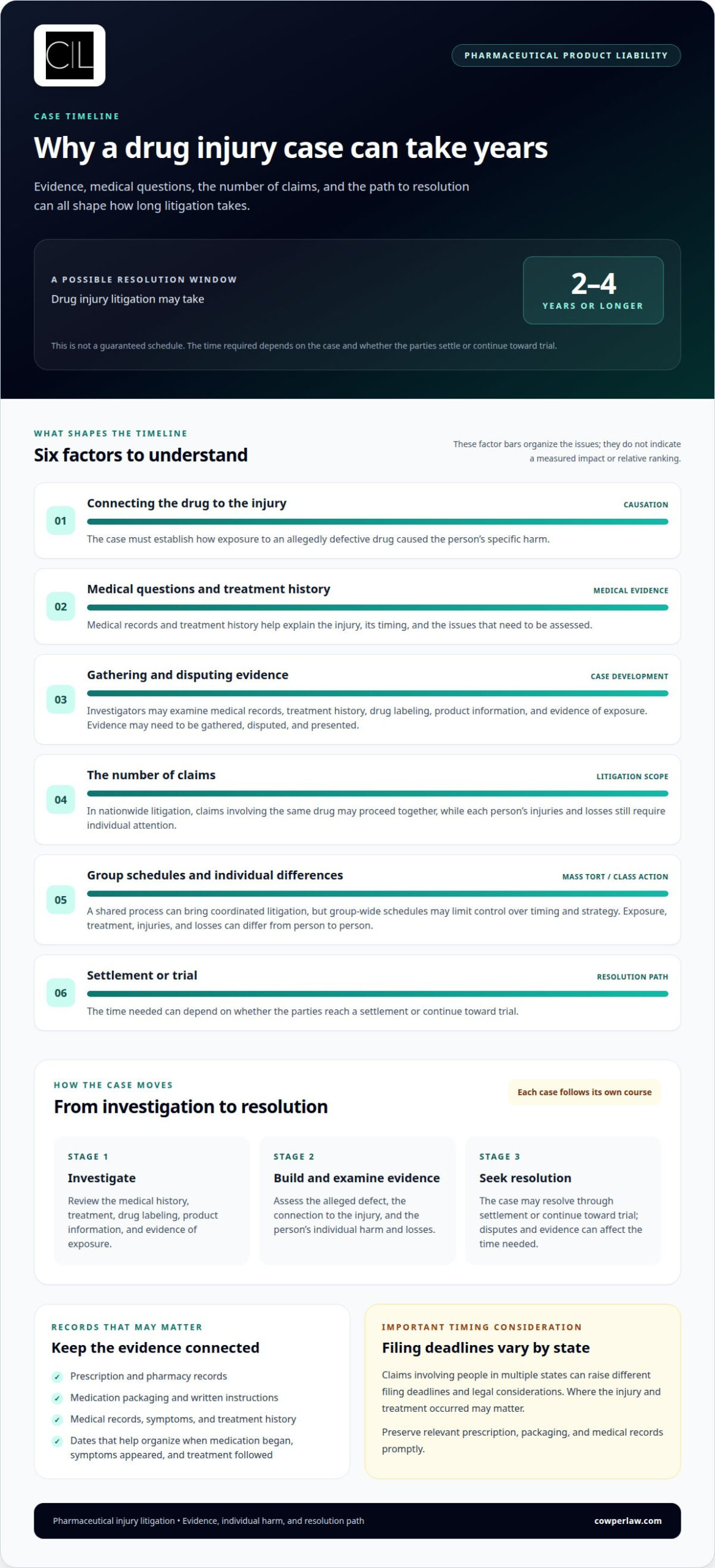
A pharmaceutical product liability case may take 2-4 years or longer to reach a resolution. A pharmaceutical product liability lawyer can assess whether a drug-related injury may support a claim and explain the steps that shape its timeline. The evidence, the injury and the course of litigation all matter.
That uncertainty can be difficult when you’re already coping with a serious injury. You deserve a clear picture of what a claim involves and why building a strong case takes time. This article explains the main types of pharmaceutical product liability claims and the factors that can affect how long litigation takes.
You’ll also learn what evidence may matter, how a case can progress from investigation toward resolution, and when experienced legal representation may help you understand your options. The goal is a steadier view of the road ahead, without promising a quick or predictable outcome.
Drug injury litigation can take 2-4 years or longer to resolve. The timeline depends on proving how a defective prescription or over-the-counter drug caused specific injuries.
A pharmaceutical product liability lawyer may investigate medical records, treatment history, drug labeling, and evidence of exposure. These steps help connect a defective drug to a serious injury and identify the issues a lawsuit must address. In nationwide pharmaceutical litigation, cases involving the same drug may proceed together, while each person’s injuries and losses still require individual attention.
Resolution may take 2-4 years or longer as evidence is gathered, disputed, and presented. The time required can depend on the complexity of medical questions, the number of claims, and whether the parties reach a settlement or continue toward trial.
Joining a mass tort or drug injury class action can bring shared resources and coordinated litigation, but it also involves trade-offs. Claims may follow group-wide schedules, and a resolution designed for a group may not reflect each person’s distinct injuries, treatment, or losses. Ask how your individual circumstances will be assessed and how settlement decisions are made.
What are the risks and challenges of joining? A shared process can limit control over timing and strategy, while differences in exposure and harm make comparisons among claimants more complicated. Consider how your evidence and individual losses fit the case.
Injuries associated with defective drugs can range from lasting health effects to harm requiring extensive treatment. A claim may involve a design flaw, a manufacturing problem, or inadequate warnings. The evidence must connect the alleged defect to the person’s injuries.
Potential compensation may account for treatment costs, lost income, and the effects of serious injuries. Recoverable losses depend on the evidence and the harm involved, and compensation is not automatic. A careful review can identify which records support the claim and which losses need documentation.
Claims involving people in multiple states can raise different filing deadlines and legal considerations. Because pharmaceutical injury deadlines vary by state, identify where the injury and treatment occurred, and preserve relevant prescription, packaging, and medical records promptly.
Pharmaceutical and medical device litigation examines whether an alleged defect contributed to someone’s injuries. A prescription drug claim may involve defective design, manufacturing problems, or inadequate warnings. Separately, a physician may face a medical malpractice claim for prescribing medication that does not suit a patient’s needs or conflicts with other drugs. This distinction helps identify which decisions and evidence a lawsuit must examine.
The U.S. Food and Drug Administration regulates pharmaceuticals using studies and data supplied by drug companies. According to the FDA, it does not independently test pharmaceuticals. Investigators therefore examine product information, company records, medical histories, and the circumstances of exposure to assess an alleged connection between a drug and harm.
Medical devices raise different questions. Faulty hip implants, for example, can loosen or break and may release toxic metal ions into the bloodstream. An investigation can consider the implant’s condition, the patient’s symptoms, and medical findings. Those details help distinguish a device failure claim from an injury linked to prescription medication.
Attorneys representing injured people build claims around evidence connecting a dangerous product to harm. Defense attorneys represent companies responding to allegations involving defective or inadequately designed products. In a prescription drug lawsuit, useful records can include medication packaging, prescribing information, pharmacy records, and treatment notes. A wrongful death claim may also require records explaining the injury and its consequences for surviving relatives.
A careful investigation starts by organizing the timeline: when the prescription began, when symptoms appeared, and what treatment followed. Keep available packaging and written instructions with relevant medical records. For a device-related injury, include reports describing the implant or device and any treatment addressing its failure. This material gives attorneys a clearer basis for assessing causation and the losses involved.
For help understanding how evidence fits together, consider a careful review of the injury claim. Clear records can help frame the questions surrounding dangerous drugs, medical devices, and the harm a person or family has suffered.
A pharmaceutical product liability lawyer evaluates whether an alleged defective drug caused an injury and develops evidence for a claim. After a suspected medication injury, document the drug, symptoms, and dates; preserve packaging and prescription records; and gather relevant treatment records.
A claim’s central questions are whether the drug had a design or manufacturing defect, whether its warnings or instructions were inadequate, and whether that issue caused harm. For example, records should connect a person’s use of a prescription medication with documented effects. The injury, product evidence, and causal link all matter.
Experience in defective drug litigation involves organizing medical evidence, examining drug information, and addressing arguments about causation. Consider whether an attorney can explain how the person’s records support the claim and which issues remain. A focused review should connect the alleged defect, exposure, side effects, and documented injury.
A manufacturer may face claims alleging a defective design, manufacturing failure, or inadequate warning. An investigation examines the product and its safety information, then compares those details with the person’s prescription history and effects. The aim is to establish whether the alleged defect caused injury, not merely that a side effect followed medication use.
FDA approval is part of a drug’s safety history, but a claim may still examine the studies and data underlying that history, as well as product warnings. The U.S. Food and Drug Administration regulates pharmaceuticals based on studies and data supplied by companies. Comparing those materials with the person’s records can clarify the safety issues raised.
For a careful review of drug injury evidence and potential claims, discuss a possible medication injury claim.
A pharmaceutical claim is strongest when evidence connects a product issue to a person’s documented harm. Plaintiffs need to show more than that symptoms followed medication use: records should establish which drug was taken, when it was used, and what injury resulted. This distinction matters in claims involving pharmaceutical companies, where product evidence and individual medical histories must work together.
L-Tryptophan litigation shows how individual cases can sit within a broader dispute. Contaminated batches of L-Tryptophan supplements were reported to have caused more than 1,500 permanent disabilities, and more than 1,100 lawsuits were reported as pending against manufacturers. Those figures illustrate the scale of the allegations, but each person’s exposure, diagnosis, and lasting effects remain important to their own claim.
The Centers for Disease Control and Prevention reported 27 deaths among patients who met the surveillance case definition and used L-tryptophan-containing products (LTCPs). That historical example underscores why investigators examine both safety signals and the details of each person’s use. A reported association can raise serious questions, while individual records help explain how exposure and injury relate.
For injured people, practical preparation starts with preserving prescription records, packaging, and medical documentation. Create a timeline of the medication, symptoms, and treatment, then keep relevant pharmacy and provider records together. A personal injury lawyer can use these materials to assess the alleged product issue, its connection to the injury, and the losses described.
Mass litigation can coordinate claims involving the same product, but shared allegations do not make every case identical. Each plaintiff’s medical history, exposure, and effects may differ. A successful case depends on evidence, not simply joining a group. Preserve the details that clarify an individual claim, including product identification and a documented course of treatment.
After a suspected medication injury, the next step is to turn uncertainty into an organized account of what happened. Gather the records you already have, note questions about treatment and its impact, and consider how an experienced advocate can assess the path forward. A pharmaceutical product liability lawyer can help you understand how your circumstances may fit a claim and what decisions lie ahead.
Cowper Law handles Drug Injury Litigation, Medical Device Injury Litigation, Spinal Cord Stimulator Lawsuit Representation, and Catastrophic Injury Legal Services. The right approach depends on the product involved, the harm, and the evidence specific to your circumstances. If you’re ready to discuss your situation, contact Cowper Law to take the next step.
You don’t have to make sense of a complicated legal process alone. Start with your questions and the information you can bring; a thoughtful conversation can help you move forward with greater clarity and resolve.
The three commonly recognized categories are design defects, manufacturing defects, and inadequate warnings or instructions. A design claim challenges the product’s planned design; a manufacturing claim concerns an error in making a particular product or batch. A warning claim concerns safety information. For example, a drug may be alleged to have a dangerous design, contamination, or insufficient instructions about risks.
Drug claims may involve a harmful design, contamination or another manufacturing flaw, or missing and inadequate warnings. The evidence differs by allegation: packaging and batch information may help investigate contamination, while drug labeling and medical records may matter in a warning claim. A plaintiff also needs evidence connecting the alleged defect to the injury, rather than relying only on the fact that a side effect occurred.
A drug manufacturer may face a claim alleging that a defective product caused injury. A prescribing physician’s conduct is a separate issue: a medical malpractice claim may concern medication that is inappropriate for the patient’s needs or conflicts with other drugs. A pharmacist may face a malpractice claim for incorrectly filling a prescription or dispensing the wrong dosage. The responsible party depends on the conduct and evidence involved.
A plaintiff generally needs evidence of a product defect, an injury, and a connection between them. Prescription records, for instance, can help establish which medication was used, while medical records document diagnosis, treatment, and reported symptoms. Evidence should also support the specific defect alleged, such as a manufacturing problem or inadequate warning. Legal requirements can vary by claim and state.
There is no single deadline that applies across all states; filing deadlines vary by state and claim. California has a two-year statute of limitations for defective drug liability cases. To determine the applicable deadline, identify the jurisdiction and claim details, since timing can depend on where the claim is brought and the circumstances of the injury. Treat this as an early issue.
FDA approval and warning information can form part of the evidence, but neither alone determines every claim’s outcome. The U.S. Food and Drug Administration regulates pharmaceuticals based on studies and data supplied by drug companies. A case may examine that information alongside the drug’s warnings, the person’s prescription, and medical evidence. The key question remains how the alleged product issue relates to the specific injury.