
Serious harm after taking a prescription drug does not automatically establish legal responsibility. A dangerous prescription drug lawsuit is a civil claim alleging that a medication caused injury because of a defect, inadequate warnings, or another legally relevant failure. Whether someone may have a claim generally depends on evidence linking the medication to the injury and identifying a potentially responsible party.
If you are coping with new or worsening health problems, it is understandable to want clear answers about what caused them and what to do next. The medical and legal questions can be difficult, but a careful review of the evidence can help clarify whether a claim may be available.
This article explains what these lawsuits involve, which medications may be at issue, how liability and causation are assessed, and who may qualify to file. It also covers records that can support a claim and why the specific facts of an injury matter.
A dangerous drug lawsuit is a civil claim alleging that a medication caused harm because of a defect, inadequate warnings, or another legally relevant failure. Medical and scientific evidence can help connect the medication, the alleged failure, and the injury.
Evidence in a drug injury claim may include medical, scientific, regulatory, and expert information showing what happened and why. Medical records and prescription history can document the drug taken, when symptoms began, and what treatment followed. Expert testimony can assess whether the medication could cause the reported effects and whether other explanations fit the evidence. Drug warnings and related documents can show which risks were disclosed.
For example, treatment notes describing symptoms after a prescription, together with pharmacy records identifying the medication, can help establish a timeline. The evidence must support causation, not merely show that an injury followed medication use. Records of testing, clinical trials, or post-market safety findings may also matter when a claim concerns what the manufacturer knew about risks.
Injuries or adverse effects may support a claim when they cause harm requiring medical care, ongoing treatment, or result in lasting impairment. Examples include a serious new health problem, a worsened condition, or a disability linked to the medication. The specific effect and its connection to the drug matter. A side effect alone does not establish that a manufacturer or another party is legally responsible.
Document symptoms, treatment, and changes in your health, including when a problem first appeared or worsened. Keep medical records and doctors’ notes describing the effects. If you suspect a medication caused harm, consult a doctor before stopping it abruptly.
Potential compensation may include medical expenses, future treatment costs, lost wages, reduced earning capacity, pain and suffering, disability, and diminished quality of life. The value of a settlement depends on the evidence of injury, its effects on daily life, and documented past and future losses. Punitive damages may also be available when a manufacturer acted with reckless disregard for safety.
Keep prescription records, drug packaging, inserts, and receipts, as well as bills and treatment records. These documents can help establish which medication was used, what warnings accompanied it, and how the injury affected treatment and expenses. Many defective drug cases settle rather than go to trial, but the evidence and claimed losses shape each case.
Prescription drug litigation can involve different medications and alleged harms, from biologic drugs to medicines promoted for unapproved uses. A drug’s name alone does not establish a claim. The alleged injury, evidence of causation, and possible manufacturer failure all matter when considering whether to pursue a case.
Recent examples illustrate the range of allegations. In June 2026, federal cases alleging a connection between Dupixent and cutaneous T-cell lymphoma were consolidated into MDL No. 3180. Thousands of federal lawsuits alleging injuries from GLP-1 medications are also being coordinated in multidistrict litigation. These proceedings group related federal claims for coordinated pretrial handling; they don’t prove that a medication caused an individual’s injury.
Other cases have focused on manufacturers’ promotion of medications. Those outcomes concern allegations about promotion, not automatic proof of negligence or causation in every patient’s case.
These examples distinguish a medication’s category from the legal issue being alleged. A claim may concern a drug’s effects, warnings, promotion, or a manufacturer’s response to safety information. For instance, a case involving Dupixent focuses on alleged lymphoma, while the Risperdal matter involved promotion for unapproved uses. Each claim requires its own evidence. An attorney reviewing a serious injury would consider the medication taken, the reported harm, and the connection between them. A drug’s appearance in litigation does not establish that every user was harmed or can pursue a claim.
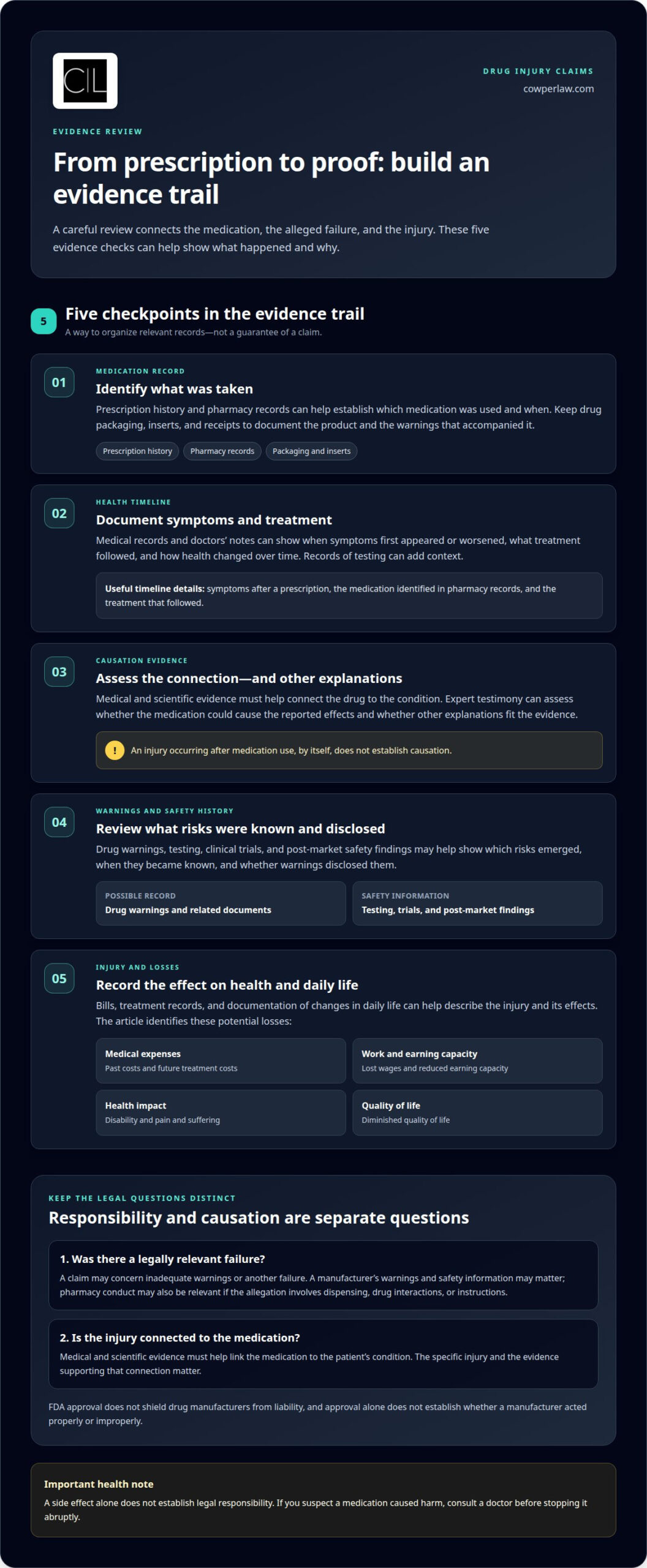
Drug injury claims examine both legal responsibility and causation. Patients must connect the medication to their injuries and identify a potentially responsible party. A manufacturer may face a failure-to-warn claim if it did not disclose risks it knew or should have known. Such a claim does not require proof that the company intended harm. Evidence about a drug’s chemical effects, reported side effects, and warnings can help explain the alleged failure.
FDA approval does not shield drug manufacturers from liability. Pharmaceutical companies are legally obligated to disclose side effects discovered during testing, clinical trials, and post-market surveillance. In a failure-to-warn claim, evidence may address which risks emerged, when they became known, and whether the warnings disclosed them. These questions help assess liability, but approval alone does not establish that a manufacturer acted properly or improperly.
A pharmacy may also be relevant if the alleged harm involves dispensing or prescription instructions. Pharmacies may have a duty to dispense medications properly, check for known drug interactions, and provide correct instructions. For example, records showing that a patient received a medication with incorrect directions may help clarify the pharmacy’s role. The claim depends on the alleged conduct and the evidence connecting it to the injury.
Causation requires medical and scientific evidence linking the drug to the patient’s condition. Medical records can show when symptoms began, what treatment followed, and whether a doctor documented other possible causes. Expert testimony can assess whether the medication’s known effects fit the injury and timeline. Prescription history and drug warnings provide additional context. Symptoms that occur after taking a drug matter, but timing alone does not establish causation.
Damages are considered after the evidence addresses responsibility and harm. Records of treatment, lost wages, disability, and changes in daily life can support claimed losses. For example, records of ongoing care after an adverse reaction may help show its impact. A claim’s strength depends on how clearly the evidence connects the alleged failure, the medication, and the patient’s injuries.
Eligibility depends on the connection between a prescription medication, a person’s injury, and a legally relevant failure. A dangerous prescription drug lawsuit may be considered when evidence links serious harm to a medication and identifies a potentially responsible party. Records of the prescription, treatment, and changes in health can help establish the timeline. The injury alone does not establish liability.
The claim also depends on what pharmaceutical companies knew and disclosed. A failure-to-warn claim may focus on whether a manufacturer failed to disclose risks it knew or should have known. FDA approval does not shield a manufacturer from liability. Records about warnings, clinical trials, or post-market safety findings may help show whether information about a risk was adequately disclosed.
Compensation may include medical expenses, future treatment costs, lost wages, reduced earning capacity, pain and suffering, disability, and diminished quality of life. Treatment bills and employment records, for instance, can document different effects of an injury. Surviving families may seek wrongful death damages when a medication-related death supports a claim. The harm, evidence, and claimed losses shape the compensation that may be pursued.
Filing deadlines vary by state and claim type. In Florida, the general deadline for dangerous drug claims is two years from the date of injury or discovery of the harm. The applicable start date and deadline matter, so preserve dated records showing treatment and when the harm was discovered.
To begin assessing a claim, preserve prescription records, medication packaging, medical notes, and receipts, then organize them by date. These materials can help evaluate whether a dangerous prescription drug lawsuit has support by showing which drug was taken, what injury followed, and whether a failure to disclose or another basis for liability may apply.
If a medication injury has left you weighing your next steps, discuss your drug injury claim with a legal team.
Cowper Law represents people harmed by medical devices through Medical Device Injury Litigation. This service is relevant when the alleged source of harm is a device rather than a prescription medication. For example, someone injured by a spinal cord stimulator can explore Spinal Cord Stimulator Lawsuit Representation and how the device, injury, and medical evidence relate.
Severe, lasting harm may also call for Catastrophic Injury Legal Services. When a device-related injury results in death, surviving family members may have questions about Wrongful Death Claims. Each type of claim focuses on the alleged harm and the evidence connecting it to the device.
If a medical device caused serious harm to you or someone close to you, contact Cowper Law or visit cowperlaw.com to discuss your next steps.
A dangerous prescription drug lawsuit is not just about identifying a medication. It is about determining how the injury, product, and potential claim fit together. Before deciding what to do, write down the questions that remain: which records could clarify the timeline, what losses need documenting, and whether your concern involves a drug or a medical device. A clear list can make a legal discussion more focused and help you explain what matters most.
Cowper Law handles Drug Injury Litigation and offers Medical Device Injury Litigation, Spinal Cord Stimulator Lawsuit Representation, and Catastrophic Injury Legal Services. The distinction matters: a claim involving a prescription medication differs from one involving an implanted device, even when both cause serious harm. Share the facts you have so the discussion can focus on the legal issue that fits your circumstances.
For a considered conversation about your situation, contact Cowper Law about your claim. Taking that step can help you move from uncertainty toward a clearer path forward.
Yes. Off-label use alone does not automatically prevent a claim. Off-label prescribing means a doctor uses an approved medication for a purpose regulators have not approved. A doctor may prescribe it using professional judgment, while manufacturers cannot promote the drug for an unapproved use. Key questions may include whether the drug caused injury and whether the manufacturer’s conduct or warnings support a claim.
No. An FDA adverse event report can document a health problem reported after medication use, but the report alone does not establish that the drug caused it. A report may help identify a potential safety issue or provide context for a patient’s history. Medical records, prescription details, scientific evidence, and expert analysis can help evaluate causation in an individual case.
Drug manufacturers may dispute whether the medication caused the reported condition, whether warnings adequately disclosed the risk, or whether another factor explains the injury. For example, a manufacturer may point to a patient’s other medications or underlying condition when contesting causation. The response depends on the claim and evidence, including the person’s treatment timeline, prescribing history, and relevant safety information.
The evidence needed varies by claim, but a useful starting file can include the prescription label, pharmacy history, appointment notes, and test results. Keep dated records showing when the medication began and when symptoms appeared. For example, lab results from before and after treatment may help explain a change in health. The evidence must address both the alleged failure and the claimed connection to the injury.
Multidistrict litigation, or MDL, coordinates related federal lawsuits for pretrial proceedings. It can bring cases involving the same medication or similar allegations before one federal court for coordinated handling. For example, federal cases alleging a connection between Dupixent and cutaneous T-cell lymphoma were consolidated into MDL No. 3180 in June 2026. Coordination does not itself prove causation in an individual case.
Strict liability is a legal theory that can focus on whether a product was defective and caused injury, rather than whether the manufacturer intended harm. It differs from a negligence claim, which examines conduct such as whether a company failed to take reasonable care. The specific legal test depends on the claim and applicable state law. The evidence must still support the alleged defect and injury.