
Can you pursue an injury claim without paying attorney fees upfront, and what happens if there’s no recovery? Contingency basis legal representation for injury can ease the pressure of paying legal fees while medical and other expenses mount. Under this arrangement, the attorney’s fee is tied to a successful recovery of damages, but that doesn’t automatically mean case expenses are waived. The written agreement matters.
Before signing, get clear on the difference between attorney fees and case expenses, what work the representation covers, and how the agreement addresses decisions such as settlement. The fee percentage alone doesn’t tell the whole story. Cowper Law represents people harmed by medical devices, drugs, negligence, and catastrophic injuries, as well as families pursuing wrongful death claims. Understanding the terms is a practical first step toward deciding whether representation fits your circumstances.
In contingency-basis legal representation for injury claims, the attorney’s fee is tied to a successful financial recovery. Instead of paying that fee by the hour as the case progresses, the client and attorney agree that the fee will be paid from a recovery, as described in their written agreement. This arrangement can make legal representation more accessible when an injured person is already facing medical bills, lost income, and other demands. It does not guarantee that a claim will succeed or produce a particular result.
In plain terms, contingency-based representation means the attorney’s fee depends on obtaining a financial recovery for the client, under the terms set out in the agreement. The phrase describes how the attorney is paid, not what the case is worth or how it will end. A contingent fee is one way legal fees may be structured, but the specific terms depend on the agreement and applicable rules.
Keep attorney fees separate from case expenses. Expenses may include costs associated with gathering records, filing documents, or obtaining expert input. The agreement may explain whether those expenses are paid from a recovery, handled another way, or remain the client’s responsibility if there is no recovery. Don’t assume that a contingency arrangement erases every possible expense.
With hourly billing, a client generally pays for the time a lawyer spends on the matter, as set out in the fee agreement. With a contingency arrangement, the attorney’s fee is connected to a recovery rather than billed solely for each hour worked. Neither structure is automatically right for every legal matter. For an injury client managing treatment and household expenses, understanding the fee approach before committing can make the financial terms clearer.
For example, someone with a serious device-related injury may be considering legal representation while still receiving care. They can ask how the proposed arrangement works, what expenses it addresses, and what the agreement says happens if there is no recovery. The goal is to understand the terms before legal work begins, not to assume a particular result.
If a claim produces no financial recovery, the agreement may provide that no attorney fee is collected. That doesn’t, by itself, answer whether case expenses could still be owed. The written terms and rules that apply to the representation matter. Read the provisions about unsuccessful claims carefully, and ask for plain-language explanations of terms you don’t understand before signing.
“No attorney fee” and “no expense responsibility” aren’t necessarily the same promise. Cowper Law collects legal fees only upon a successful recovery of damages. For a particular claim, review the agreement for the fee calculation, how expenses are handled, and what happens if there’s no recovery. Clear terms give you a sounder basis for deciding whether to move forward.
A clear written agreement turns a general understanding into specific terms you can review. Before signing, make sure you can explain how the attorney’s fee is calculated, which recovery it applies to, how case expenses are treated, and what work the representation covers. The written agreement controls the specific fee terms. If its wording leaves you uncertain, pause and ask for an explanation in plain language.
The Cornell Law School’s definition of contingency fee offers helpful background on this fee structure. General descriptions can’t replace the terms of your own agreement, which should explain how the arrangement applies to your claim. Contingency basis legal representation for injury can involve different contract terms, so don’t assume every firm handles fees and expenses the same way.
Read the financial provisions closely. Identify the fee calculation and the recovery it applies to, such as whether the agreement addresses a settlement, a judgment, or both. If the agreement explains the sequence, note whether expenses are deducted before or after the attorney’s fee is calculated. These details affect how funds are allocated, so ask for clarification if the wording is vague.
Case expenses are separate from attorney fees. Look for how the agreement defines expenses, who pays them as they arise, how they’re accounted for, and what happens if there’s no recovery. If records or expert input are needed, the document should help you understand how those expenses fit into the arrangement. Don’t infer that a contingency fee automatically covers every cost.
The agreement should also describe the work included, any client responsibilities, how updates or questions will be handled, and what happens if either side ends the representation. These provisions matter throughout the case, not just when funds are distributed. If a phrase about ending representation or outstanding expenses is unclear, ask what it means in practical terms and how applicable rules may affect it.
Use this checklist as you review:
Terms and professional rules can vary by jurisdiction, so use a general checklist alongside a careful review of the actual document. Ask about each provision you don’t understand, and keep a copy of the signed agreement. If you’re considering representation for an injury involving a medical device, drug, or negligence, you can discuss your injury claim circumstances with Cowper Law.
A fee percentage can catch your attention, but it can’t tell the whole story. To assess contingency representation, consider whether the terms are clear, whether communication is understandable, and whether the attorney has experience relevant to the kind of injury claim you’re considering. The agreement and the work behind it matter alongside the fee model.
A headline fee alone doesn’t show what a client may ultimately receive. The fee calculation, case expenses, and amount recovered all affect how funds may be distributed under the agreement. Contingency basis legal representation for injury is easier to assess when you look beyond one figure and understand how the arrangement works from the start of a claim through resolution.
Bring specific questions to a discussion about representation. Ask how the attorney’s fee is calculated if a case resolves, how expenses are handled if there’s no recovery, and whether the agreement describes any changes if litigation or trial becomes necessary. Clear answers help you understand the terms, and the written agreement should reflect the arrangement you’re being asked to accept.
| Topic | Question to ask |
|---|---|
| Fees | How does the agreement calculate the attorney’s fee, and what recovery is it applied to? |
| Expenses | How are case expenses handled if there’s no recovery, and how are they accounted for? |
| Communication | Who will provide updates, and how can I raise questions about the case? |
| Case strategy | What might change in the representation if litigation or trial becomes necessary? |
Pay attention to how the answers are explained. If a term sounds unclear, ask for a plain-language explanation and compare it with the written document. A careful conversation can surface assumptions before they become points of confusion later.
The fee structure doesn’t reveal how a claim will be investigated or prepared. Injury litigation may require reviewing records, examining available evidence, and assessing how the facts support the claim. A medical device injury lawyer, for example, may need to understand both the person’s harm and the circumstances surrounding the device. Ask how the legal team approaches the issues relevant to your situation.
Trial readiness also matters. A case may resolve without trial, but preparation should account for the possibility that disputed facts or negotiations could lead to litigation. This doesn’t mean a trial is certain or that any outcome can be promised. It means understanding whether the legal strategy considers the evidence, opposing arguments, and steps a case may require.
Evaluate responsiveness and relevant experience with the same care you give the fee terms. The right questions can clarify the path ahead and help you decide whether the proposed representation fits your needs.
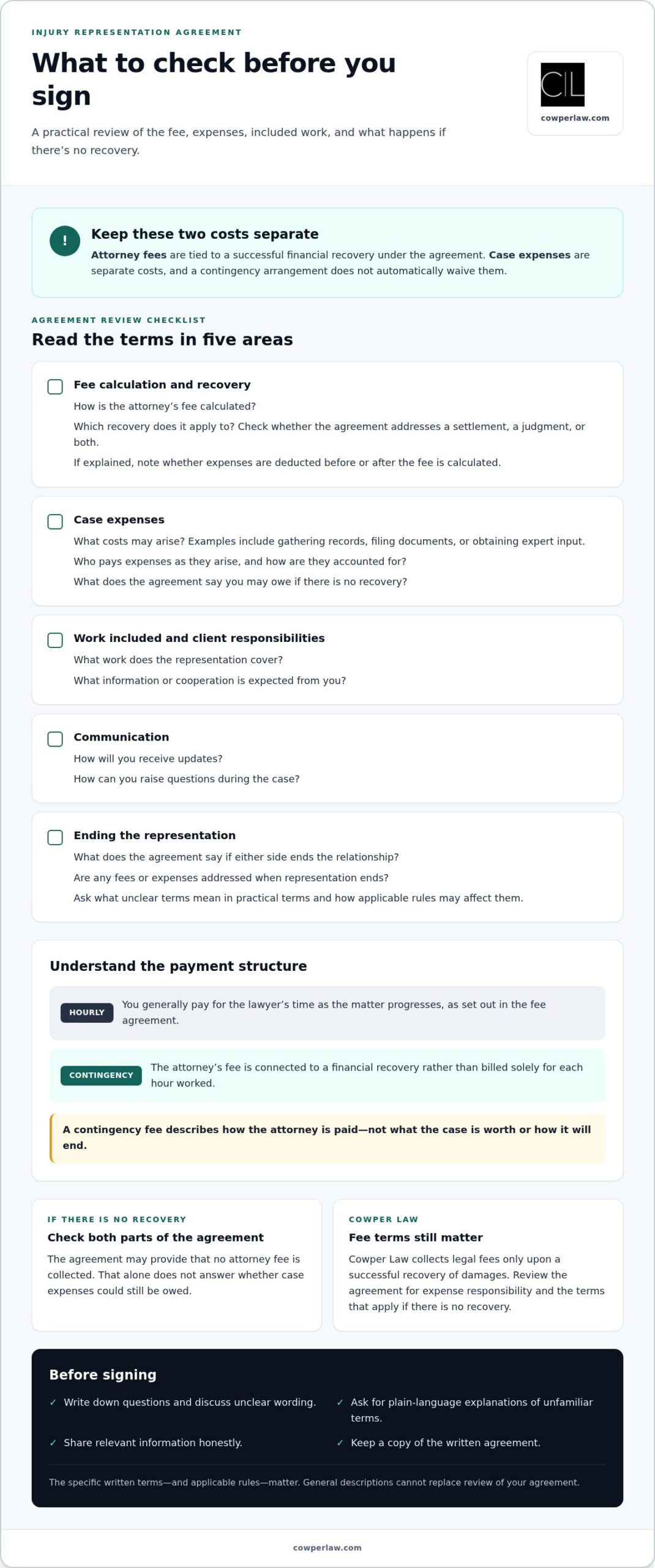
Signing an agreement is an important decision, and you’re entitled to understand what you’re agreeing to. A little preparation can make the discussion more focused and help you identify questions before representation begins. These steps can help you review the terms and understand what the agreement covers.
Before deciding whether to move forward, ask what the initial case review may examine. Depending on the claim, relevant issues can include the injury, its connection to an alleged act or product, available evidence, and deadlines that may apply. Filing deadlines aren’t universal. They can depend on the type of claim and jurisdiction, so ask how timing concerns relate to your circumstances.
Recovery is also case-specific. A discussion about possible outcomes shouldn’t be treated as a prediction or promise. For additional context, Cowper Law’s published guide on medical device lawsuit settlement amounts addresses why outcomes vary from case to case. Reviewing it can help frame questions, but it can’t determine what any individual claim may recover.
Contingency basis legal representation for injury should begin with a clear understanding of both the written terms and the next steps being discussed. If you’re weighing representation for an injury involving a medical device, drug, or negligence, discuss your injury claim with Cowper Law.
An injury can leave you facing difficult questions while you’re trying to focus on your health and family. Cowper Law represents people harmed by medical devices, drugs, and negligence, along with individuals facing catastrophic injuries and families pursuing wrongful death claims. The firm’s contingency-based approach ties its legal fees to a successful recovery of damages. This means attorney fees are collected only upon a successful recovery, but it doesn’t mean every case expense is waived.
Before representation begins, review the written agreement for the specific fee terms, how a recovery is defined, and how expenses are handled. Those details belong to the agreement, not to assumptions about what contingency representation always includes. Clear terms help you understand the financial arrangement as you consider whether to move forward.
Injury claims can involve challenging questions about what happened, the harm a person experienced, and the evidence that may help explain it. Cowper Law’s work includes medical device injury, drug injury, catastrophic injury, and wrongful death matters. As a trial firm, Cowper Law approaches cases with the demands of litigation in mind, while keeping the individual and family at the center of the legal process.
Support means helping clients understand the issues, available options, and steps involved in their matter. For someone harmed by a device, that may mean discussing the circumstances surrounding the injury and what information could be relevant to evaluating a claim. For a family considering a wrongful death claim, it can mean receiving careful guidance through an unfamiliar process. Each person’s situation is different, and a description of a practice area can’t determine the outcome of an individual case.
Contingency basis legal representation for injury is a fee arrangement, but choosing representation also means deciding whom to trust with a serious and personal matter. A conversation can help you explain what happened, raise questions about the process, and understand potential next steps. It also gives you an opportunity to discuss the agreement’s terms before deciding whether to sign.
Bring the information you have and the questions that matter most to you. You don’t need to have every issue resolved before starting a conversation. The purpose is to understand your circumstances and the potential next steps with care and clarity.
If you or a family member has been harmed by a medical device, drug, or negligence, contact Cowper Law to discuss your injury circumstances.
Understanding the financial arrangement can give you a firmer footing as you consider what comes next. You don’t have to resolve every question about your claim in one conversation. Focus on making a decision you understand, with enough time to consider the written terms and how representation would fit your circumstances. That clarity can help you feel more in control during a difficult time.
Contingency basis legal representation for injury can make legal fees less immediate, but the choice to move forward should still feel informed and personal. Bring your questions and share what you’re comfortable discussing. Cowper Law can hear about your circumstances and talk through potential next steps without promising a particular result.
Discuss your injury case with Cowper Law. A clear conversation can help you take the next step with greater confidence.
No. Contingency basis legal representation for injury isn’t automatically appropriate for every claim. The facts, potential legal issues, and rules that apply in the relevant jurisdiction all matter. A claim involving a complex product issue, for example, may require a different initial review than another type of injury matter. Ask which case-specific factors affect the proposed representation and what the agreement would cover.
You may have options to end the attorney relationship, but what follows can depend on the agreement and applicable law. Before making a change, ask how to protect important case dates and arrange an orderly transfer of your file. Don’t assume changing lawyers automatically ends every possible fee or expense obligation. If there’s disagreement about what is owed or who may continue the claim, get advice based on your agreement and jurisdiction.
Bring what helps identify the claim and explain its timeline. If a device or drug is involved, note its name or model and when it was used, if you know. You can also bring a short list of questions and copies of relevant communications or claim reference numbers. Don’t delay a conversation because your materials aren’t perfectly organized. Be clear about what you know, what you’re unsure of, and what you still need to locate.
Not necessarily. An appeal is a distinct stage of legal work, so check whether the agreement includes it or limits representation to earlier proceedings. Ask what would happen if an appeal becomes relevant, including whether a separate written agreement would be needed and how any additional fees or expenses would be addressed. Get the explanation in writing before assuming the original terms continue to apply.
They may be, but whether a contingency arrangement is appropriate and what it covers depends on the claim, the jurisdiction, and the agreement. The law may also determine which family member or representative can bring a wrongful death claim. Before signing, ask who would be the client, whose interests the representation covers, and how decisions and communications will be handled among involved family members.
You can raise questions or discuss proposed terms before signing, but whether a particular provision can change depends on the matter, the firm, and applicable professional rules. Identify the specific wording you want clarified, such as how the fee is calculated or what work is included, and ask for a revised written version if terms change. The final document should match your understanding. Don’t rely on a verbal assurance that conflicts with it.