
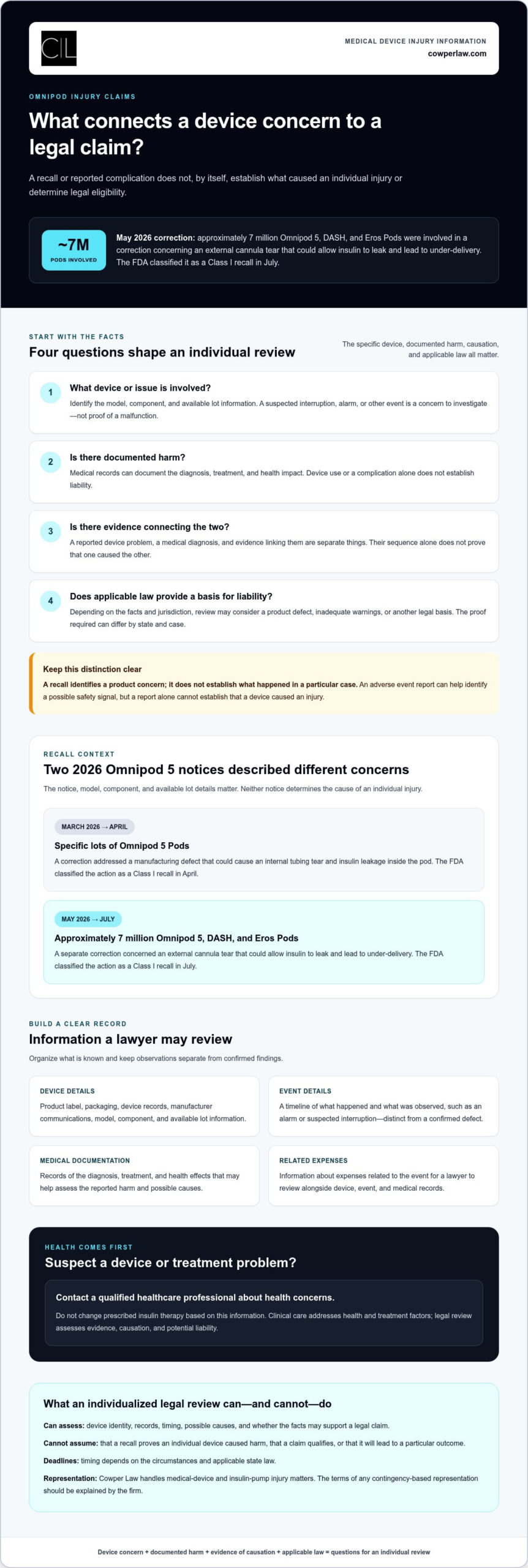
Could an Omnipod-related injury support a legal claim, even if the cause isn’t clear? An Omnipod insulin pump injury claim depends on evidence connecting a specific device issue to documented harm, not simply on having used a recalled product. In May 2026, Insulet issued a correction involving approximately 7 million Omnipod 5, DASH, and Eros Pods; the FDA classified it as a Class I recall in July. The reported issue involved an external cannula tear that could allow insulin to leak and lead to under-delivery.
It’s understandable to have questions about whether a pod, another component, treatment decisions, or something else contributed to an injury. A recall may be relevant, but it doesn’t establish what caused an individual patient’s harm or determine legal eligibility.
This article explains how a device problem may differ from a legally actionable defect, which device and medical records can help a lawyer assess causation and injury, and why deadlines depend on the circumstances and applicable state law. It also covers practical steps for preserving evidence and seeking an individualized legal review, without assuming that a claim will qualify or lead to a particular outcome.
An Omnipod-related injury may warrant legal review when the facts raise questions about a device issue, resulting harm, and whether the issue caused or contributed to that harm under applicable law. Using an Omnipod, experiencing a complication, or reporting a device problem doesn’t by itself establish that a company is legally responsible. Each situation requires an individual assessment.
A medical event can have several possible explanations. Diabetes complications, treatment decisions, device operation, and other health or technical factors may all need clinical and legal evaluation. A lawyer can help organize those questions without presuming fault. For background on pump technology, including patch pumps, see this overview of the insulin pump.
Depending on the facts and jurisdiction, possible legal theories may involve a product defect, inadequate warnings, or another basis for liability. The theory and proof required can differ by state and case. A review may consider whether there was a specific device problem, whether it caused or contributed to an injury, and whether the law provides a basis for holding a responsible party liable. Read more in this medical device injury lawyer guide.
An adverse event is a reported problem or harm. A product-liability claim requires evidence and legal analysis connecting an alleged product issue to an injury under the law that applies. That connection is central to an Omnipod insulin pump injury claim, and it cannot be assumed from the event alone.
Keep three things distinct: a reported device problem, a medical diagnosis, and evidence linking the two. For example, someone might report an interruption in insulin delivery and later receive treatment for a diabetes-related complication. Both events deserve attention, but their sequence alone doesn’t prove that the interruption caused the diagnosis or that a device defect was responsible.
Clinicians assess health and treatment factors; legal review considers causation and potential liability in light of the evidence and applicable law. Device operation, other medical circumstances, and alternative causes may be relevant. The aim is not to dismiss a patient’s experience or assign blame prematurely, but to determine whether the facts support a claim.
A suspected problem may involve interrupted insulin delivery, unexpected delivery, alarms, or connectivity. These are event categories to investigate, not proof that a particular Omnipod device malfunctioned. The exact model and component, what the user observed, and whether records confirm the event all matter.
Current notices show why it’s important to identify the specific model and component. Insulet issued a March 2026 correction for specific lots of Omnipod 5 Pods after a manufacturing defect could cause an internal tubing tear and insulin leakage inside the pod; the FDA classified that action as a Class I recall in April. A separate May 2026 correction involved approximately 7 million Omnipod 5, DASH, and Eros Pods due to an external cannula tear that could allow insulin to leak; the FDA classified it as a Class I recall in July. These notices describe identified product concerns, but they don’t establish what happened in an individual case or prove that a particular injury resulted.
Use the product label, packaging, device records, or manufacturer communications to identify the model, component, and, where available, lot information. Record what you observed, such as an alarm or suspected interruption, separately from any confirmed defect or official regulatory finding. Check current FDA and manufacturer records before relying on a model-specific notice, recall, or warning.
The FDA’s MAUDE database contains reports of device-related events. Reports may be submitted by different parties and may not establish a verified cause. Event reports can help identify possible safety signals, but a report alone cannot establish that a device caused an injury. The presence of reports isn’t a substitute for examining the device, medical records, and circumstances of the event.
If evidence supports a delivery problem, clinicians may assess whether it contributed to a change in blood glucose or another diabetes-related complication. The March and May recall descriptions identify insulin leakage and possible under-delivery as concerns. Potential consequences may include hyperglycemia and diabetic ketoacidosis (DKA), but they should not be assumed in an individual case. Medical records need to document the diagnosis, treatment, timing, and severity; a full review also considers alternative explanations.
Health concerns come first. Contact a qualified healthcare professional about treatment questions, and don’t stop, change, or substitute prescribed insulin therapy based on this article. For a legal review of device records and injury evidence, learn about insulin-pump device legal advocacy.
A useful review often starts with four connected records: device information, medical documentation, a clear event timeline, and evidence of losses. Together, these can help a lawyer assess what happened, whether a device issue may have contributed to an injury, and what additional information may be needed. Preserving evidence supports the review, but doesn’t guarantee that a claim is legally viable or lead to a particular outcome.
If it’s safe to do so, retain the pod or other relevant equipment and its packaging. Follow your healthcare provider’s guidance, and don’t dismantle or alter the device. A lawyer may advise you on preserving physical evidence, particularly if it could be relevant to technical evaluation.
Keep available records that help identify the device and document the event, such as:
Save original messages and files where possible, and make copies for your records. A prompt, factual timeline can help clarify how the reported device problem relates to medical care without treating an unconfirmed malfunction as an established defect.
Medical records may include diagnoses, treatment notes, test results, medication information, and records of hospital or follow-up care. They can establish what harm was identified and when. A lawyer may also seek qualified expert review to assess whether the evidence supports a connection between a device issue and the injury, while considering other possible causes.
Keep receipts and other documentation for expenses related to the event, as well as records showing changes to work or daily activities when relevant. Specific, dated evidence is more useful than estimates made long afterward. Be candid about gaps or uncertainty; an accurate record is stronger than one that only appears complete.
Evidence may also help clarify whether a matter is evaluated individually or as part of a group proceeding. This medical device class action guide explains group litigation, but whether that approach applies is a separate legal question. For an Omnipod insulin pump injury claim, counsel can review the available records and applicable law without assuming eligibility or recovery.
Start with your health, not the legal questions. If you have urgent symptoms or suspect an interruption in insulin delivery, seek prompt medical attention and contact a qualified healthcare professional. Tell your healthcare team about the device concern and follow its instructions. Don’t stop, change, or substitute prescribed insulin therapy based on this article.
Tell your care team what you observed, when it happened, and what treatment or device alarms followed. Share product information and any manufacturer communications you have. Your healthcare professional can advise on medical concerns and appropriate next steps; a lawyer can separately assess whether the facts may support a legal claim.
If you’re considering submitting an event report to the FDA, check the agency’s current instructions and reporting options first. Reporting an event can document a concern, but it doesn’t establish that the device caused an injury or determine legal responsibility.
Write down a dated account while details are fresh. Include what you noticed, when symptoms began, who you contacted, what they advised, and when you received care. Preserve relevant messages, screenshots, device information, packaging, and treatment records when safe. Keep receipts and other documentation of related expenses. Don’t dismantle or alter device components; follow your healthcare provider’s guidance about handling them.
Legal deadlines vary by jurisdiction and may depend on case-specific facts, including when an injury occurred or was discovered. There is no single deadline for every potential product-injury claim, so don’t rely on a general online estimate as a final answer. Timely legal review can help clarify which rules may apply and what evidence to preserve, without assuming a claim is eligible.
If you’re considering an Omnipod insulin pump injury claim, a confidential discussion with counsel may help you understand how your records and circumstances could be assessed. Cowper Law represents people in medical-device and insulin-pump injury matters, but a review is not a promise of eligibility or recovery. Discuss your device injury concerns with counsel.
A legal review assesses the facts; it doesn’t promise eligibility or recovery. Counsel may consider the device’s identity, available product and medical records, the timing of the event, possible causes of injury, and applicable law. Cowper Law handles medical-device injury litigation and insulin-pump device matters. The firm’s practice areas do not establish that it has handled a specific Omnipod case.
An initial conversation may cover which device and component were involved, what happened, what injuries were diagnosed, and what treatment followed. Records, a timeline, or the device itself may help counsel understand what is known and what remains uncertain. An attorney may request additional information as the assessment proceeds.
The review is individual. Counsel can evaluate whether the available facts raise legal questions about a device issue, causation, injury, and applicable law. A conversation doesn’t itself establish liability, create an attorney-client relationship, or guarantee that the firm will take the matter. Ask what the review includes and what happens next.
Clear answers can help you decide whether the working relationship fits your needs. Consider asking:
Cowper Law describes its representation as contingency-based, with fees collected only upon a successful recovery. The specific arrangement matters, so review the written agreement and ask the firm to explain how fees and case expenses are handled before deciding whether to proceed.
Consider the answers, the attorney’s relevant experience, and your own priorities. If you’re weighing an Omnipod insulin pump injury claim, you can contact Cowper Law to request an individualized review. The purpose is to assess the evidence and applicable law, not to promise a particular result.
An Omnipod insulin pump injury claim depends on evidence connecting a specific device concern to documented harm, along with the law that applies. Device records, medical documentation, and a clear account of events can help counsel assess what may have happened. A reported problem alone doesn’t prove device fault or establish eligibility.
Cowper Law handles medical-device injury litigation and insulin-pump device matters. The firm describes its representation as contingency-based, with fees collected only upon a successful recovery. Review and confirm the specific fee and expense terms in any written agreement.
If you’re unsure whether your experience warrants legal review, you don’t have to resolve every question on your own. Ask Cowper Law for an individualized review of your medical-device injury concerns. A careful assessment can help clarify the facts, evidence, and possible next steps without promising a particular outcome.
You may be able to pursue a claim if evidence and applicable law support a connection between a device issue and your injury. Using an Omnipod or experiencing a complication alone doesn’t establish liability. A legal review can consider the specific model and component, what happened, medical records, possible alternative causes, and applicable law. A lawyer can assess your circumstances, but no review can guarantee eligibility or compensation.
If a verified device issue interrupts or reduces insulin delivery, clinicians may assess whether it contributed to high blood glucose or a diabetes-related complication, including diabetic ketoacidosis (DKA). These are potential consequences, not proof that a particular pump caused harm. Unexpected delivery or other reported problems also require individual assessment. Medical records documenting diagnosis, timing, severity, and treatment help clarify what occurred and whether other causes may be relevant.
Yes. The FDA classified two 2026 Omnipod pod corrections as Class I recalls. In April, it classified a March correction involving specific lots of Omnipod 5 Pods with a possible internal tubing tear. In July, it classified a separate May correction involving approximately 7 million Omnipod 5, DASH, and Eros Pods with an external cannula tear. Check current FDA and manufacturer notices to confirm affected products and lots; a recall alone doesn’t prove the cause of an individual injury.
Keep available packaging and device components when safe, and follow your healthcare provider’s guidance about handling them. Save records identifying the model or lot, controller or app information, alarms, screenshots, and technical-support communications. Write down dates, observations, symptoms, and contacts while details are fresh. Also retain medical records and documentation of related expenses. Don’t dismantle or alter the device; preserving evidence may help a lawyer assess the facts, but it doesn’t guarantee a claim.
You usually can’t determine causation from a device alert or the timing of symptoms alone. A careful assessment compares the suspected malfunction with medical records, the event timeline, device information, treatment, and other possible explanations. Healthcare professionals assess medical questions, while legal counsel may review whether evidence supports a connection under applicable law. Expert analysis may be needed. A reported event or diagnosis is important information, but neither alone proves that the device caused the injury.
There’s no single national deadline for product-liability claims. Time limits vary by state and may depend on facts such as when the injury occurred or was discovered; some states also set a deadline tied to when a product was sold or made. Because these rules are case-specific, don’t rely on a general estimate to calculate your deadline. Seek timely legal review so counsel can identify which filing requirements may apply to your circumstances.
Cowper Law describes its representation as contingency-based, with legal fees collected only upon a successful recovery. That description doesn’t answer every question about a specific agreement or case expenses. Before deciding whether to proceed, ask the firm to explain how fees and expenses are handled and review the written representation agreement carefully. Cowper Law handles medical-device injury litigation and insulin-pump device matters, but this doesn’t guarantee that a particular claim will be accepted or successful.