
What if the bills you have today tell only a small part of what this injury will require tomorrow? A Life-altering injury lawsuit may address more than immediate treatment costs when an injury changes how you move, work, care for yourself, or take part in daily life. It can be difficult to know whether the effects are serious or lasting enough to support a claim, or who may be responsible.
Your losses are personal, and they may unfold over years. A careful evaluation considers expenses and income already lost, possible future care, reduced earning capacity, and the ways pain or limitations affect everyday life. This article explains what can make an injury life-altering, what losses a claim may address, and which records or expert assessments can help document its long-term effects. It also outlines questions to discuss with counsel as you weigh your next steps. Every case depends on its own facts and evidence.
An injury may be life-altering when its effects substantially change a person’s ability to function, live independently, or meet future needs. The practical impact matters more than the label: a diagnosis alone doesn’t show how someone’s work, relationships, or daily routines have changed. A catastrophic injury may involve a traumatic brain injury, spinal cord damage, a severe orthopedic injury, serious burns, or complications connected to a medical device. No injury type automatically establishes the right to bring a lawsuit.
A life-altering injury is harm that changes how a person functions, how independently they can live, or what care and support they may need in the future. Whether a Life-altering injury lawsuit may be available depends on the evidence, what caused the harm, and applicable state law. The seriousness of the injury is one part of the evaluation, not a decision by itself.
The effects can reach beyond visible physical limitations. A spinal injury may affect mobility and self-care. A brain injury may disrupt memory, communication, concentration, or emotional regulation. Severe burns or orthopedic injuries can limit movement and make familiar tasks painful. Complications involving an implant or another medical device may require ongoing treatment or create new functional challenges.
Some changes are less apparent to others. Chronic pain, fatigue, anxiety, or difficulty processing information can affect relationships, work, and independence without an obvious outward sign. Two people with the same diagnosis may face very different challenges depending on their symptoms, responsibilities, support, and recovery. That’s why the individual’s experience matters.
Not necessarily. Serious effects during recovery may matter even if doctors can’t yet say they’ll last forever. At the same time, a permanent diagnosis, disability rating, or prognosis doesn’t by itself establish legal eligibility. The relevant legal test depends on the claim and jurisdiction, and the evidence must connect the injury and its effects to the facts of the case.
Deadlines and legal standards vary by jurisdiction, so don’t rely on a general rule or wait for complete certainty about the long-term prognosis. A case-specific review can consider medical information, changes in function, and the circumstances behind the injury. This helps distinguish the label attached to an injury from what the evidence may support.
A Life-altering injury lawsuit may seek to address the injury’s full effect, not just expenses paid so far. Losses can involve medical care, income, practical help, and changes to everyday life. Which damages may be available depends on the evidence and applicable law. Cornell Law School’s overview of personal injury law provides background, but a particular claim requires an individual assessment.
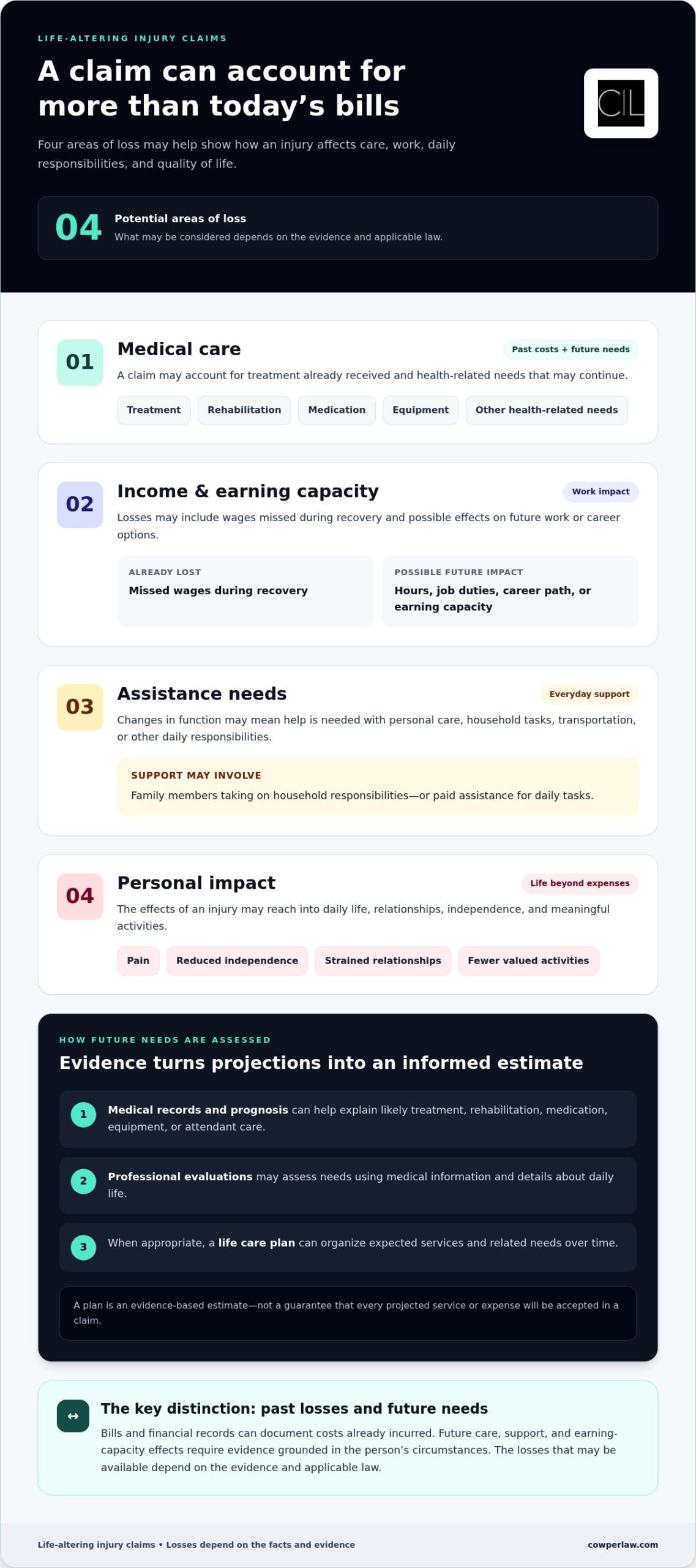
Today’s bills may show what an injury has already cost, but they can’t necessarily capture the care, support, and opportunities a person may need in the years ahead. A useful evaluation separates documented past losses from future needs that require reliable evidence.
Future needs should be based on the person’s medical circumstances, not guesswork. Treatment plans and prognosis may help explain anticipated rehabilitation, medication, equipment, or attendant care. When appropriate, a life care plan can organize expected services and related needs over time, often developed with specialized services like Injury Consulting to project comprehensive long-term care and physical therapy requirements. Qualified professionals may assess those projections using medical records, evaluations, and information about daily life. The plan is an evidence-based estimate, not a guarantee that every projected service or expense will be accepted in a claim.
Lost income can include more than missed paychecks. An injury may limit hours, change job duties, interrupt a career path, or affect future earning capacity. It can also shift household responsibilities to family members or require paid assistance. Personal losses may include reduced independence, strained relationships, and fewer opportunities to take part in valued activities. There’s no universal formula that guarantees a value for these effects. Applicable rules and evidence vary by claim.
A careful evaluation connects records and professional analysis to the person’s actual needs and losses. Cowper Law’s personalized case evaluation can help examine how the evidence may show the full impact of an injury, including future needs and changes to daily life.
A serious injury doesn’t, by itself, prove that someone else was legally responsible. A Life-altering injury lawsuit requires more than showing that the harm is profound. The evidence must support a legal basis for holding a person or organization accountable. Depending on the circumstances, an investigation may consider negligence, product liability, medical malpractice, or more than one legal framework.
These are starting points for investigation, not conclusions. A single event may raise questions about both a product and the conduct of people involved in its use. The facts, evidence, and applicable law determine which theories may be viable.
| Possible framework | What may need investigation | Questions the evidence may help answer |
|---|---|---|
| Negligence | Whether a person or organization acted unsafely or failed to meet a relevant duty. | What conduct occurred, whether it caused the injury, and what harm followed? |
| Product liability | Whether a product may have had a defect or inadequate warning. | Was there a product-related issue, and is there evidence connecting it to the injury? |
| Medical malpractice | Whether medical care or professional conduct may have fallen below the applicable standard. | What care was provided, what should have occurred under the relevant legal standard, and did the conduct cause harm? |
A negligence theory generally examines conduct, causation, and resulting harm. An investigation might consider whether a person acted unsafely or whether an organization failed to address a relevant hazard. The precise legal elements, including the duties and proof required, depend on the jurisdiction and case details. Evidence of a serious outcome does not replace evidence of responsibility.
A product-related investigation may examine an alleged defect in a product’s design or manufacture, or whether its warnings were adequate. A medical malpractice inquiry instead focuses on care or professional conduct. The questions can overlap. For example, an injury involving a medical device may call for review of both the device and the circumstances of treatment, without assuming either theory applies.
Records, product information, and qualified expert analysis may help clarify what happened and whether a connection to the injury can be supported. For background on device-related claims, see this medical device injury lawyer guide. Each potential path calls for an evidence-led, case-specific evaluation.
A useful record does more than confirm a diagnosis. It helps show how the injury happened, how function has changed, and what support may now be needed. For a Life-altering injury lawsuit, that picture often develops over time. Preserve evidence as you go rather than relying on memory months later.
Use a simple process: keep records, track changes, identify witnesses, and organize financial documents. Consistency matters. Treatment notes paired with dated descriptions of symptoms and daily limitations can help show when changes began, how they progressed, and what remains difficult.
Gather records that reflect both care and everyday function. Depending on the injury, useful materials may include:
Keep original documents intact and store copies in an organized place. In personal notes, record what happened and when, including tasks that now require help or activities you’ve had to stop or change. If a medical device may be involved, preserve relevant device and treatment information and review how to document a medical device injury for court as you organize the record. Share materials with counsel for case-specific guidance. Don’t alter records or guess at details you can’t recall.
Financial and practical records can help explain effects that invoices won’t capture. Employment materials may include pay stubs, attendance records, job duties, and documentation of missed work or changed responsibilities. If the injury limits work or earning capacity, records describing those restrictions and changes can help explain the impact.
Also note changes in household tasks, caregiving, transportation, and activities that mattered before the injury. A family member’s observations or a dated personal account may describe the practical difference, while receipts and service records can document some added expenses. Keep these materials factual and specific.
Depending on the questions a case raises, qualified professionals may help interpret medical needs, functional limits, or financial effects. The right analysis varies, and every claim doesn’t require the same experts. A careful review connects the records to the person’s actual experience. Discuss your injury evidence with Cowper Law to learn how an individualized evaluation can help organize the story your records tell.
A life-altering injury can leave important questions unanswered: who may be responsible, what evidence matters, and how should future needs be considered? Cowper Law represents people harmed by catastrophic injuries, medical devices, drugs, or negligence. The firm provides personalized legal representation, building an evidence-based account of the harm and its effects while assessing the legal issues raised by each case.
Evaluating a Life-altering injury lawsuit may involve reviewing the circumstances of the injury, available medical records, ongoing and anticipated needs, possible responsible parties, and applicable legal deadlines. Deadlines and legal standards vary, so a timely, case-specific review matters.
Cowper Law’s evaluation begins with the circumstances of the injury and available records and evidence. The review can consider how the injury has affected daily function, what treatment or support may be needed, and whether an individual or organization may have contributed to the harm. It can also identify gaps that may call for further investigation or professional analysis. An initial review examines the facts; it does not promise eligibility, acceptance, timing, or compensation.
A useful discussion should help you understand how the firm approaches the questions that matter to your circumstances. Consider asking:
Cowper Law collects legal fees only upon successful recovery. This does not mean every case will succeed or that other case expenses are waived. Discuss the fee arrangement and potential costs clearly before deciding how to proceed. If a medical device may be involved, the firm’s overview of medical device injury claims and patient rights offers additional context.
You deserve a careful review that takes your needs and your story seriously. Discuss your injury and legal options with Cowper Law to consider a path forward with clear, compassionate guidance.
A life-altering injury can reshape daily life and create needs that reach well beyond the first round of medical bills. A Life-altering injury lawsuit may address documented losses and evidence-supported future needs, but the legal path depends on the facts, responsibility, and applicable law. Records showing changes in health, work, independence, and everyday activities can help make the full impact clearer.
You don’t have to untangle every question alone. Cowper Law provides personalized representation in catastrophic injury and medical device injury matters, with careful attention to the evidence and the person behind the case. The firm collects legal fees only upon successful recovery. This doesn’t mean every case will succeed or that other case expenses are waived, so discuss the arrangement before deciding how to proceed.
Discuss your injury and legal options with Cowper Law to request a thoughtful, case-specific review and consider what comes next.
A life-altering injury can substantially change a person’s ability to function, work, live independently, maintain relationships, or take part in everyday activities over an extended period. Brain and spinal cord injuries, severe burns, major orthopedic injuries, and serious device-related harm may have lasting effects, but the diagnosis alone doesn’t settle a legal question. The injury’s individual consequences, medical evidence, circumstances, and applicable state law all matter.
A lawsuit may be possible when evidence supports a legally recognized basis for responsibility and connects it to the injury. Depending on the facts, a Life-altering injury lawsuit may involve negligence, a product issue, medical treatment, or another legal theory. State law, filing deadlines, and available evidence can affect the analysis. A lawyer can review the circumstances and explain potential options, but no review can guarantee eligibility or a particular result.
Depending on the facts and applicable law, a claim may seek damages for medical care, lost income, reduced future earning capacity, and support needs such as help with daily activities. It may also address personal effects, including pain or reduced enjoyment of life. The categories and evidence required vary. Future needs may call for treatment records, qualified professional opinions, or life care planning, and no particular category or amount is assured.
Future effects can be supported by treatment records, a medical prognosis, rehabilitation notes, work history, and dated descriptions of changes in daily activities. Depending on the case, qualified professionals may assess anticipated care or functional needs. The evidence should connect the injury with its ongoing effects and explain how those effects may develop. Relevant proof depends on the claim, available evidence, and the jurisdiction’s requirements.
No. A permanent-injury label isn’t the only factor that may matter. The severity and duration of effects, functional limitations, and evidence connecting the injury to responsible conduct may also be relevant. Legal standards differ by jurisdiction and claim type. A diagnosis or disability rating doesn’t automatically establish eligibility. If you’re unsure how the injury’s current or expected course affects your options, seek advice based on the particular facts and applicable rules.
There’s no single nationwide deadline that applies to every injury lawsuit. The filing period and any exceptions may depend on the state, type of claim, parties involved, and when relevant facts became known. Some claims may also involve special notice requirements. Because missing a deadline can affect legal rights, don’t rely on a general online estimate. Ask counsel to assess the rules that may apply to your circumstances promptly.
With a contingency-fee arrangement, the attorney’s legal fee is collected upon successful recovery, according to the fee agreement. The agreement should explain how the fee is calculated and how potential case expenses are handled. These are separate issues, so don’t assume every expense is waived. Cowper Law collects legal fees only upon successful recovery. Discuss the agreement’s terms and any potential expenses before deciding how to proceed.