
A loose implant or worsening pain is not something to ignore. Signs your medical implant is failing can include persistent or increasing pain, swelling, redness, discharge, or unusual movement around the implant. Some discomfort after dental implant surgery is expected for the first few days. But pain that does not fade within a week or two, returns after healing, or worsens should be assessed. Fever, feeling unwell, or difficulty swallowing requires immediate attention.
It’s understandable to worry that a new symptom means the implant must be removed. That is not always the case: early assessment can help identify the cause and whether treatment may preserve the implant or whether removal and replacement should be considered.
This article explains symptoms to watch for, factors that may increase the risk of failure, and what clinicians may consider when an implant is loose or unstable. Treatment decisions can differ depending on the implant, the surrounding tissue or bone, and whether infection or another complication is involved.
After dental implant placement, mild discomfort is expected for the first few days, and minor swelling should ease within a few days. Pain that worsens, persists, or returns after healing deserves attention.
Infection around a dental implant can inflame nearby tissue and cause redness, swelling, tenderness, pus, bleeding, bad breath, or a bad taste. Untreated infection can weaken supporting bone and threaten implant stability. Fever, feeling unwell, difficulty swallowing, or severe pain that medication does not relieve requires immediate attention.
Some discomfort during healing is different from pain that steadily intensifies. Ordinary discomfort after placement should fade within a week or two. Pain that continues for weeks, returns after healing, or grows stronger needs dental assessment. For example, increasing tenderness while chewing may indicate a problem that needs evaluation rather than continued observation.
Persistent pain can have several causes, including infection, breakdown involving the implant or abutment, or bone graft failure. Pain, swelling, or infection may also occur if osseointegration has been lost, although these symptoms are not always present. During osseointegration, living bone cells grow around the implant surface and anchor it to the jaw.
When seeking care, describe the change clearly: when it began, whether it is worsening, and whether biting triggers it. Mention visible symptoms such as gum redness, discharge, or bleeding. A dentist can assess the implant and surrounding tissue, then determine whether treatment should address infection, implant components, or another cause.
With a hip or knee implant, discuss new or worsening pain, swelling, warmth, reduced movement, or a feeling of instability with your treating clinician. These symptoms do not identify the cause on their own, but noting when they began and which movements trigger them helps explain the problem.
Record practical examples, such as pain while standing, difficulty walking, or swelling near the joint. Note whether symptoms are constant or changing, and whether the implant feels unstable during movement. Report severe or worsening symptoms promptly rather than treating them as routine recovery discomfort.
The timing of pain also matters for dental implants. Early failure can occur within the first 3 to 4 months, while the jawbone is fusing with the implant. Complications can also develop years after placement, so a long symptom-free period doesn’t rule out a new problem. A loose implant, pain when biting, or persistent discomfort should be assessed rather than tested by repeatedly pressing or moving it.
Do not assume the visible crown is the implant itself. A crown or abutment may loosen separately, while movement of the implant body can point to a problem with bone integration or placement. A dentist may use an X-ray to check bone growth around a mobile dental implant. This distinction helps guide the next assessment and possible treatment.
Risk varies by implant type, placement, healing, and overall health. Dental implant failure may develop early, while bone is integrating, or years later after infection or poor maintenance. Recognizing those timelines helps distinguish a healing concern from a later complication. Once healing progresses, an implant should feel stable, not repeatedly shift during ordinary use.
What symptoms suggest a breast implant rupture or complication? Possible signs include new pain, swelling, firmness, a lump, or changes in breast shape or size. Some ruptures may cause no obvious symptoms, so discuss any change in how the breast looks or feels with a clinician.
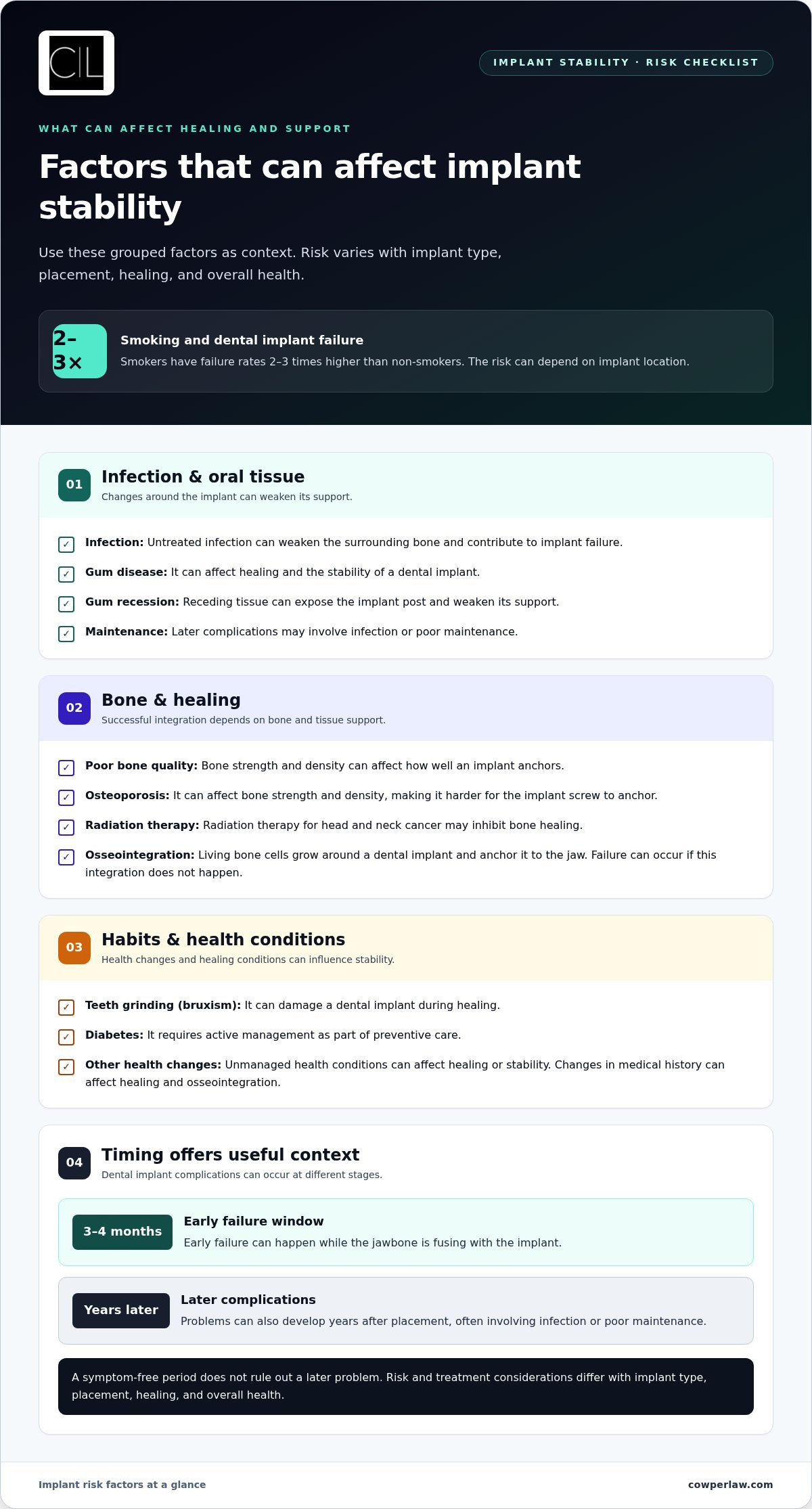
Common causes and risk factors for medical implant failure include infection, poor bone quality, and problems with healing or tissue support. For dental implants, gum disease, bruxism, smoking, osteoporosis, and unmanaged health conditions can affect healing or stability. Specific risks vary by implant type and placement.
Timing can offer useful context. Early dental implant failure happens within the first 3 to 4 months, as the jawbone fuses with the implant through osseointegration. Failure can occur if integration does not happen. Later problems may develop years after placement, often involving infection or poor maintenance. These different timelines matter because the cause and treatment considerations can differ.
Health and oral conditions can affect how well an implant heals. Gum disease and teeth grinding can damage a dental implant during healing. Osteoporosis can affect bone strength and density, making it harder for the implant screw to anchor. Radiation therapy for head and neck cancer may inhibit bone healing, while diabetes requires active management as part of preventive care.
Consider sensations such as unusual pressure, tenderness, or movement alongside these risk factors. Bleeding or inflamed gums, for example, can signal a problem around a dental implant. Note when the symptom began, whether it is changing, and any relevant health changes. These details can help clarify whether the concern relates to infection, bone support, or healing.
If you believe a device complication caused harm, medical device injury litigation may be relevant to understanding your legal options.
A dental implant that moves is different from one that simply feels unfamiliar. Movement can signal a problem with integration, placement, or an attached component, so avoid testing it by pushing or rocking it.
First, distinguish the implant body from the crown and abutment. The crown is the visible tooth, while the abutment connects it to the implant body anchored in the jawbone. A loose crown or abutment may be tightened or replaced. Movement of the implant body raises a different concern because the bone may not have integrated properly.
Notice what happens during ordinary activities. An implant that shifts while chewing, feels unstable when biting, or causes discomfort with pressure needs prompt dental assessment. A persistent change matters even without significant pain or swelling. Do not try to reposition the implant yourself, as further movement may irritate the surrounding tissue.
Write down when the shifting began and which activity brings it on. For example, note whether the crown moves while speaking or discomfort appears only when biting. Also record bleeding, redness, swelling, or discharge around the implant. Contact a dentist promptly about looseness, particularly if movement comes with worsening pain or signs of infection.
Timing can help explain the concern. Osseointegration, when living bone cells grow around the implant surface, typically takes 3-6 months. During this integration period, a dentist can assess the site and use an X-ray to check bone growth. An X-ray may help assess changes around the implant that are difficult to judge by appearance alone.
Assessment focuses on which component moves, the condition of the surrounding tissue, and whether the jawbone supports the implant. If only the crown or abutment is loose, tightening or replacement may address that component. If the implant body itself moves, the dentist evaluates bone integration and placement before deciding on treatment. Clear observations help distinguish these situations without repeatedly disturbing the implant.
A failing dental implant does not always need to be removed. Early treatment may preserve it, depending on the cause and the condition of the surrounding tissue and bone. A dentist may recommend deep cleaning around the implant or antibiotics if infection is involved. If the implant cannot be saved, removal and possible replacement may be considered.
Removal does not mean the implant will be replaced immediately. A failed dental implant may be removed under local anesthesia. The dentist then assesses the bone at the site. If it remains intact, a bone graft is not necessary. If bone loss has occurred, a graft may help rebuild support before another implant is considered.
Healing affects the next decision. When bone regeneration is needed, it may take several months to integrate before a replacement implant can be placed. A graft also needs time to heal before replacement. Treatment may therefore involve separate stages: removing the failed implant, restoring bone health when needed, then considering placement once the site is ready.
Costs depend on the steps required, including removal, bone grafting, and replacement, as well as local market factors. The price depends on the case and is provided after a quote request. The clinical plan matters: if bone remains intact, grafting may be unnecessary; when bone regeneration is needed, the additional healing stage affects the overall treatment process.
Ask the dentist to explain which component failed, whether infection or bone loss is present, and what each proposed stage is intended to address. A loose crown, for example, differs from an implant body that has failed to integrate, and treatment may differ. Understanding these distinctions helps you follow the treatment rationale, healing milestones, and expected chewing function after care.
If an implant complication caused harm, explore legal options after implant injury as you consider next steps.
Changes around a hip or knee implant deserve attention, especially when they disrupt ordinary movement. Notice new or worsening joint pain, swelling, warmth, stiffness, reduced movement, or a feeling that the joint is unstable. These symptoms can have different causes, so the pattern, timing, and effect on daily activities are useful details to share with a clinician.
Function matters. For example, note whether hip pain makes it harder to stand from a chair or knee discomfort limits walking or using stairs. Record whether symptoms began suddenly or gradually, remain constant, or occur during particular movements. A clear account helps the clinician understand what has changed from your usual level of movement.
Compare symptoms with your own recent routine, not someone else’s recovery. Changes such as needing support to walk, avoiding stairs, or struggling to rise from a chair provide concrete context. Keep a simple record of the activity, symptom, and time it occurred. If several changes develop together, describe them as a group rather than mentioning only the most noticeable one.
Contact the clinician responsible for your hip or knee care about new or worsening symptoms. Explain whether pain is persistent, whether swelling or warmth is present, and how movement has changed. Mention any recent fall or impact. Do not test joint stability by forcing a movement or repeatedly placing extra strain on the implant.
A clinical assessment can consider your symptoms, the implant, and how the joint functions. Be ready to explain when the change began, which movements trigger it, and whether it interferes with walking or other daily tasks. Bring a medication list and relevant medical history if available. These details help frame the assessment without assuming that one symptom proves implant failure.
Keep records of appointments, reported symptoms, and changes in daily function. For example, note when you first needed help with a task you previously managed alone. If symptoms fluctuate, record both easier and more difficult days. This timeline can help you describe the problem accurately and understand how the care plan addresses your hip or knee concerns.
Symptoms can leave you balancing medical decisions with questions about accountability. Keep a clear record of what changed, when it began, the care you received, and how the implant affected daily life. These details can help organize conversations with your healthcare team and clarify what support you need next.
If you recognize signs your medical implant is failing and suspect a device caused harm, legal guidance can help you understand possible next steps. Cowper Law handles Medical Device Injury Litigation, Spinal Cord Stimulator Lawsuit Representation, and Catastrophic Injury Legal Services. The right path depends on the device, the circumstances, and the harm involved.
You don’t have to sort through those questions alone. Contact Cowper Law to discuss your concerns and learn how the firm can help you move forward. Take the next step at your own pace, with your health and your experience at the center.
An implant failure may require further assessment, treatment, or removal, depending on its cause and the surrounding tissue. For example, infection may need treatment before a dentist considers whether the implant can remain. If a dental implant cannot be saved, removal may be followed by bone grafting or possible replacement. Keep records of symptoms, appointments, and treatment decisions to track how the situation develops.
Common warning signs include new or worsening pain, swelling, redness, discharge, bleeding, or movement around the implant. The pattern matters: note whether discomfort occurs during an activity, such as chewing, or whether a breast implant’s shape or size changes. Recognizing signs your medical implant is failing starts with noticing changes from your usual function and reporting them clearly, rather than trying to test the device yourself.
Normal dental implant healing may involve mild discomfort for the first few days, with minor swelling easing within a few days. Infection may cause redness, tenderness, pus, bleeding at the gumline, bad breath, or a bad taste. Worsening swelling, fever, feeling unwell, or difficulty swallowing requires immediate attention. Track whether symptoms are improving or intensifying, as the direction of change helps describe the concern.
Symptoms may appear during early healing or much later. Early dental implant failure happens within the first 3 to 4 months, while the jawbone is integrating with the implant. Other complications can develop years after placement. For instance, someone who felt well after initial healing may later notice pain or swelling. The time symptoms begin is useful context, but it doesn’t establish the cause by itself.
Assessment depends on the implant and the reported changes. For a mobile dental implant, a dentist may use an X-ray to assess bone growth around it; an X-ray can also indicate micro-movements. Describe what moves, when discomfort occurs, and whether swelling or discharge is present. For a hip or knee implant, explain which movements have changed and how daily function is affected so the assessment can address those concerns.
Treatment depends on the cause and whether the implant can be preserved. Dental implant care may involve antibiotics or deep cleaning around the implant. A loose crown or abutment may be tightened or replaced, while an implant that cannot be saved may need removal. If bone loss has occurred, a bone graft may be considered before replacement. The condition of the bone helps determine the treatment sequence.
For dental implants, brush twice daily and keep scheduled professional cleanings. Checkups every 3-4 months are recommended, especially during the first year; after the first year, long-term checkups every 6 months are advised. Avoiding smoking, managing diabetes, and telling your dentist about health changes can support preventive care. Keep a simple symptom log, noting changes in pain, gum appearance, movement, or chewing function.