
A lead fracture is a reason to investigate, not proof of a lawsuit. A Spinal cord stimulator lead fracture lawsuit depends on whether the device problem, the harm you experienced, and the available evidence support a claim in your circumstances.
If your pain or other symptoms changed after a suspected device problem, you may be focused on medical appointments, imaging, revision, or removal. You may also be wondering what records to keep and whether a filing deadline applies. These questions deserve careful attention, without assuming that a fracture alone establishes responsibility or a right to compensation.
This article explains the possible medical and legal significance of a lead fracture, the records and case-specific facts that may help an attorney assess a claim, and why deadlines can vary with the applicable law and circumstances. Cowper Law represents individuals in spinal cord stimulator litigation, reviewing medical records, device history, and alleged harm. The firm’s representation is contingency-based, with legal fees collected only upon successful recovery. No outcome can be promised, but a thoughtful review can help clarify your options.
A lead fracture is a break or disruption in a spinal cord stimulator lead, the component that carries electrical signals from the system to targeted areas. The finding alone, however, doesn’t tell the whole story. Its significance depends on the device assessment, the patient’s symptoms, and whether treatment is needed. One person may have a device finding without the same symptoms or care needs as another.
A new concern can bring difficult questions: Why has the stimulation changed? Is another procedure needed? Could a device problem be connected to new or worsening symptoms? Patients may look into a Spinal cord stimulator lead fracture lawsuit after imaging, a clinician’s assessment, revision surgery, or device removal raises questions about what happened. Legal review is separate from medical care and doesn’t presume that a device caused harm.
A suspected device problem is a concern to investigate. It becomes a medically confirmed finding only after a clinician evaluates the available evidence.
A spinal cord stimulator system includes leads and an implantable pulse generator. The leads deliver electrical stimulation to targeted areas, while the pulse generator produces the signals. Because the generator is a separate component, a concern involving a lead doesn’t automatically mean there is a problem with the generator or the entire system.
A break or disruption may affect how stimulation is delivered, but symptoms or the word “fracture” alone can’t establish its significance. The Spinal Cord Stimulator Complications overview describes general device issues, including lead breakage. A clinician needs to assess an individual finding and its possible effects.
Patients may report that pain relief has changed, stimulation feels different, or discomfort has appeared or worsened. These experiences can be distressing, particularly when treatment had seemed stable. They can have multiple possible causes, however, and don’t by themselves establish a lead fracture or prove that a device problem caused an injury.
A clinician may consider the patient’s description, device assessment, imaging, and treatment history when deciding whether further evaluation or care is appropriate. Depending on the circumstances, the next step may involve additional assessment or a discussion of treatment. The clinician determines what is suitable for that patient.
If you’re concerned about a change, tell your clinician when it began, how it has affected you, and whether it coincided with a change in stimulation or care. Don’t stop, adjust, or remove a device without guidance from your treating clinician. If further procedures are discussed, ask what the evaluation found, which options are being considered, and how the decision relates to your symptoms.
These medical details may later help clarify the timeline, but they aren’t a legal conclusion. A Spinal cord stimulator lead fracture lawsuit requires a separate, fact-specific review of the device history, alleged harm, and evidence connecting them. A fracture raises questions; it isn’t proof of responsibility or entitlement to a legal recovery.
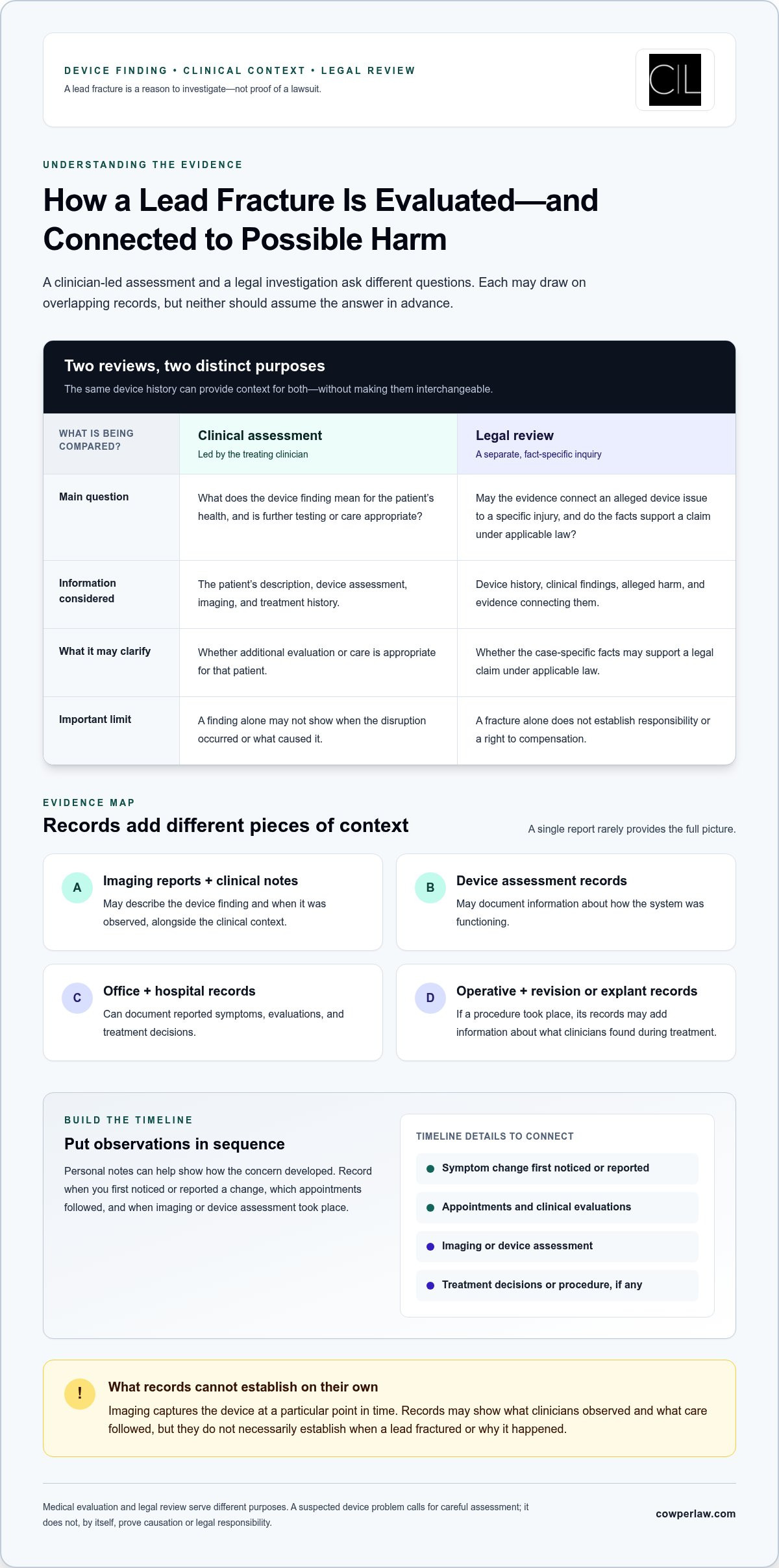
A clinician-led assessment and a legal investigation answer different questions. A treating clinician evaluates the device finding and the patient’s health, then determines whether further testing or care is appropriate. A legal review considers whether the evidence may connect an alleged device issue to a specific injury and whether the facts support a claim under applicable law. Neither review should assume the answer in advance.
A fracture finding can be important, but it may not show when the disruption occurred or what caused it. Imaging captures the device at a particular point in time and needs to be considered alongside clinical notes, device information, and the patient’s history. A single record rarely provides the full picture.
Different records can provide different pieces of context. Depending on the patient’s care, relevant documents may include:
These documents can show what clinicians observed and what care followed. They don’t necessarily establish when a lead fractured or why it happened. An attorney evaluating a Spinal cord stimulator lead fracture lawsuit may compare records over time, considering how the device history, clinical findings, and alleged harm fit together instead of relying on one report in isolation.
A timeline can make the records easier to understand. For example, noting when you first reported a change, which appointments followed, and when imaging or a device assessment took place can help show how the concern developed. If revision or removal occurred, the procedure record may add information about what clinicians found during treatment. The sequence provides context, but timing alone doesn’t prove causation.
Symptoms may also have more than one possible explanation. Your underlying condition, earlier symptoms, other health issues, and changes in care may all matter when clinicians assess your health and counsel review a claim. This doesn’t discount your experience. It explains why careful, individualized review matters.
Causation depends on case-specific medical findings and legal evidence. A fracture finding alone doesn’t establish what caused an injury or who may be responsible.
Medical decisions belong with the treating team, while legal analysis requires review of the relevant records and applicable law. If you want to understand how your device history and alleged harm may be assessed, Cowper Law’s spinal cord stimulator lawsuit representation includes a personalized review of those case-specific facts. A review can clarify legal questions, but it cannot promise eligibility or a particular outcome.
A lead fracture may prompt a closer look, but it doesn’t by itself establish that a device was defective, that anyone was negligent, or that a patient is entitled to compensation. The legal question is not simply whether a lead broke. It is whether evidence supports a legally recognized claim connecting an alleged product issue to a person’s injury under the applicable law.
This distinction matters. A patient may have a confirmed finding and need additional treatment, yet the available evidence may not establish when the fracture occurred, what caused it, or whether it caused the reported harm. A careful review considers the full picture rather than treating one device finding or procedure as proof of a case.
An attorney may review the device’s identification information, implantation and treatment history, medical records, and documented injury. The review can also examine whether the evidence raises questions about a product’s design, manufacturing, or warnings, and whether those issues can be connected to the patient’s harm. The legal theories that may apply depend on the facts and applicable law.
For example, records might document a lead finding, a change in symptoms, and a later procedure. That sequence is relevant context, but it doesn’t automatically show that a product defect caused the symptoms or that a particular party is legally responsible. Other medical explanations and the patient’s history may also need consideration.
A possible claim depends on case-specific evidence connecting an alleged product issue to an injury, not on the fracture finding alone. Legal review can help identify what the records support and what questions remain. It cannot promise that a claim will qualify or predict its outcome. Cowper Law’s medical device injury litigation guidance explains the firm’s focus on these fact-specific claims.
A recall or safety notice may provide relevant context if it concerns the same device or component. Its scope, timing, and stated issue matter. A notice doesn’t by itself establish that an individual’s implanted device was affected, that it caused an injury, or that a legal claim will succeed. Those questions require examining the device identification and the person’s medical and treatment records.
Regulatory notices and litigation developments can change, so manufacturer- or model-specific claims should be grounded in current, verified information. Don’t assume that a notice applies to a device based on a general description alone. For recall-related background, Cowper Law’s spinal cord stimulator recall lawyer guide offers additional context.
A Spinal cord stimulator lead fracture lawsuit is not decided by one label, test, or notice. An individualized legal assessment can clarify how the device history, alleged harm, available evidence, and applicable law fit together, without presuming a result.
A suspected device problem can leave you juggling appointments, questions, and unfamiliar paperwork. You don’t need to investigate the device yourself. Focus on preserving records already available to you and making a straightforward account of what you experienced. These materials can help clinicians and, if you seek legal guidance, counsel understand the sequence of events.
Start with what you remember, using approximate dates if you don’t know the exact day. Keep your notes factual and distinguish what you experienced from what a clinician told you. Gather documents you already have, but don’t postpone medically appropriate care while trying to locate every record.
A simple folder or dated list can make the information easier to review. Cowper Law’s medical device injury documentation guide offers broader context for organizing records after a device-related concern.
Before speaking with counsel, consider writing a short summary in your own words: what device concern arose, what symptoms or injury you experienced, what treatment followed, and what questions remain. You don’t need to decide what caused the problem or use legal terminology. A clear account helps keep the focus on your experience and the records available.
Deadlines to bring a claim vary by jurisdiction and by the facts, including circumstances that may affect when a time limit begins. Don’t rely on a general online estimate as your personal deadline. Ask qualified counsel how the rules and any evidence-preservation needs may apply to your situation, and seek guidance promptly if you’re considering a Spinal cord stimulator lead fracture lawsuit.
Medical care remains the priority. Preserve what you can without interfering with treatment, and let counsel assess the legal questions. To discuss your situation with Cowper Law, share your device concern and available records. A review can help clarify the issues; it can’t guarantee eligibility or a particular result.
A lead fracture can raise difficult questions about your health, your device, and what may happen next. Cowper Law represents individuals in medical device injury litigation, including spinal cord stimulator cases. The firm’s approach is personalized and grounded in the specific records, device history, and harm involved. A careful review can clarify the legal questions to consider, but it cannot promise eligibility, compensation, or a particular outcome.
You don’t need to have every answer before seeking legal guidance. Medical care and personal decisions come first. A legal evaluation is an opportunity to understand how the available facts may fit together, identify what remains uncertain, and discuss possible next steps without treating a suspected device problem as proof of a claim.
Counsel can review available medical and device records, the timeline of treatment, and the harm you report. The review may identify questions that need further investigation, such as whether the records support an alleged product issue or connect that issue to an injury. It also considers the legal requirements that may apply to your circumstances.
Eligibility, potential legal theories, filing deadlines, and outcomes depend on individual facts and applicable law. A lawyer’s review is not a medical diagnosis, and it doesn’t replace the judgment of your treating team. You can discuss your health concerns and prior treatment decisions openly. The purpose is to understand your situation, not to second-guess the care you needed.
If you choose to begin a review, share your concerns in your own words and provide relevant records you already have. A brief summary can help set the context:
Cowper Law provides personalized support and determined advocacy, including representation against large companies. That means looking closely at the facts of your case rather than assuming that every fracture has the same meaning. You can discuss how the available evidence may shape the evaluation and which legal questions remain.
The firm’s representation is contingency-based, with legal fees collected only upon successful recovery. No recovery or result is guaranteed. If you’re considering a Spinal cord stimulator lead fracture lawsuit, a conversation can help clarify whether further legal review may be appropriate for your circumstances. Contact Cowper Law to discuss your situation.
A device concern can make the path ahead feel uncertain. You don’t have to resolve every medical or legal question before asking for guidance. A focused conversation can help you identify what you know, what remains unclear, and which questions deserve attention next.
If you’re considering a Spinal cord stimulator lead fracture lawsuit, an initial legal review is about understanding your individual circumstances, not promising a result. Cowper Law represents individuals in medical device injury litigation with personalized, compassionate advocacy. The firm’s legal fees are collected only upon successful recovery.
Your health and personal decisions remain central. Share what you’re comfortable discussing and take the process one step at a time. Contact Cowper Law to discuss your spinal cord stimulator lead fracture concerns. A clear conversation can be a steady beginning as you consider your options.
Possibly, but a fracture alone doesn’t establish a legal claim. An attorney may consider whether there’s a documented injury, what the device and treatment records show, and whether evidence connects an alleged device failure to the harm under applicable law. A procedure or change in care may be relevant, but it doesn’t decide the legal question by itself. A clinician should assess health concerns; a case-specific legal review can evaluate potential options.
No. A fracture doesn’t by itself prove a product defect, identify why the lead broke, or establish that it caused an injury. A review may compare device information with treatment records and the circumstances surrounding the finding. For example, the date a problem was recorded may differ from when it began. Treating professionals assess medical issues, while legal responsibility is analyzed separately under the facts and applicable law.
Reported experiences vary and may include pain, changed stimulation, or additional evaluation or treatment. Those symptoms don’t automatically establish that a lead fracture caused harm, since other explanations may need consideration. A clinician can assess symptoms and recommend care based on the patient’s circumstances. For legal review, useful context may include how the person’s condition changed, what treatment followed, and whether the records support a connection between the device concern and documented injury.
Keep copies of records you already have, such as imaging reports, clinician notes, device documents, and revision or removal records if a procedure occurred. A brief symptom and appointment timeline can help you recall the sequence later. Preserve documents in their original form rather than editing or annotating medical records. Don’t delay appropriate care while collecting paperwork. Counsel can help identify whether other records may matter to your circumstances.
No. A recall or safety notice may provide context, but it doesn’t automatically show that your specific device was affected, caused an injury, or supports a legal claim. Device identification, treatment history, documented harm, and applicable law all matter. Compare current recall details with reliable regulatory information rather than relying on a general device description. An attorney can assess how a notice relates to your individual circumstances.
There’s no single filing deadline that applies to everyone nationwide. Time limits can depend on the jurisdiction, the type of claim, and case-specific circumstances, including facts that may affect when a deadline begins. Because a missed deadline can limit legal options, seek guidance promptly from qualified counsel. A general online estimate can’t determine the date that applies to your situation, so seek advice based on your specific facts.
Cowper Law’s representation is contingency-based, with legal fees collected only upon successful recovery. Before deciding how to proceed, review the representation agreement and discuss any questions about its terms with the firm. This helps you understand the arrangement as you consider whether legal representation is right for your circumstances.