
A breast implant illness claim may depend on whether the evidence supports an alleged implant defect and whether the filing deadline has passed. Breast implant illness legal representation can help evaluate these issues. Some states allow two years from diagnosis or discovery of an injury to file a product liability claim, while others may allow up to four years. Because missing a deadline can affect your ability to seek compensation, speak with an attorney promptly.
It’s understandable to seek answers when illness, medical records, and uncertainty about an implant’s safety come together. Symptoms alone don’t establish whether you have a legal claim. The circumstances of the injury and the evidence about the device matter, too.
This article explains how alleged defects may relate to breast implant illness claims, what contingency fees generally mean, and why filing deadlines vary. You’ll also learn what information can help an attorney evaluate a potential claim, so you can approach the next step with greater clarity and a steadier sense of what to expect.
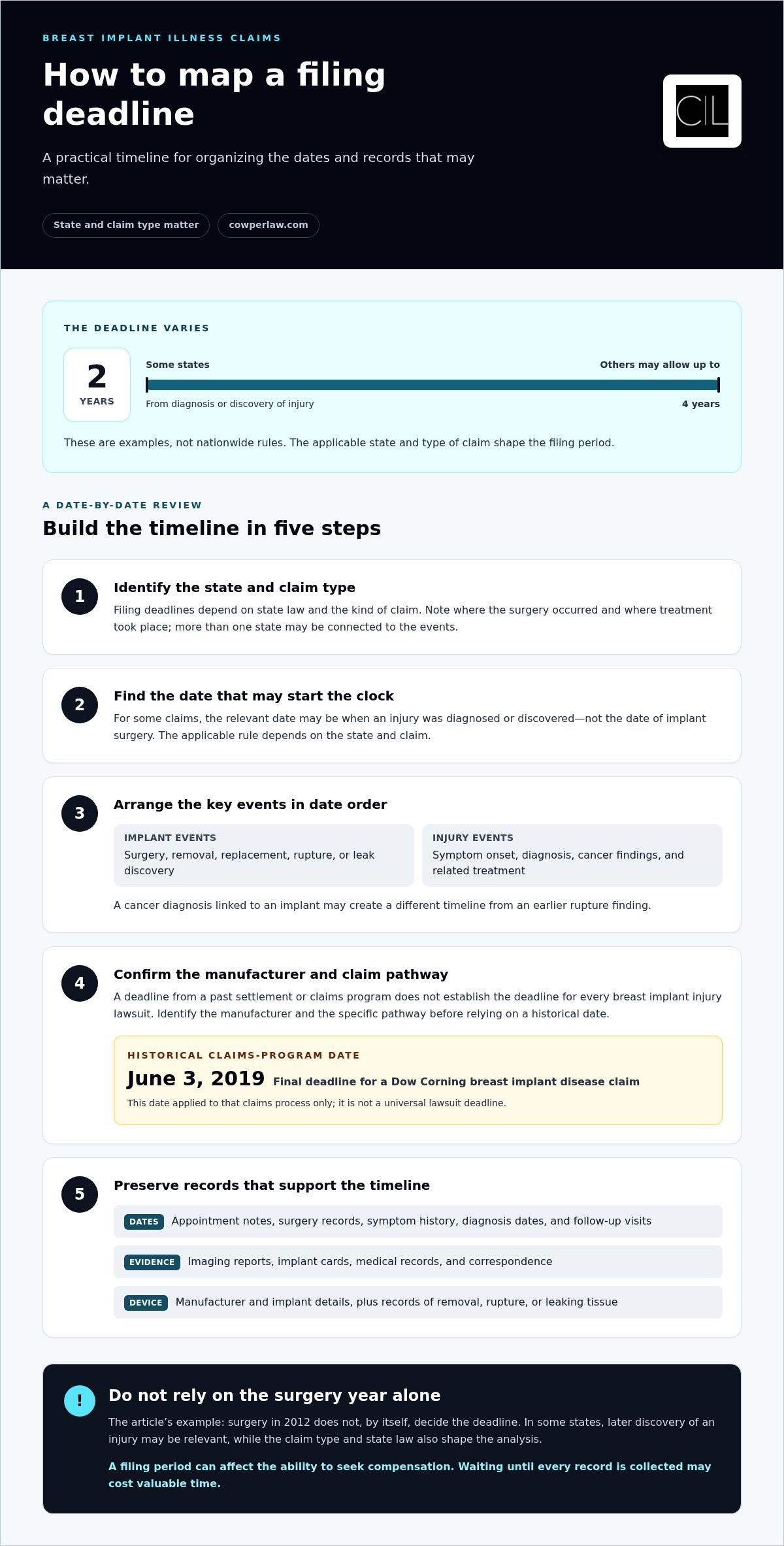
A filing deadline can determine whether an injured patient may pursue compensation. In the United States, the deadline depends on the state and type of claim. Some states allow two years from diagnosis or discovery of an injury to file a product liability claim; others may allow up to four years. These are not nationwide rules that apply everywhere, so the state connected to the claim matters.
The date that starts the clock matters, too. For some claims, the relevant date may be when the injury was diagnosed or discovered, rather than the date of breast implant surgery. Records can help clarify the timeline. Note the surgery date, when symptoms began, when a clinician identified an injury, and when imaging or surgery revealed a rupture or leaking tissue. A cancer diagnosis linked to an implant may create a different timeline from an earlier rupture finding.
For example, a person who had surgery in 2012 shouldn’t assume that year alone decides the deadline. Later discovery of an injury may be relevant in some states, while the claim type and applicable state law also shape the analysis. Preserve appointment notes, imaging reports, implant records, and correspondence. A dated record can help Cowper Law assess which events matter and whether a filing period may still be open.
Keep historical claims separate from current product liability deadlines. The final deadline to submit a Dow Corning breast implant disease claim was June 3, 2019. That date applied to that claims process; it doesn’t establish the deadline for every breast implant injury lawsuit. Identify the manufacturer and claim pathway before relying on a deadline associated with a past settlement or claims program.
To prepare for a deadline review, organize these details:
Speak with Cowper Law promptly for expert breast implant illness legal representation. A statute of limitations can prevent recovery, and waiting until you have every record may cost valuable time. An attorney can review the dates, identify potential claims, and explain which filing deadline may apply.
How can I check an attorney’s credentials and disciplinary history in my state? Search the official state bar attorney directory using the lawyer’s name and location, then review the listed license status and disciplinary record. Compare the result with the attorney’s name and firm details before discussing your case.
Many women worldwide have breast implants, and concerns about illness can raise urgent questions about cause and accountability. The term “breast implant illness” describes concerns people associate with implants. It does not, by itself, identify a specific defect or establish what caused an injury. A legal claim requires careful review of a person’s medical history, implant information, and evidence supporting an alleged connection.
One distinct condition discussed in implant litigation is breast implant-associated anaplastic large cell lymphoma, or BIA-ALCL. According to the FDA, in July 2019 it requested Allergan’s voluntary recall of BIOCELL textured implants and tissue expanders after worldwide reports of 573 BIA-ALCL cases and 33 patient deaths. These figures concern BIA-ALCL, not every illness that patients associate with implants.
The FDA’s later figures also need their dates and categories kept clear. FDA research identified over 700 breast implant-related cancer cases as of 2020. Over 600 reported cases involved Allergan-manufactured BIOCELL implants, and 36 deaths resulted from BIA-ALCL, according to that research. These numbers don’t establish the cause of an individual’s illness. They provide context for evaluating a particular implant and diagnosis.
Build an organized record before discussing a claim with an attorney. Start with the implant card or surgical records, then collect imaging, pathology results, removal records, and treatment notes. Add a dated account of symptoms and their effects on work or daily activities. For example, a pathology report identifying BIA-ALCL is different evidence from a record documenting a rupture, so organize documents by date and type.
An experienced lawyer can assess whether the records support a claim involving an alleged defect, and what evidence is still needed. Potential compensation can relate to medical expenses, lost income, pain and suffering, and emotional distress. The strength of the connection between the device, diagnosis, and documented losses guides that assessment. For people seeking help with those questions, breast implant injury litigation provides a path to have the alleged defect and resulting harm examined.
More than a million women may have received silicone-based breast implants since they returned to the U.S. market, and thousands may be at risk.
A contingency-fee arrangement ties the attorney’s fee to a recovery, as set out in the written agreement. If you’re considering a claim involving a breast implant device, understand both how the attorney’s fee is calculated and who is responsible for case expenses before signing. The agreement, not a verbal summary, explains the terms.
During a consultation, ask for a plain-language explanation of each cost category. The attorney should explain what happens if the case settles, goes to trial, or results in no recovery. Ask whether litigation expenses are deducted separately from the attorney’s fee. The written agreement should clarify how the calculation works in each outcome.
For example, a case may involve obtaining medical records, reviewing device information, and consulting qualified experts. These steps can create expenses beyond the attorney’s fee. Ask which expenses may arise, who pays them as the case proceeds, and whether you remain responsible for them if the claim ends without compensation. Review the specific agreement rather than assuming a standard industry formula.
Before signing, review these points with the lawyer:
A clear agreement helps you distinguish attorney’s fees from litigation expenses and make an informed decision. For instance, if an attorney explains a percentage but not whether costs are deducted before or after that calculation, ask for a written example using hypothetical figures. It should explain the method without promising a particular recovery.
Keep a copy of the signed agreement and any written explanation of costs. If a term is unclear, ask the attorney to explain it before you sign, then request the explanation in writing. This creates a shared record of the arrangement and can help prevent misunderstandings as the case develops.
The right fee arrangement depends on the agreement’s language, the work involved, and how expenses are handled. During a consultation, discuss the evidence, available device records, and steps needed to evaluate the claim. A careful review helps you understand the financial terms alongside the legal work before deciding whether to proceed.
Thousands of women filed lawsuits against breast implant manufacturers after reports of ruptures and illnesses. Attorneys can assess whether records connect an alleged defect with documented complications and resulting losses. Breast implant illness legal representation focuses on evidence supporting that connection, not simply the presence of symptoms.
Look for an attorney with experience in breast implant claims involving the device type and injury at issue. Ask how they assess implant records, medical evidence, and the relationship between an alleged defect and a patient’s complications. A focused discussion of these steps can help you evaluate relevant experience rather than relying on broad advertising or general personal injury claims.
Use an initial discussion to understand the attorney’s role and proposed case review. Ask whether the attorney reviews records directly and how they assess different kinds of evidence. Find out how updates are shared and who will answer your questions as the matter progresses. Clear explanations of records, communication, and next steps can help you decide whether the working relationship is right for you.
Legal representation for an alleged defect may involve gathering device and treatment records, evaluating the alleged failure, and documenting resulting harm. Breast implant illness legal representation may address concerns such as rupture, leakage, complications after implantation, or information about product risks. Removal records and pathology reports can help establish what happened and when.
Before a case review, organize the documents you already have. Include the implant card, surgical records, imaging, removal notes, pathology results, and follow-up records. Build a timeline that connects each document to an event. For example, pair an imaging report with the related appointment notes, then include later records showing how treatment changed.
An attorney can also assess the scope of a potential claim, including medical expenses, lost income, and documented effects on daily activities. Keep bills, employment records, and treatment notes together. These materials can help distinguish the device issue from other medical events and show how the alleged defect affected your life.
During your discussion, ask what evidence supports the alleged defect, what information may still be needed, and what steps could follow. To discuss your records and potential next steps, request a review of your breast implant concerns.
Look for experience that matches your concern. An attorney handling product injury claims should be able to explain how they assess an implant’s alleged defect, the medical evidence, and the resulting harm. Ask specifically about breast implant cases rather than relying on broad claims of personal injury experience. Strong breast implant illness legal representation starts with relevant knowledge and a clear explanation of the review process.
Use an initial discussion to understand the attorney’s approach. Ask how they distinguish a device failure, such as rupture or leakage, from an illness attributed to an implant. Find out what evidence may establish a connection between the device and injury. A clear explanation should address both supporting records and information that could complicate the claim.
Before the conversation, prepare a short case summary. Include the surgery and removal history, implant manufacturer if known, major diagnoses, and effects on work or daily life. You don’t need to build a legal argument yourself. The summary can help the attorney focus on your circumstances and identify records that may matter most.
Listen for specific, balanced answers. For example, an attorney should explain why a pathology report, imaging study, or removal record may matter without treating one document as proof of every issue. Ask how the legal team will keep you informed if additional records change its assessment. Direct answers help you understand the reasoning, not just the proposed result.
Compare your notes after each consultation. Record the attorney’s relevant experience, proposed review steps, communication plan, and any unanswered questions. If one attorney explains the evidence carefully while another offers only general assurances, that difference can help guide your decision. Consider whether the attorney’s approach fits your facts and priorities.
Keep your own file as the matter develops. Save written updates, agreements, and information requests together. If the attorney asks for a specific record, note when you sent it and keep a copy. As you assess breast implant illness legal representation, organized communication can help you stay involved in decisions about your case.
Your next step can be a focused conversation about what happened and what you need now. Before reaching out, write down your most important questions, such as how your records will be reviewed, who will guide the case, and how you’ll stay informed. Preparing in advance can make a difficult process more manageable.
Legal representation for breast implant illness should begin with careful attention to your circumstances and the evidence behind your concerns. Cowper Law handles medical device injury litigation, including spinal cord stimulator lawsuits, as well as catastrophic injury cases. The firm also handles breast implant litigation and can discuss whether its work fits your situation and explain a potential next step.
Contact Cowper Law about your claim to discuss your concerns and the path forward. You deserve to have your questions heard and your options considered with care.
Breast implant-associated anaplastic large cell lymphoma, or BIA-ALCL, is an illness linked to breast implants. Patients also use “breast implant illness” to describe varied health concerns they attribute to implants. The terms are not interchangeable: BIA-ALCL is a specific cancer, while the broader term describes a range of reported concerns. A person’s diagnosis and implant history help distinguish the issues involved.
An alleged defect can involve rupture, leakage, or other complications requiring medical attention or removal. BIA-ALCL is a separate concern associated with breast implants, including certain textured devices. A complication does not automatically establish that a product was defective or caused an illness. Keep device information and medical findings together so the implant type, diagnosis, and treatment can be considered in context.
Address health concerns with your treating clinician and keep a dated record of symptoms, appointments, and recommended care. Save implant cards, procedure paperwork, imaging, and bills in one file. Then write down questions for an attorney, including whether the available records support a claim and which state’s deadline may apply. Prompt legal review matters because filing deadlines can bar recovery.
Breast implant illness is a term patients use for health concerns they associate with implants, not the name of one specific diagnosis. Reported concerns vary, so no single symptom pattern proves the condition or its cause. Track what you experience, when it occurs, and how it affects daily activities. Share that history with your clinician, who can assess your symptoms and possible explanations.
Useful records include your implant card, operative report, imaging, diagnosis notes, and documentation of removal or follow-up treatment. Add pathology results if testing was performed, as well as bills and employment records documenting financial effects. A dated symptom and treatment timeline can connect these records. For example, note which appointment led to imaging or a change in treatment, then keep the related report with that date.
Fee arrangements depend on the written agreement. Cowper Law provides contingency-based legal representation, with legal fees collected only upon successful recovery of damages. Before signing, read how the agreement defines recovery and explains case expenses, including what happens if there is no recovery. Ask the attorney to clarify any term you don’t understand, and keep a copy of the signed agreement for your records.
Prepare a short timeline covering your implant surgery, diagnoses, major appointments, and any removal procedure. Gather the implant card, key medical reports, and documents showing expenses or missed work. Make a list of questions about relevant case experience, communication, and the written fee agreement. You don’t need to reach a legal conclusion first. Organized records help an attorney understand the situation and identify useful next steps.