
The FDA added a maculopathy warning to Elmiron’s label but had not asked Janssen to recall the drug. A recall and an Elmiron vision loss lawsuit are separate matters: people with eye damage may still have questions about pursuing a claim. The warning is one part of the story, not the whole case.
It’s understandable to want clear answers when vision changes appear after taking a medication. Pigmentary maculopathy, blurred vision, and other lasting problems can raise questions about how Elmiron’s risks were communicated and whether the drug contributed to the damage.
This article explains what potential settlements may depend on, what pigmentary maculopathy is, how the warning label changed, and which facts may matter when assessing eligibility to file. It also explains how vision symptoms and treatment history fit into a claim, so you can understand the issues before deciding on a next step.
Janssen and Johnson & Johnson began quietly settling some Elmiron lawsuits in 2023. They did not publicly disclose official settlement amounts. As a result, figures discussed in litigation are estimates, not a published settlement schedule. Some lawyers estimated that settlements could reach hundreds of thousands of dollars.
Projected ranges often distinguish claims by reported vision impairment. These are estimates, not guaranteed outcomes or official award amounts.
Those ranges are only one way to discuss potential compensation. A claim’s facts may include the type and severity of eye damage, treatment needs, and how symptoms affect work and daily activities. For example, documented retinal pigment changes and continuing vision problems may lead to a different damages assessment than symptoms that resolved. Records linking Elmiron use, diagnosis, and resulting limitations help show the impact on an individual.
Elmiron-related claims focus on pigmentary maculopathy and retinal pigment changes, which may involve vision loss or other vision problems. The degree of impairment matters, but it is not the only consideration. A damages assessment may also consider medical care, income affected by impaired vision, and the practical consequences of lasting symptoms. These details distinguish the clinical description of an injury from its effect on someone’s life.
That figure describes a projected aggregate, not an amount awarded to each plaintiff. In an Elmiron vision loss lawsuit, compensation depends on the evidence and claimed harm in the individual case. Elmiron use history, treatment records, eye examinations, and documentation of lasting limitations can help establish the connection between use and damages.
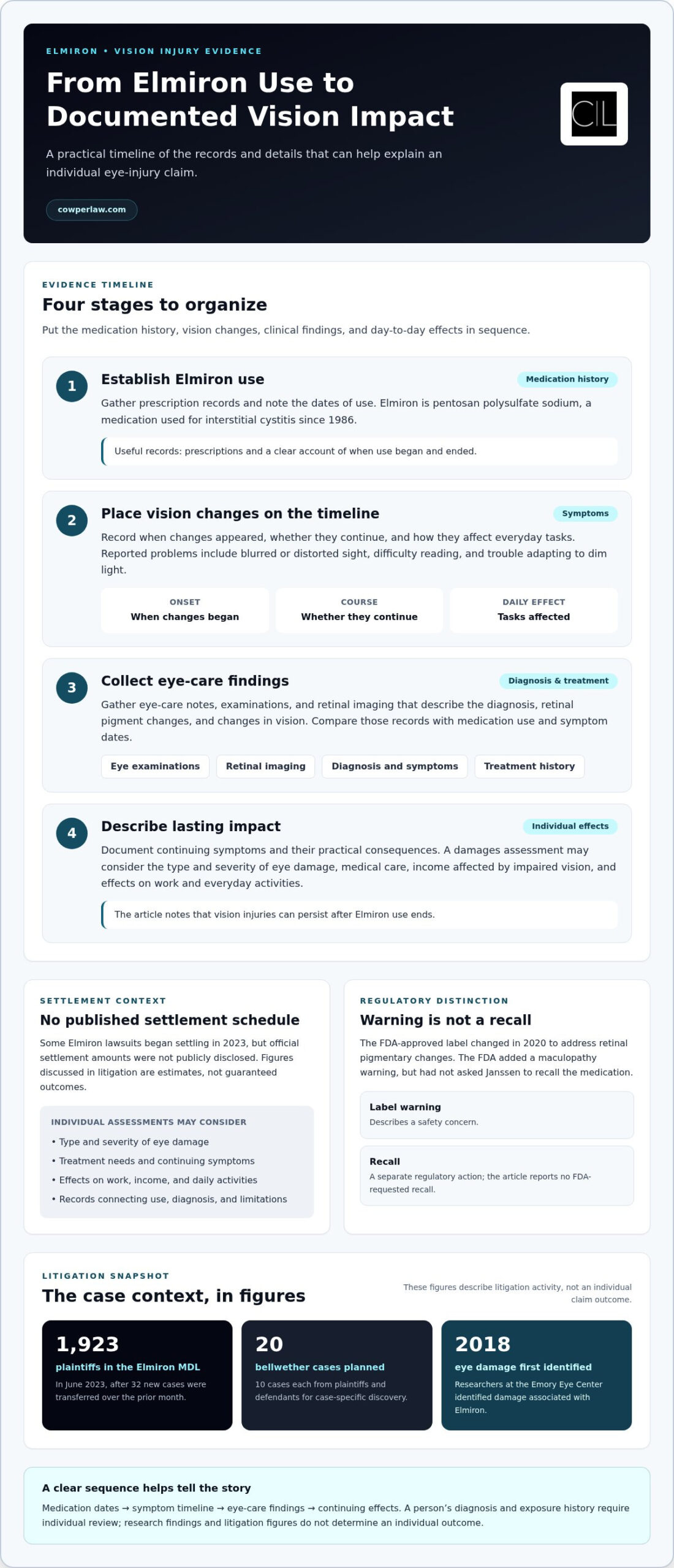
Nearly 2,000 lawsuits over alleged Elmiron-related vision injuries have been filed in the multidistrict litigation in New Jersey. In June 2023, the Elmiron MDL had 1,923 plaintiffs after 32 new cases were transferred into it over the prior month.
Judge Brian Martinotti approved 14 plaintiffs' attorneys for the Plaintiffs' Steering Committee in July 2022. The court’s bellwether selection plan called for 10 cases each from plaintiffs and defendants for case-specific discovery, for a total of 20 cases.
Elmiron is pentosan polysulfate sodium, a medication used for interstitial cystitis since 1986. Researchers have linked long-term use with retinal pigmentary changes called pigmentary maculopathy, which can damage vision.
Pigmentary maculopathy affects the macula, the central part of the retina involved in detailed vision. Reported problems include blurred or distorted sight, difficulty reading, and trouble adapting to dim light. Symptoms and examination findings matter together: note when changes began, whether they continue, and how they affect daily tasks. Vision injuries can persist after Elmiron use ends.
Researchers at the Emory Eye Center first identified eye damage associated with Elmiron in 2018. That association is central to allegations that the drug caused retinal injury, but a person’s diagnosis and exposure history still need careful review. For example, records showing Elmiron use alongside retinal imaging and documented vision changes can help establish a clear timeline for a claim.
A 2019 study tested 91 Elmiron patients who had taken the medication for more than 15 years. Researchers found clear indications of retinal damage associated with macular degeneration in 22 patients. Separately, an Emory Eye Center study found Elmiron-related maculopathy in 14 of 80 exposed patients, with no cases among 139 unexposed patients. These findings helped focus attention on pigmentary changes in the retina.
Kaiser Permanente researchers reported eye damage in 24% of 140 patients who had used Elmiron for an average of 15 years. In a separate screening study, 23% of 117 exposed patients had definite indications of medication-associated eye damage. The different study groups and findings show why an individual diagnosis should be considered alongside duration of use, eye exams, and symptoms, rather than relying on one statistic alone.
For a practical review, organize prescription history, retinal imaging, eye-care notes, and records describing changes in vision. Compare the dates: when Elmiron use began, when symptoms appeared, and when a clinician documented retinal pigmentary changes. This sequence can clarify what evidence supports an alleged connection and what details remain important in federal litigation, including the Elmiron multidistrict litigation, MDL 2973, in New Jersey.
People assessing a medication-related injury claim can use those records to explain the diagnosis and its effects. A focused review of medication-related injury claims can help connect treatment history, documented retinal injury, and the impact on everyday life.
The FDA-approved label for Elmiron changed in 2020 to address retinal pigmentary changes. Understanding that warning separately from a recall helps clarify what the label says and what it doesn’t establish about an individual injury.
The FDA added a maculopathy warning to Elmiron’s label but had not asked Janssen to recall the medication. A warning and a recall are different regulatory actions: the label describes a safety concern, while the information summarized here reports no FDA-requested recall. This distinction matters when considering the drug’s status and the information patients received.
Janssen updated Elmiron’s prescribing information on June 16, 2020, to warn about retinal pigment changes. The label stated that most reported cases occurred after three years of use or longer, although some followed shorter use. The duration wording is important: it does not say that injury can only occur after three years.
To understand which warning applied during a particular treatment period, compare the label date with prescription history and medical records. For example, a patient’s records can show when Elmiron was taken and when eye examinations documented changes. These dates provide context for evaluating the warning, potential injury, and information available during treatment.
The FDA approved Elmiron in the United States in September 1996. That approval preceded Janssen’s June 16, 2020, prescribing-information update about retinal pigment changes. Approval and later label changes describe different points in the medication’s regulatory history; neither fact alone establishes whether Elmiron caused a particular person’s vision injury.
Patients may find it useful to discuss eye examinations with a healthcare professional before and during treatment. To review your history, gather eye-exam records alongside prescriptions and diagnosis notes. Comparing them can show which examinations occurred, when retinal changes were recorded, and how those findings relate to reported symptoms.
The 2020 warning is also relevant to questions about whether patients received information about retinal risks. A claim may involve the warning’s timing, the patient’s use history, and documented eye damage. Those details should be examined together, rather than treating FDA approval as proof of safety or the later warning as proof of causation.
Keep copies of the medication label, prescription records, and ophthalmology notes. A dated timeline can help organize those materials before a review of medication injury evidence, including the label version and the onset of vision changes.
Elmiron-related concerns include general medication effects and reported retinal injury. The distinction matters: record each symptom, when it began, and whether it changed.
The information summarized here doesn’t detail common non-eye side effects, so don’t treat an unverified list as a diagnosis. Instead, compare your symptoms with the prescribing information that accompanied your medication and discuss new or worsening effects with your healthcare provider. Keep the label and prescription history together, particularly if you took the medication over an extended period.
For a claim review, distinguish general discomfort from symptoms related to vision. A dated note describing an effect, its timing, and its impact provides a clearer record than later recollection alone. Organize medication records, eye-care notes, and symptom descriptions in one timeline. This can also help an attorney identify which facts concern retinal injury.
Reports of Elmiron-related vision problems include blurred vision and worsening visual symptoms. The available litigation information states that symptoms typically start within one year of taking the drug. This is a reported pattern, not a substitute for documenting the dates in an individual patient’s history.
A case series described six patients with Elmiron-associated eye damage and vision symptoms. In a separate series involving 11 patients with PPS-associated maculopathy, nine reported worsening visual symptoms. These findings make progression important to record: note when blurred vision first appeared, whether it worsened, and how it affected reading or other routine activities.
Fundus autofluorescence, often shortened to FAF, is an eye-imaging method that may be part of an assessment for retinal changes. Keep the dated imaging report with other examination records so findings can be compared across visits. A symptom diary can add context, but it doesn’t replace clinical findings or establish by itself that Elmiron caused an injury.
Between 1997 and 2020, hundreds of people filed reports with the FDA claiming Elmiron caused serious vision problems. A report does not alone prove causation, but dates and medical records can help show how symptoms developed. If vision loss is severe or permanent, document its effect on daily life; blindness is not the only form of serious impairment relevant to understanding a patient’s experience.
For a lawyer assessing a possible claim or settlement, useful records include Elmiron use dates, ophthalmology notes, imaging results, and a clear account of symptoms. Keep copies in chronological order. This can help an attorney assess the alleged connection and claimed impact without confusing early symptoms with later changes.
Evidence for an Elmiron vision loss claim includes prescription records, eye-care records, and a timeline connecting pentosan polysulfate sodium use with diagnosed eye damage. Document when treatment began, when vision problems appeared, and whether they continued after treatment ended.
The described claim criteria focus on several details: Elmiron use for more than two years, blurred vision during use or within one year after stopping, and continuing vision problems. They also include vision problems diagnosed or beginning on or after January 1, 2010. These are useful screening points, not a substitute for organizing the medical and medication history.
Start with your bladder-treatment history. Elmiron is prescribed for interstitial cystitis, also called painful bladder syndrome, and its active ingredient is pentosan polysulfate sodium. Prescription histories, pharmacy records, or treatment notes can help establish the period of use. A clear record matters because duration of exposure is one factor in the described criteria.
Next, gather eye records that identify the condition and when it appeared. Useful documents include ophthalmology notes, retinal imaging reports, and diagnosis records describing pigmentary maculopathy or other retinal changes. For example, an examination noting blurred vision while a patient was taking Elmiron helps establish chronology. Later records can show whether symptoms persisted or developed further.
Build a simple timeline that places medication use alongside eye symptoms and diagnoses. Include when blurred vision was first reported, any changes after stopping the medication, and the dates clinicians documented continuing problems. The one-year period after stopping is specifically relevant to the described blurred-vision criterion, so record the stop date accurately rather than relying on memory.
For plaintiffs, these materials help present a connected account: interstitial cystitis led to medication use, eye problems developed, and medical records document the injury and its course. Keep original records and arrange copies by date. If a family member is organizing documents after a death, preserve the same treatment and eye-care history for review of a wrongful death claim.
Use the timeline and records to seek a focused review of a potential eye injury claim. The medication history, diagnosis, symptom timing, and continuing effects give the claim review its factual foundation.
Cowper Law represents people seeking answers after serious injuries involving medical products. If Elmiron use was followed by documented vision damage, records assembled for a claim can help clarify the injury, its timeline, and its effects on daily life.
Cowper Law represents people harmed by medical devices and other medical products. The firm also handles catastrophic injury cases, which may be relevant when vision loss creates lasting, substantial limitations. A careful review can consider treatment history, eye-care records, and the practical impact of the injury without promising a particular result.
If you’re ready to discuss your circumstances, contact Cowper Law or visit the firm’s website.
A useful next step is to organize your medical timeline and identify the questions that matter most to you. If you’re considering an Elmiron vision loss lawsuit, that timeline can help frame a focused discussion about your circumstances and the effects of your eye injury.
Cowper Law handles Medical Device Injury claims, Spinal Cord Stimulator Lawsuits, and Catastrophic Injury cases. The firm pursues justice for people harmed by medical products and supports them through the legal process. A conversation can help you understand how your records and experience may inform a claim review.
There’s no need to have every document perfectly arranged before taking that step. Start with what you have, including treatment history and eye-care records, and bring your questions forward. Contact Cowper Law about your claim to discuss a possible path forward. You deserve to have your concerns heard and your next step considered with care.
The FDA added a maculopathy warning to Elmiron’s label but had not asked Janssen to recall the medication. A label warning communicates a safety concern; it is not itself a recall. If you’re reviewing your treatment history, keep the medication information you received and note when you used Elmiron. The label version and dates can help clarify which warning appeared during your treatment.
Research has linked Elmiron use with pigmentary maculopathy, a retinal condition involving pigment changes and potential vision injury. This reported association is relevant, but it doesn’t establish the cause of an individual’s diagnosis by itself. Organize eye-care records, imaging reports, and prescription history together. They can show how the diagnosis and medication timeline align.
A lawyer can review medication and eye-care records, organize the timeline, and assess how the documented injury affects a potential Elmiron vision loss lawsuit. Cowper Law handles Drug Injury claims. A focused discussion can help clarify which records may support a claim and what questions remain. Keep prescription details, diagnosis records, and notes about the effects of vision changes available for that discussion.
Elmiron has been associated with retinal pigment changes and reported vision problems, including blurred vision and worsening visual symptoms. The medication’s prescribing information is a useful reference for understanding listed effects. Don’t stop a prescribed medication without first speaking with your doctor. If you notice a change in vision, record when it began and bring the timeline to your medical appointment.
Longer Elmiron use is a key concern in reports of retinal pigment changes. The label says most reported cases occurred after three years of use or longer, though some occurred sooner. That information doesn’t mean shorter use rules out injury. Record the length of treatment and any vision changes, then compare those dates with eye-exam records and diagnosis notes.
Elmiron-associated pigmentary maculopathy is a retinal condition involving pigment changes linked with the medication. Reported symptoms include blurred vision and worsening visual symptoms. Track when a change began, whether it progressed, and how it affects daily activities. Eye-care notes and imaging reports can document findings, while a dated symptom record adds context to the changes you’ve experienced.