
More than 200 injuries related to a t:slim X2 software failure had been reported as of April 15, 2024, and a separate pump correction was associated with 59 injuries. The FDA classified a t:slim X2 software recall as Class I on March 18, 2024. A Tandem insulin pump malfunction lawsuit may involve claims connected to one of these reported device problems, but the details of the malfunction and the harm matter.
If your pump shut down or interrupted insulin delivery, it’s understandable to want clear answers about what happened and what to do next. This article explains reported injuries and potential health effects, the failures under investigation, and how to compare an affected pump’s serial number with recall information.
You’ll also learn which records may help clarify a potential claim and how medical device injury litigation can address alleged harm. The goal is practical guidance on understanding the device issues and possible next steps, while keeping the person behind the paperwork in view.
Reported t:slim X2 problems include software failures and speaker-related malfunctions that can interrupt insulin delivery. The effects range from high blood sugar to severe complications requiring medical intervention.
Reported or recalled problems include a software failure associated with more than 200 injuries as of April 15, 2024, and a separate correction associated with 59 injuries. The FDA classified the recalled software as a Class I recall on March 18, 2024.
To report a malfunction, submit an adverse-event report through the FDA’s MedWatch program and notify Tandem Diabetes Care through its reporting or product-support channels. Include the pump model and serial number, the event date, any error message, and the medical effects. Keep copies of your submission and related records.
More than 200 injuries related to the t:slim X2 software failure had been reported as of April 15, 2024. Separately, 59 injuries were associated with a pump correction, and 59 cases linked to the malfunction reportedly required medical intervention. No deaths had been reported in connection with the software failure at the time described.
When assessing an injury, focus on the specific failure, the event timeline, and documented treatment. The FDA’s Class I classification means the recall involved a risk of serious health consequences or death. That classification alone does not establish what caused an individual patient’s injury.
An interruption or error in insulin delivery can lead to hyperglycemia, or dangerously high blood sugar. The t:slim X2 software failure was also associated with diabetic ketoacidosis, a severe complication that may require urgent treatment. Severe hyperglycemia can require medical intervention or hospitalization and can result in death.
For an injury review, connect the pump event to the medical record: note the error message, treatment, and any hospitalization. A speaker malfunction may trigger a Malfunction 16 error and stop insulin delivery. These details help distinguish a device interruption from other possible causes of a dosing problem.
Potential product-liability claims may allege a device defect, negligence, or failure to warn, alongside claims related to an injury. In the federal case against Tandem Diabetes Care, the patient’s estate asserted several claims, including manufacturing defect and wrongful death. The court dismissed the amended complaint with prejudice, underscoring that allegations and case outcomes are distinct.
A shutdown can interrupt insulin delivery and glucose reporting, leaving a person with diabetes without the pump’s expected support. The specific failure matters: battery drain, speaker wiring, and software issues have each been associated with t:slim X2 interruptions.
A speaker wiring defect can trigger a Malfunction 16 error, stop insulin delivery, and leave the affected pump no longer operational. Affected t:slim X2 pumps can also interrupt real-time continuous glucose monitoring values and trends, potentially contributing to hyperglycemia.
Separately, a March 2024 recall of t:connect mobile app version 2.7 followed a software glitch that could drain pump batteries and cause earlier-than-expected shutdowns. Tandem issued a t:slim X2 update in May 2024 after an earlier software iteration caused shutdowns for users on iOS.
When insulin delivery stops, follow the backup plan provided by your diabetes care team and contact your physician promptly. Don’t improvise a replacement dose. The appropriate response depends on your prescribed plan, glucose readings, and the pump’s status.
If a pump malfunction causes harm, contact your physician immediately, as advised for patients who believe they suffered damages. Preserve the pump and app error details, note when delivery stopped, and keep medical records describing treatment for hyperglycemia or other effects.
Report the malfunction to Tandem Diabetes Care and the FDA, including the pump model, serial number, event timeline, and observed error. Keep copies of reports and notices. These records may help establish what happened and connect a suspected defective device to the injury.
For a legal review, organize the device, app, and treatment records before discussing the event with attorneys handling device injury claims. A clear timeline can help explain how a shutdown affected insulin delivery and what harm followed.
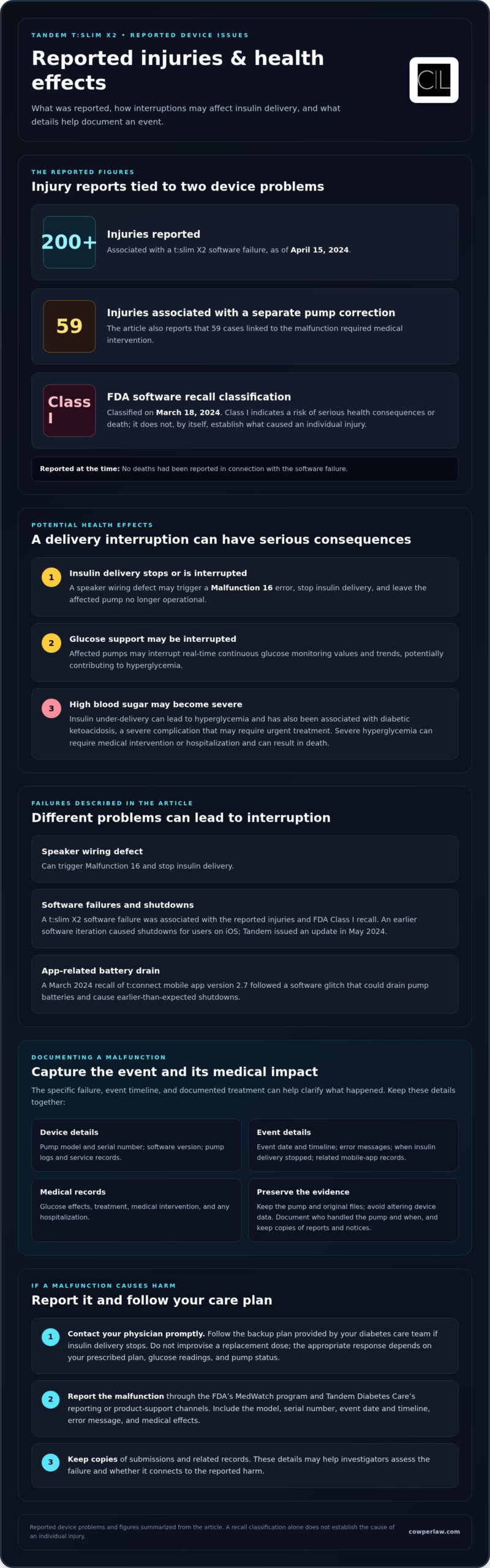
Reported causes include speaker wiring defects, software errors, and battery drain that can lead to pump shutdown. Investigations examine how a specific device failure affected insulin delivery and the patient’s blood sugar.
Keep the pump, its error messages, and any related mobile-app records together. Note the software version, event timeline, delivery interruption, and medical treatment. These details may help investigators compare a patient’s experience with the reported failure mechanism.
A device investigation may examine pump logs, service records, complaint histories, and manufacturing or software records. The National Institute of Standards and Technology identifies cybersecurity threats as a possible source of interference with infusion pump function, making digital evidence potentially relevant, too.
During discovery, parties may seek records to assess whether a defect existed and caused the alleged injury. Preserve original files and avoid altering device data. Document who handled the pump and when.
In August 2025, Tandem issued an FDA medical device correction after identifying a speaker wiring defect that could trigger Malfunction 16 and stop insulin delivery. A separate t:connect mobile app software issue involved battery drain and shutdown concerns. These are distinct failure mechanisms, so match the event details to the relevant device and software.
The FDA classified Tandem’s t:connect mobile app recall as Class I in May 2024. That recall involved an iOS software bug associated with the t:slim X2. A patient’s records should identify the app version and operating system involved, rather than treating every interruption as the same defect.
Investor rights raise different questions from patient injury claims. Investors assessing company disclosures may focus on statements about product corrections, reported risks, and business effects. Those concerns do not establish that a particular pump caused an injury. Patient claims require evidence tied to the device event and harm.
Start with the exact pump model and serial number, then compare them with the applicable Tandem correction or recall notice. A serial-number match can identify a device for follow-up, but the issue may also depend on software or app details.
Find the pump’s identifying label or check its original packaging and ownership records. Copy the serial number exactly, preserving letters, digits, and any leading zeros. Record the model name, such as t:slim X2, and note the software version and connected mobile app if known.
Next, compare those details with Tandem’s notice and the FDA recall information. Tandem announced a t:slim X2 correction on August 12, 2025, related to a speaker wiring defect. A separate Class I recall involved a t:connect mobile app software issue, so a pump serial number alone may not answer whether app-related guidance applies.
Use this checklist to keep the comparison clear:
Don’t treat a similar model name as proof of a recall match. For example, a t:slim X2 user should distinguish a speaker-related correction from an app-specific issue, then follow the instructions for the relevant notice. Keep the device and records available for follow-up, and continue to monitor glucose using your care plan.
In a potential liability review, the serial number helps identify the device, while event records help explain the consequences. Preserve error messages, treatment records, and the notice you used. These details may help connect a particular insulin pump to the reported failure and any injury.
If a malfunction caused harm, discuss a potential insulin pump injury claim using the pump’s identifying details and your event records.
Cowper Law represents individuals pursuing Medical Device Injury Litigation after alleged harm from a device failure. If a Tandem pump malfunction interrupted insulin delivery or led to medical treatment, the firm can review the device information, event timeline, and records connecting the failure to the injury.
A serial-number match or recall notice may help identify an affected pump, but a claim also depends on evidence about the malfunction, its consequences, and the patient’s harm. Preserving the pump, error messages, app records, and medical documentation can help clarify these issues. Cowper Law also handles catastrophic injury and wrongful death claims when device-related harm has severe consequences for patients or families.
For a discussion of your circumstances, contact Cowper Law.
After a serious device event, decide which questions need focused attention: how the malfunction affected you, which records could clarify what happened, and what legal options may apply. If you’re considering a Tandem insulin pump malfunction lawsuit, organize your concerns and the documents you’ve kept so the discussion can begin with your experience.
Cowper Law handles Medical Device Injury Litigation, including cases involving alleged harm from medical devices. The firm also represents clients in Spinal Cord Stimulator Lawsuits and Catastrophic Injury cases. Each matter depends on its facts, evidence, and injuries, so clear guidance starts with understanding your circumstances.
You don’t have to sort through difficult questions alone. Contact Cowper Law about your concerns and take the next step at your own pace.
Evidence for a Tandem insulin pump malfunction lawsuit should connect the device event to the injury and its effects. Preserve the pump and supplies, purchase or replacement records, screenshots of error messages, and available app or glucose-monitor data. Medical records can document symptoms, treatment, and timing. A written timeline noting when the problem began and who observed it can help organize these materials for a claim review.
Yes. For a Tandem insulin pump malfunction lawsuit, relevant safety information may include FDA recall notices and adverse-event reports. The FDA classified a t:slim X2 software recall as Class I on March 18, 2024, and classified a separate t:connect mobile app recall as Class I in May 2024. Tandem announced a t:slim X2 correction on August 12, 2025. These records describe device concerns but don’t alone establish what caused an individual injury.