
A medical device lawsuit does not automatically end in court. If you’re asking, “Will my medical device lawsuit go to trial?”, the case may settle before trial. If the parties cannot reach an agreement, it may proceed to trial. Lawyers prepare with both possibilities in mind.
It’s understandable to want a clearer picture before beginning a legal process that can affect your health, finances, and future. The path often includes investigating the claim, exchanging evidence during discovery, and negotiating a possible settlement. Trial remains an option if negotiations do not resolve the dispute.
This article explains the stages of a lawsuit, what can affect whether a case reaches trial, and how a class action differs from an individual injury claim. It also covers the information a lawyer may need to evaluate the device, the harm, and the evidence, helping you understand what may lie ahead.
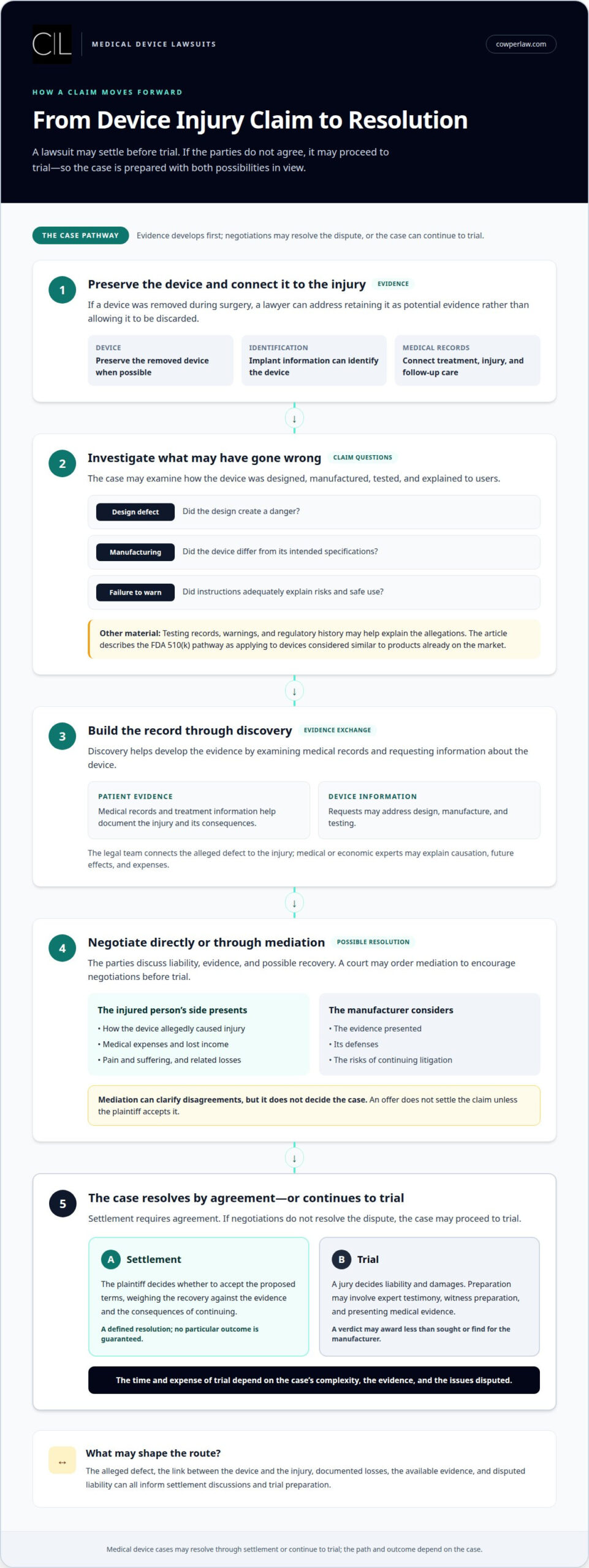
In the United States, an injured patient may bring a claim against a device manufacturer in state or federal court. Patients often ask, “Will my medical device lawsuit go to trial?” The case may examine how the device was designed, manufactured, tested, and explained to users. A design-defect claim considers whether the design created a danger. A manufacturing claim asks whether the device differed from its intended specifications. A failure-to-warn claim examines whether instructions adequately explained the risks and safe use.
Testing and regulatory history may help explain the allegations. Some medical devices may receive FDA clearance through the 510(k) pathway, which the U.S. Food and Drug Administration describes as an approval process for devices considered similar to products already on the market. A lawyer may examine testing records, warnings, and device information to assess how those facts relate to the alleged injury.
Preserving the device can strengthen a claim. If it was removed during surgery, a lawyer can address how to retain it as potential evidence instead of allowing it to be discarded. Medical records and implant identification can also help connect the device to treatment and injury. Together, these materials may show which device was implanted, what happened, and what care followed.
The evidence helps shape the answer to “Will my medical device lawsuit go to trial?” A claim may seek medical expenses, lost wages, pain and suffering, or punitive damages. For example, revision surgery may add medical costs, while an injury that prevents someone from working may support a claim for lost income. Medical and economic experts may explain future effects and expenses.
To pursue a claim, the legal team connects the alleged defect to the patient’s injury and documents the consequences. A medical expert may explain how a device problem caused a condition, while records show treatment and related losses. Evidence about design, manufacturing, testing, and warnings helps define the claims and guide case strategy.
Yes. A medical device company can settle a lawsuit before trial through direct negotiations or mediation. Many claims settle before trial, but settlement requires the parties to agree on terms. A court may order mediation to encourage negotiations before trial. It gives both sides a chance to discuss liability, evidence, and possible recovery without asking a jury for a verdict.
During negotiations, the plaintiff’s legal team presents how the device allegedly caused injury and documents related losses, such as medical expenses, lost income, and suffering. The manufacturer considers that evidence alongside its defenses and the risks of continuing the litigation. In mediation, both sides discuss possible terms. The process may clarify disagreements, but it does not decide the case.
An offer does not automatically settle the plaintiff’s claim. The plaintiff decides whether to accept a settlement, weighing the proposed recovery against the evidence and the consequences of continuing. An offer may provide a defined resolution, while at trial a jury decides liability and damages. Neither route guarantees a particular outcome.
Trial carries risks and demands preparation. Expert testimony, witness preparation, and presenting medical evidence require work, and the final verdict may award less than sought or find for the manufacturer. The time and expense involved depend on the case’s complexity, the evidence, and the issues disputed. A trial can also require the plaintiff to testify, though clients usually don’t give depositions or appear in court.
To assess the choice, a lawyer compares the offer with the documented injury, likely evidence, and contested liability. A consultation can help clarify how those factors shape settlement discussions and trial preparation. For a case-specific review of medical device injury claims, consider discussing the evidence and options with legal counsel.
An individual medical device injury claim focuses on one person’s harm, treatment, and losses. Attorneys assess how the device relates to the person’s condition, including complications after surgery or failure of an implanted device. A product recall is not required to file a lawsuit. A recall may draw attention to a device, but an individual claim still depends on the person’s injury and evidence.
When many people allege harm from the same device, their cases may share court proceedings without becoming one class action. In multidistrict litigation, cases with common factual and legal issues can be consolidated in one federal court for pretrial proceedings. Each person’s case remains individual for damages. A small number of selected cases, called bellwether cases, may go before a jury. Those trials can inform the litigation, but an individual case’s path depends on whether it is selected for trial.
A class action works differently: plaintiffs are treated as a group and share the outcome. Overall settlements or verdicts can be large, while individual participants’ awards are typically fairly small. That structure may differ from a personal-injury claim, where the person’s specific condition, treatment, and losses are assessed individually. Over 100,000 transvaginal mesh lawsuits have been filed on behalf of women alleging injury from vaginal and pelvic mesh products.
For someone harmed by a device, the key distinction is whether the case proceeds as part of a group or preserves an individual damages claim. Existing multidistrict litigation may provide a coordinated path for related claims, while a class action binds plaintiffs to a shared outcome. A recall notice alone does not determine which structure applies or establish the cause of a serious condition.
Attorneys can evaluate the device, injury, and available litigation structure to identify the claim’s next steps. If a defective device caused harm, discuss your medical device injury claim with counsel.
Discovery is the stage when both sides gather evidence to examine what happened and why. In a medical device lawsuit, lawyers may request information about the manufacturer’s design, manufacturing process, and testing. These requests help investigate whether a dangerous flaw existed and caused a patient’s injury. The evidence can shape settlement discussions or help prepare disputed issues for trial.
Company records can reveal details beyond the device itself. A request may seek internal documents and testing records about warning signs, product performance, or design decisions. For example, testing materials may show what risks the manufacturer identified and how it responded. Lawyers compare those records with the patient’s medical history and use of the device to build a clearer picture of the alleged failure.
Medical records also matter. They document the patient’s condition, treatment, and the timeline connecting device use to injury. Lawyers review them to assess what harm occurred and whether the evidence supports that the device caused it. A deposition is sworn testimony, where a witness answers questions outside the courtroom. Whether a patient gives a deposition or appears in court can depend on the needs of the case.
During discovery, lawyers organize documents, evaluate testimony, and identify gaps that may need further investigation. A patient’s records can be compared with the manufacturer’s testing and warnings. Differences may raise questions about which risks were known or communicated. Expert analysis may help explain complex device evidence and its connection to an injury. These steps help counsel represent the patient’s interests and assess whether the case is ready for negotiation or trial. Discovery can also clarify which facts remain contested, giving both sides a firmer basis to evaluate the claim.
The question “Will my medical device lawsuit go to trial?” is best considered in light of your goals and what the evidence can support. A lawyer can assess your circumstances, explain the available path, and help you make informed decisions as the case develops. No one can promise whether a particular claim will settle or reach a verdict.
Cowper Law handles medical device injury litigation, including spinal cord stimulator cases, and wrongful death claims involving fatal harm. The right next step is a conversation focused on your specific injury and priorities, not assumptions about how another case ended. Contact Cowper Law about your case to discuss your options and move forward with experienced legal support.
You may have a claim if a device caused an injury, worsened a condition, or led to financial losses. A lawyer will consider how the device was used, what harm followed, and whether medical evidence connects the two. For example, worsening symptoms after implantation may warrant a review of treatment records, device information, and any revision surgery. These facts help assess whether a product injury claim may proceed.
FDA clearance does not, by itself, answer whether a particular device caused harm or whether a legal claim has merit. The 510(k) pathway concerns clearance for devices considered similar to products already on the market. A claim may still examine the specific device’s design, manufacture, testing, and warnings, alongside the patient’s injury and medical history.
Evidence connecting the product to your condition is central to evaluating a claim. Medical records can show when symptoms began, what diagnosis followed, and how treatment changed after device use or medication. A medical expert may explain whether the product could have caused the injury in your circumstances. Lawyers also consider other possible causes documented in your health history.
In many states, injury lawsuit deadlines are one, two, or three years from the injury date, but the applicable period depends on the state and claim. Some deadlines may begin when an injury is diagnosed or discovered. Because missing a filing deadline can affect your ability to pursue a claim, it is important to identify the relevant state, injury, and discovery timeline.
Compensation sought may include medical expenses, lost income, and damages for pain and suffering. If an injury requires future treatment, medical and economic experts may explain the expected care and its financial effects. For example, records of continuing treatment can help show the impact of an ongoing condition. The losses must be connected to the alleged device or drug injury.
The deadline depends on the state, the type of claim, and when the injury occurred or was discovered. Two people harmed by similar devices may therefore face different filing dates because their circumstances or states differ. A lawyer can review the relevant timeline, including diagnosis and treatment records, to identify the deadline that applies to the person’s claim.