
A faulty medical device can leave more than a physical injury behind. Emotional distress damages from a faulty medical device may be recoverable when the distress is serious, linked to device-related harm, and supported by evidence. The rules vary by state, and a physical injury may strengthen the claim.
It is understandable to wonder whether trauma, anxiety, or other psychological effects count when you are also facing treatment and time away from work. They may: depending on the facts and applicable law, a claim can include emotional harm alongside medical expenses, lost income, and other losses.
This article explains when emotional distress damages may be available, what evidence can help document their impact, and which parties may be responsible for a device-related injury. It also explains how medical bills, future care, and lost earning capacity may factor into a claim, and when legal guidance can help assess the next steps.
Emotional harm may be included in a defective-device product liability claim, particularly when physical injury links the distress to the device. Available legal theories and proof requirements depend on state law; a claim based on emotional distress alone may face different limits.
A product liability claim seeks compensation for harm caused by a defective product, and emotional distress may be part of that harm. Anxiety, trauma, or other psychological effects can accompany physical injury. Courts may look for severe, documented distress and medical evidence or expert testimony linking it to the defect. In Ripple v. Davol, Inc., the court rejected emotional-distress claims based only on negligence or product liability, requiring physical contact or severely threatening conduct for negligent infliction of emotional distress. The ruling shows why the legal theory matters.
Strict liability may apply when a manufacturing defect makes a device unsafe and directly causes harm. The injured person generally must show the defect and its connection to the injury, rather than prove negligence. For example, a production error missed during quality control could leave an implanted device different from its intended design. Medical or scientific experts may explain how that flaw caused physical injury and related distress. Liability may also extend to parties in the distribution chain, such as a manufacturer, distributor, or transportation company, if evidence links its role to the damaged or defective device.
Illinois law allows claims for physical and emotional damages in product liability cases, but negligent infliction of emotional distress is not recognized as a separate claim, according to an Illinois appellate decision identified as 374 N.E.2d 683. The distinction matters: a person may seek emotional damages tied to a product-caused injury without treating distress as an independent negligence claim. Illinois claims typically require proof that the defect caused injury and that distress is severe and documented, with medical evidence or expert support. Without physical injury, recovery is more challenging; rare cases may involve extreme psychological harm from an egregious defect or near-miss. A surgical device failure, for instance, requires evidence linking the device problem to the patient’s harm.
Consider legal guidance when a device failure, warning issue, or treatment decision causes injury or psychological suffering. A medical device case may involve separate claims against a manufacturer and a medical provider.
A claim against a manufacturer concerns a defective device; a claim against a provider may concern care, instructions, or warnings. Identifying the right claim matters because the evidence and legal rules differ. Medical records, for example, may show what instructions a patient received, while device evidence may help establish a product defect. A timely legal review can assess both possibilities and preserve relevant records before a lawsuit proceeds.
Emotional distress without physical injury can be harder to recover than distress linked to bodily harm. State law determines whether a patient can pursue such a claim and what proof is required. Physicians’ claims also face limits: a Washington decision rejected a physician’s emotional-distress claim related to prescribing an allegedly defective drug, citing potentially endless liability. Bystander claims have distinct tests; a Pennsylvania decision required witnessing negligent injury to another person and suffering mental disturbance as a result.
Caps and filing deadlines depend on the state and claim type, so no single amount or deadline applies nationwide. The available facts do not establish which states cap emotional-distress damages; the governing state’s law must be assessed. Florida medical malpractice lawsuits generally must be filed within two years from when harm was discovered. That is not a deadline for every device claim. Emotional-distress damages are assessed through the severity of psychological harm and its effect on daily life, rather than a fixed calculation. No settlement or verdict amount can be stated here; a claim’s value turns on its evidence and injuries. Records of treatment, expert opinions, and testimony can help document the impact. A review of a medical device injury claim can assess the parties, evidence, and applicable deadline.
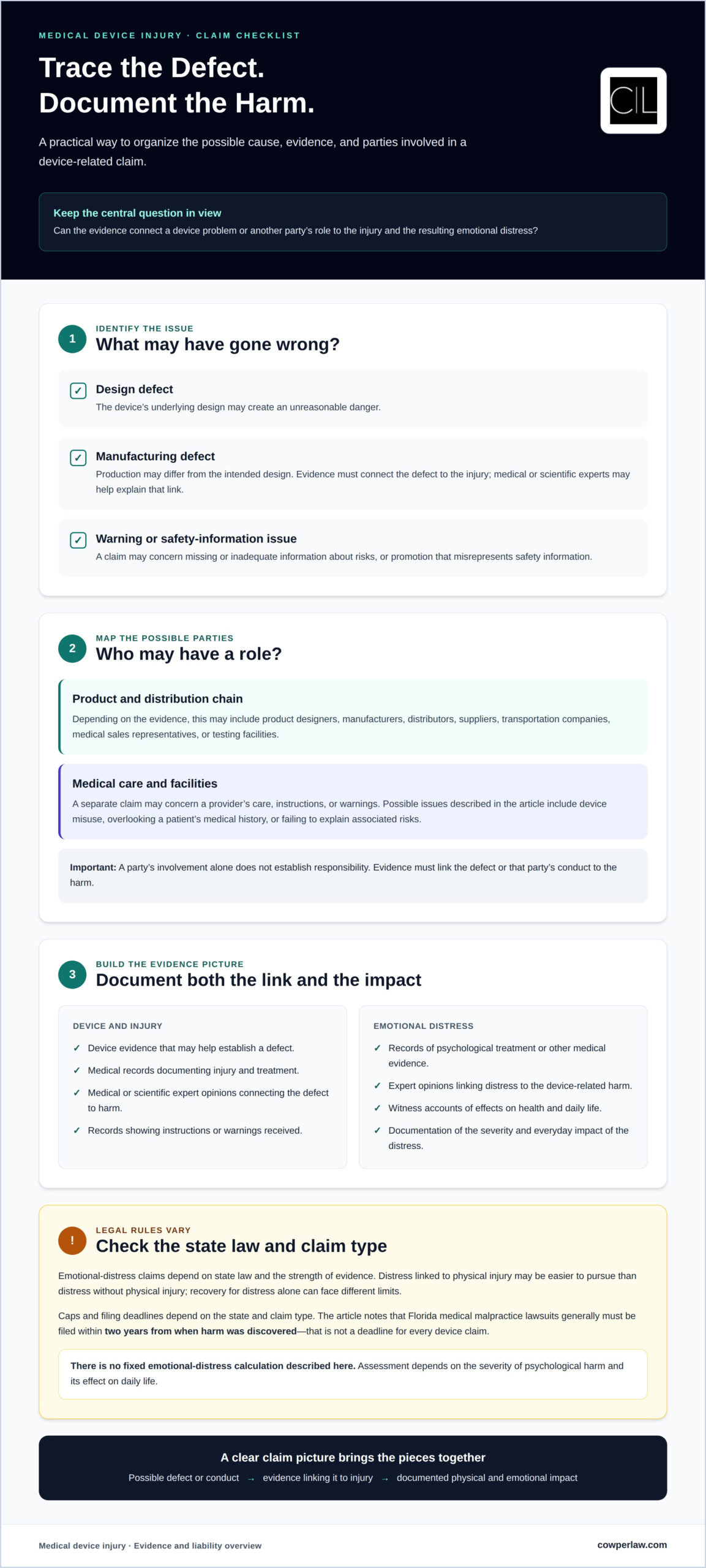
Responsibility depends on how the device became defective and who contributed to the patient’s injury. A plaintiff may pursue claims against a manufacturer, medical provider, or other responsible party when evidence links that party’s conduct or the defect to physical harm and emotional suffering.
A design defect concerns a device’s underlying design; a manufacturing defect occurs when production differs from that design. A warning claim may involve missing or inadequate information about risks. For example, a manufacturer may face liability if a device’s design creates an unreasonable danger or its warnings omit known risks. A marketing company may also face a claim if its promotion misrepresents safety information.
Potentially responsible parties may be involved at different stages of a device’s journey to the patient. Product designers, manufacturers, suppliers, medical sales representatives, testing facilities, and medical facilities may all have a role. A doctor may be responsible for misusing a device, overlooking the patient’s medical history, or failing to explain associated risks. A hospital or supplier’s role depends on evidence linking its actions to the injury, not simply its presence in the distribution chain.
To link emotional harm to a defective product, evidence should document both the injury and its psychological effects. Medical records, treatment notes, expert opinions, and testimony from people who observed changes can help document anxiety, depression, or other distress. Records of treatment after a device failure, for example, may show effects on sleep, daily activities, or work. Evidence should also connect those effects to the device-related injury, rather than merely establish that distress occurred.
The device itself, medical records, and recall documents can help clarify what failed and when. A careful review can identify the parties, defect theory, and evidence supporting pain and suffering. Request a review of your medical device injury claim to assess who may be accountable.
A dangerous medical device can lead to treatment costs and lost earnings as well as physical pain. Compensation in a device-related claim may include medical expenses for treating the injury, emotional distress, and income lost during recovery or care. These losses require different documentation: a hospital bill records treatment, while employment records can show missed work. An attorney can assess how each loss connects to the device-related harm and potentially responsible parties.
Medical costs may continue beyond the first procedure. A patient may need follow-up appointments, rehabilitation, medication, or additional care because of a device injury. If treatment is expected to continue, anticipated future medical expenses may also be included in a claim. Records describing ongoing care after an implant complication, for example, can help explain why expenses continue. Claimed costs should relate to treating harm caused by the device, rather than unrelated health needs.
Lost income may include wages missed during treatment or recovery. A plaintiff whose injury prevents a return to the same job may also seek compensation for reduced future earning capacity. Pay records and work history can document past income, while medical evidence may explain limits on future work. A serious injury that restricts a person’s ability to perform previous duties can affect both current wages and longer-term earning opportunities.
Emotional suffering can also lead to financial losses. Therapy costs may be part of a claim when treatment addresses distress linked to the device injury; missed work caused by emotional struggles may matter too. Appointment records and employment documents, for instance, can help show how anxiety or depression affected care and work. Pain and suffering address human harm, while bills and wage records document financial effects. Together, this evidence helps show the full impact of a defective device, beyond immediate medical expenses.
The effects of a device injury can reach far beyond the procedure, shaping a person’s health, confidence, and plans for the future. A claim for emotional distress damages from a faulty medical device depends on the applicable law and evidence. Understanding how the facts fit together is an important next step.
Cowper Law handles medical device injury litigation, including spinal cord stimulator lawsuit representation. The firm also handles wrongful death claims when a device-related loss affects a family. These cases call for careful attention to the human consequences as well as the legal issues.
A focused legal review can help clarify the possible claims and what evidence may support them. You don’t have to make sense of a difficult situation alone. Contact Cowper Law about your claim to discuss a way forward with an advocate prepared to listen and act.
A recall may provide relevant context, but it does not determine whether you have a damages claim. A person injured by a recalled device may still have a valid claim, depending on the facts. The recall’s timing, stated defect, and connection to the injury can matter. Records identifying the device model and the patient’s treatment, for example, may help show whether the recalled problem relates to the harm.
Possibly, but the rules differ by state and legal claim. Emotional harm may be considered alongside physical injury in a product liability case, while a claim based only on distress may face additional legal hurdles. Evidence may need to show how the device-related harm affected the person’s health or daily life. A diagnosis or treatment record can help document that impact.
Not always, but a physical injury may strengthen an emotional-distress claim. Courts and state laws can set different requirements when someone reports psychological harm without bodily injury. A patient who experiences severe anxiety after a device failure, for instance, may need evidence linking the distress directly to the event. Medical records, treatment history, and expert opinions can help explain that connection.
Family members’ claims are separate from the injured patient’s claim, and eligibility depends on state law and the circumstances. A spouse may be able to seek damages for lost companionship, affection, or support resulting from the patient’s injuries. Evidence showing how a serious device-related injury changed the couple’s shared life may be relevant. A relative’s concern alone does not establish a recoverable claim.
A recall, warning history, or evidence that a manufacturer knew of a risk may help explain the device’s safety history and the alleged failure. A recall may follow a defect, health risk, or regulatory violation, but its relevance depends on the specific injury and device. Warning materials and communications can also show which risks were disclosed. These details may provide context for a claim, but do not prove emotional harm on their own.
Fear of future illness may be relevant, but worry alone does not establish entitlement to damages. The claim’s strength depends on state law and evidence linking the fear to a device-related injury or risk. A medical evaluation, diagnosis, or treatment records, for example, may document the psychological impact. Evidence about the implant and its reported problem can also help explain the concern and its effects on daily life.