
A social media harm case depends on evidence connecting platform use to an injury, not simply on how much time someone spent online. The dangers of social media and litigation become especially clear when posts, usage patterns, health records, and other evidence are scrutinized. Section 230 may also arise as a platform-immunity defense.
It’s understandable to wonder whether a loved one’s experience could support a legal claim. Evidence may include medical and mental health records, school records, expert analysis, and timelines showing when symptoms began or worsened. Together, these details can help explain the alleged harm and its connection to social media use.
This article explains what evidence may matter, how claims address company accountability, and what Section 230 can mean in US litigation. You’ll also learn how social media harm lawsuits fit into broader coordinated cases, and which factors may shape an individual claim.
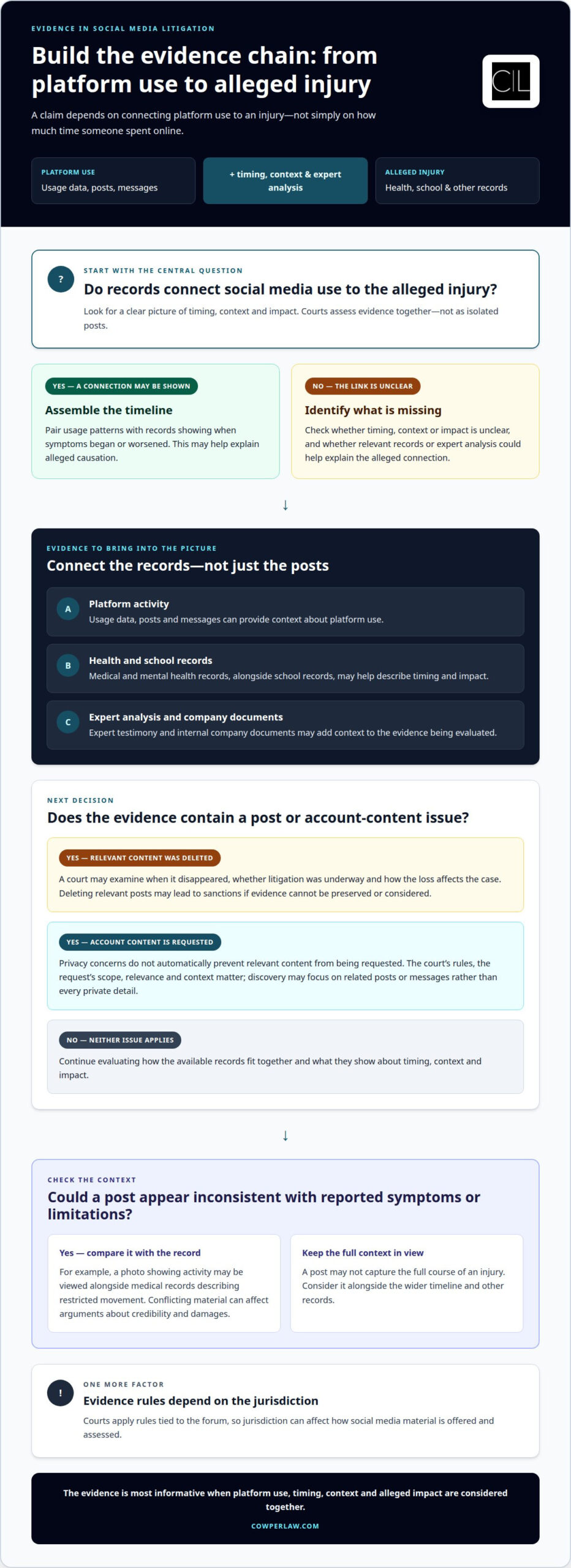
In social media harm cases, the dangers of social media and litigation often turn on whether records connect platform use to an alleged injury. Evidence can help establish timing, context, and impact.
Do evidence rules differ by state or court jurisdiction? Yes. Courts apply rules tied to the forum, so jurisdiction can affect how social media material is offered and assessed.
Evidence may include platform usage data, medical and mental health records, school records, expert testimony, and internal company documents. A timeline linking use to symptoms, such as worsening anxiety after prolonged app use, may help explain alleged causation. The dangers of social media and litigation become clearer when records are evaluated together, rather than as isolated posts.
Can deleting posts after a lawsuit begins lead to legal sanctions? Yes, deleting relevant posts may lead to sanctions if it prevents evidence from being preserved or considered. A court may examine when the content disappeared, whether litigation was underway, and how the loss affects the case. When deleted data or electronic trails must be properly analyzed and retrieved, forensic specialists such as International Investigative Group can help uncover and document critical evidence. Preserve potentially relevant posts and discuss their handling with counsel.
What privacy rights apply to social media accounts during discovery? Privacy concerns don’t automatically prevent relevant account content from being requested. The court’s rules and the request’s scope matter. Discovery may focus on posts or messages related to the alleged injury, rather than every private detail. Relevance and context help define what information may be at issue.
Social media use can affect a personal injury claim if posts appear inconsistent with reported symptoms or limitations. For example, a photo showing activity may be viewed alongside medical records describing restricted movement. Context matters: a post may not capture the full course of an injury, but conflicting material can affect arguments about credibility and damages.
Employers and businesses face risks when posts expose confidential or copyrighted workplace material. Sharing a copyrighted document, for example, can make it available to competitors and create a dispute over its use—highlighting the importance of securing core assets through specialists like Exy Intellectual Property to mitigate brand exposure. A job-status update may also alert a former employer to a possible non-compete contract breach, making the post relevant to litigation.
Social-media accountability cases examine specific company conduct and alleged injury. Plaintiffs allege platforms knew of risks to young users. They say companies failed to provide adequate warnings, safeguards, or meaningful age-appropriate protections.
A claim may focus on whether a platform’s design contributed to foreseeable harm. Courts may consider minors’ vulnerability and a company’s control over the user experience when evaluating an alleged duty of care. The central issue is how design choices, company knowledge, and an individual’s injury connect.
In California, eighteen state attorneys general brought a case alleging that social media companies used addictive algorithms that harmed minors’ mental health. The allegations put platform design and its potential effects at the center of the dispute. A serious claim must connect alleged company conduct to the harm at issue, rather than rely on general concerns about social media.
A New Mexico court ordered Meta to pay $942 million for harming children. That order illustrates the potential stakes of litigation, but it doesn’t determine the result of other claims. Each case turns on its own allegations, evidence, and legal issues.
On December 5, the Massachusetts Supreme Judicial Court heard oral arguments in Commonwealth v. Meta Platforms. The case concerns allegations about Meta’s design and its effects on minors. The proceedings reflect continuing legal scrutiny of how platforms shape young users’ experiences.
Company knowledge can also be examined through internal research, emails, presentations, and whistleblower disclosures. Those materials may help establish what a company knew about risks and when it learned of them. Attorneys may compare that evidence with usage patterns, medical records, and the timeline of a young person’s symptoms to assess whether the alleged harm is linked to platform conduct.
In September 2025, U.S. Senator Dick Durbin introduced legislation to expand the definition of a product to include most social media platforms. This proposal highlights ongoing debate about how product-related legal theories might apply. For claims involving shared alleged harms, class action lawsuit representation may be relevant.
Section 230 of the Communications Decency Act is cited as a platform-immunity defense in social media litigation. It matters because a platform may rely on it when defending against claims connected to online content. The defense is an argument, not a finding that a company has no liability.
For a social media harm claim, the complaint’s allegations help frame the dispute. It should identify the alleged conduct, the injury, and how the two are connected. For example, a claim might allege that platform features encouraged prolonged use and contributed to harm. Section 230 may then become part of the company’s response.
Keep the allegation precise. Claims about a platform’s own design or decisions are not the same factual allegation as claims about a user’s post. That distinction describes what the parties are arguing; it does not, by itself, establish whether Section 230 applies. The court considers the legal arguments and the record before it.
Parents or legal guardians can bring claims on behalf of minors who suffered social media-related harm. A parent’s account of changes at home, paired with school records showing falling grades or disruption, can help describe the injury. Those details do not resolve an immunity argument, but they clarify the harm the claim seeks to address.
To understand the defense, separate three questions: what conduct the complaint alleges, what injury it describes, and how the platform responds. Internal company documents, usage patterns, and medical evidence can help establish the factual context. The parties’ arguments about Section 230 address a different issue from whether the alleged injury occurred.
Where social media use is alleged to have contributed to a fatal outcome, families can explore wrongful death claim representation. A clear account of the allegations and the loss gives the legal team a concrete starting point for assessing the claim.
US social media litigation includes individual claims and coordinated proceedings. On 6 October 2022, 28 separate actions against social media companies and related defendants were consolidated. They formed federal multidistrict litigation in the Northern District of California. The litigation has grown to hundreds of actions. Many claims are handled through coordinated mass tort litigation, bringing related allegations into a shared process.
Claims commonly allege that features such as infinite scrolling, autoplay, notifications, likes, streaks, rewards, and filters encourage children and teens to use platforms repeatedly and for longer periods. Plaintiffs connect these design features with alleged addiction and mental health injuries. The central question for an individual claim remains how the alleged platform conduct relates to that person’s experience and harm.
Trials in six bellwether cases in the social media multidistrict litigation were scheduled to begin in 2026. Bellwether cases are selected claims tried within coordinated litigation. Their proceedings can bring specific allegations and evidence before a court. They are not the same as a final decision on every other person’s claim.
Some lawsuits allege social media use contributed to suicide or another fatal outcome. Claims may seek compensation for treatment, hospitalization, medication, educational disruption, emotional distress, long-term care, and diminished quality of life. Those losses describe different effects, from immediate medical needs to lasting changes in daily life. The records and allegations in each case shape what losses are at issue.
Other disputes tied to social media involve different legal concerns. In the United States, a person who posts false statements damaging another’s reputation may face a defamation lawsuit. Sharing another person’s private information, including intimate images without permission, may raise privacy claims. Paid product endorsements also call for clear disclosure that a post is advertising. These examples show why the post, the alleged harm, and the person responsible matter when assessing a claim.
The dangers of social media and litigation can feel personal long before a claim takes shape. A useful next step is to organize the timeline of events, the impact on daily life, and the questions that remain. That gives a legal review a clearer starting point.
Cowper Law represents people in medical device injury litigation and spinal cord stimulator lawsuits, and handles wrongful death claims. These are distinct areas of representation, but each calls for careful attention to the harm a person or family has experienced. If you’re facing a serious injury or loss, you deserve a thoughtful review of the facts and the legal options connected to your situation.
Contact Cowper Law about your case to discuss what happened and what steps may make sense. You don’t need to have every answer before asking for guidance. Start with your concerns, your records, and the changes this experience has brought to your life. A steady plan can help you move forward with greater clarity and support.
If social media is connected to an injury, dispute, or harmful post, preserve relevant records and organize what happened. Note the account involved, approximate dates, and how the events affected you or your family. Avoid responding publicly in ways that could add confusion. A clear timeline helps explain the issue and identify which records may matter.
Posts can influence how a court assesses a person’s account, the timing of events, or the impact of an alleged injury. For example, a public post describing daily activities may be compared with claims about limitations. Its meaning depends on context, including when it appeared and what it leaves out. A single post rarely tells the full story by itself.
Yes, social media posts and messages can be offered as evidence in a lawsuit. A public comment, direct message, or shared image might help establish what someone said or when an interaction occurred. The material’s relevance and reliability matter. Preserve surrounding conversation and dates, since a cropped excerpt may not show the exchange’s full meaning.
Preserve potentially relevant posts and messages rather than editing or deleting them. Keep original files or account records when available, and note where each item came from and when it was saved. For example, retain the full message thread instead of only a screenshot of one reply. Share relevant preservation concerns with your legal representative promptly.
Courts assess whether evidence is sufficiently connected to the account or person it is said to represent. Account details, the surrounding conversation, timestamps, and consistency with other records can help provide context. A screenshot alone may leave questions about who created a post or whether it is complete. Preserve source information and the original conversation when possible.
Private settings don’t automatically prevent account content from becoming part of a civil discovery dispute. A party may seek relevant material, while privacy and the scope of the request can matter to how the dispute is handled. Keep the requested information intact, and avoid assuming that a private account is beyond legal scrutiny. The court process determines what must be produced.